







Dogs
Dog ramps
Little things. Happy tails.
39 items picked for everyday life with your pet, with shipping estimates on every item.
 A happy life, one little thing at a time.
All dogs homes, cages & gates →Dog playpens →Freestanding dog gates →Dog stairs for bed →Dog ramps for bed →Outdoor dog kennels →Dog stairs →Dog gates with door →Dog gates →Puppy playpens →Tall dog gates →Extra wide dog gates →Outdoor dog playpens →
↗Tracked US shippingEstimates on every item↶Returns & refundsHow it works♡Here to helpTalk to Giddy Pets
All dog ramps
Little essentials. Lots of love.



A little guidance
Help choosing dog ramps
Buying guides and care advice written for this range: what to measure, what matters and what to skip.
From our guides
- Best Dachshund Ramps: What Actually Matters →
- Best Dog Ramp for a Couch: What Actually Matters →
- Best Dog Ramp for Bed: How to Choose Slope, Grip and Size →
- Best Dog Ramps for Cars, SUVs and Beds: How to Choose →
- Best Dog Ramp for Car: How to Choose the Right Length and Slope →
- Best Pool Ramps for Dogs: What to Look For Before You Buy →
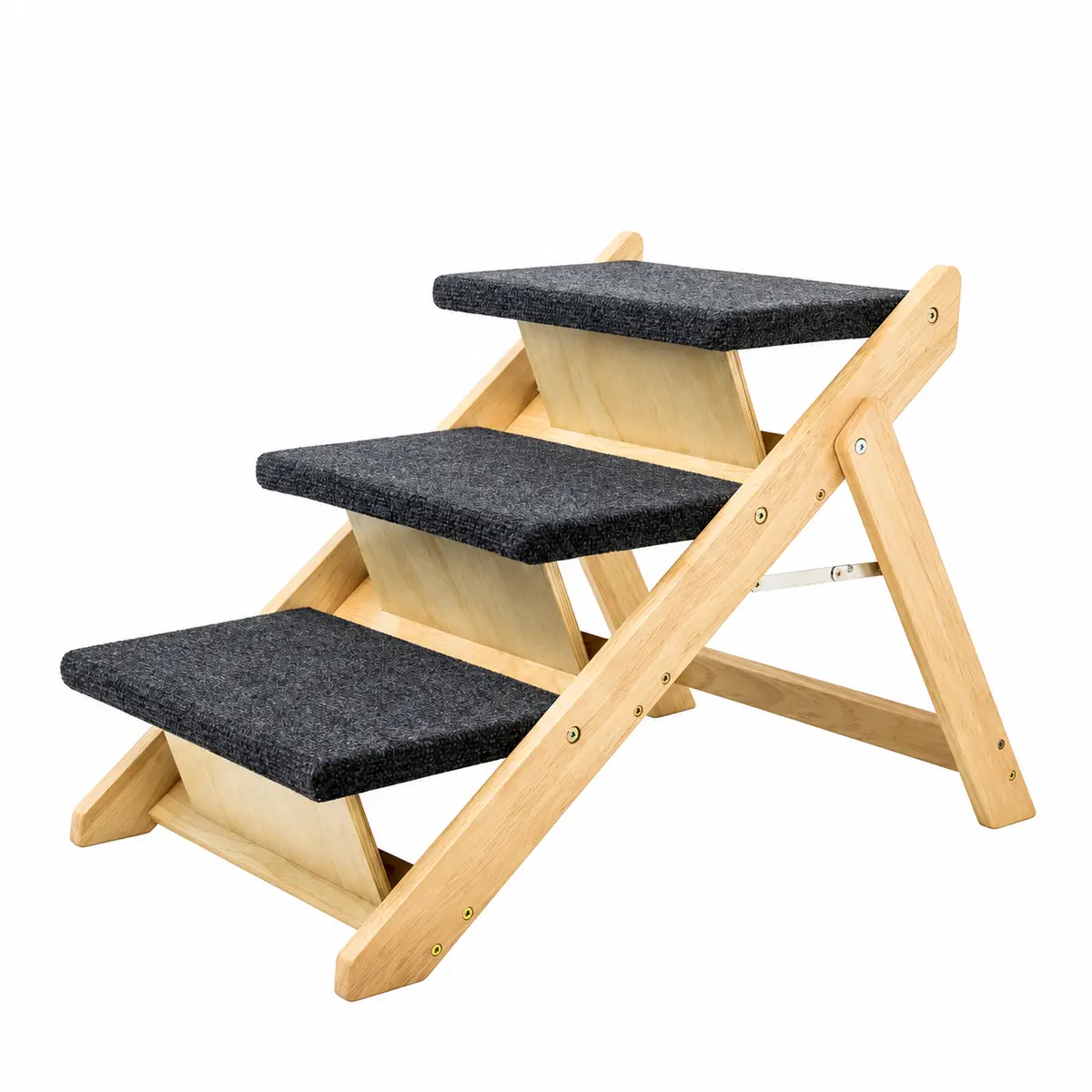
Shop dog ramps for beds, couches and sofas: folding ramps with non-slip carpet and a top platform, height-adjustable ramps from around 15 to 19 inches and higher, ramps with removable guardrails, and solid pine ramp-stairs that fold flat. This page is for owners of small and short-legged dogs, seniors with stiff joints, and dogs recovering from surgery who should not jump. Below is how to match the height and length, and how to teach a dog to use one.
Which dogs benefit from a ramp
Jumping onto and off furniture puts repeated impact through a dog's joints and spine. The AKC recommends ramps or stairs for arthritic dogs, and notes that breeds predisposed to intervertebral disc disease, such as Dachshunds, Corgis and Basset Hounds, benefit from low-impact access. Puppies, dogs recovering from surgery and three-legged dogs are also good candidates.
Small breeds that leap onto the couch dozens of times a day are a common case too. If your dog has started hesitating before a jump, sitting and staring at the bed, or yelping when it lands, that is the time to add a ramp and to mention the change to your vet.
Ramp or stairs
Ramps give a continuous slope with no steps to climb, which is easiest on sore hips, elbows and backs and often less scary for nervous dogs. Stairs take up less floor space for the same height but ask the dog to lift each leg. This collection includes both, plus combination ramp-stairs.
Choose a ramp for dogs with back problems, arthritis, or very short legs. Choose stairs if floor space beside the bed is tight and your dog climbs steps comfortably. Height-adjustable models let you start low and raise the angle as your dog gains confidence.
Measuring height, length and slope
Measure from the floor to the top of the mattress or seat cushion, not the frame. The ramp's top platform should sit level with or just below that height. A ramp that stops short makes the dog jump the last bit, which defeats the point.
Length controls the slope. The longer the ramp for a given height, the gentler the climb. For a bed around 20 inches high, a ramp of about 4 feet gives a comfortable slope for most small dogs, and longer is better for seniors. Check the width too, so your dog's whole body fits without stepping off the edge.
Grip, guardrails and weight rating
A non-slip surface is essential. Carpeted ramps give paws something to grip, and rubber feet stop the ramp sliding across wood or tile. Ramps with removable guardrails add a raised edge, which reassures dogs with poor eyesight or balance.
Check the weight rating covers your dog with room to spare, especially for larger dogs and for ramps used by two dogs at once. The AKC points out that large dogs need sturdy products that will not flex or snap. A ramp that wobbles under a dog will not be used twice.
Teaching your dog to use the ramp
Lay the ramp flat on the floor first and let your dog walk across it for treats. Then set it at its lowest height against a stable surface, ideally with a wall on one side, and lure your dog up a step at a time, rewarding each step. Never push or pull.
Keep sessions short and stop before your dog loses interest. Once it walks up confidently, block easy jumping routes for a while so the ramp becomes the habit. Most dogs learn within a few days.
This page is general information, not veterinary advice, and it cannot replace an examination by the vet who knows your pet.
Is a ramp or stairs better for a dog with arthritis?
A ramp is usually easier, because the dog walks a slope instead of lifting each leg onto a step. It is also the better choice for dogs with back problems. Choose a gentle angle and a non-slip surface.
How long should a dog ramp be for a bed?
Longer gives a gentler slope. For a bed around 20 inches high, about 4 feet of ramp suits most small dogs. Seniors and dogs with back problems do better on longer ramps.
How do I get my dog to use a ramp?
Start with the ramp flat on the floor, reward every step, then raise it slowly. Place it against a stable surface with a wall on one side, never force your dog, and keep sessions short.
Do dachshunds need ramps?
Dachshunds are prone to intervertebral disc disease, so many owners use ramps to cut down on jumping on and off furniture. A long, gentle ramp is kinder to the spine than steps.
Can cats use dog ramps?
Yes. Several ramps here are designed for dogs and cats, and they help senior cats with arthritis reach a bed, couch or window ledge without jumping.