






Buying guides
Best Dog Ramp for Car: How to Choose the Right Length and Slope
The best dog ramp for a car is long enough to give a gentle slope, wide enough for your dog's shoulders and hips, grippy, and rated well above your dog's weight. Length is the deciding factor: guides aim for a climb of roughly 18 to 27 degrees, which means a ramp of about 4 to 6 feet for most SUVs and trucks. Fold, weight and storage come next.
By Matt GarnettUpdated November 14, 20265 min read3 sources
Why length decides everything
A ramp is only as gentle as it is long. The same ramp that is comfortable for a low hatchback becomes a slide at the tailgate of a tall SUV. Whole Dog Journal suggests aiming for a climb of roughly 18 to 27 degrees depending on how high the opening is, and notes that a 62-inch ramp is too steep for most full-size SUVs and trucks, while a 72-inch ramp reaches into tall ones.
You can work it out yourself. Measure from the ground to the vehicle floor where the ramp will rest, then divide that height by the sine of the angle you want. At about 25 degrees that works out to roughly 47 inches of ramp for a 20-inch floor, 59 inches for 25 inches and 71 inches for 30 inches. This is simple geometry, not a published safety standard, so treat it as a guide and ask your vet about a senior or injured dog.
Ramp, steps or lifting
The AKC says ramps are generally the better choice for cars because they fold easily and are often lighter than quality stairs. A ramp can replace lifting a heavy dog into the vehicle, which protects your back and your dog. PetMD notes that ramps suit medium and large dogs and dogs with arthritis or back problems, while stairs are usually fine for small, agile dogs. Browse our dog car ramps, or compare with dog car steps if your dog only needs a boost.
Dogs who gain most include arthritic dogs, recovering dogs, puppies whose developing bones are vulnerable to strain, and long-backed breeds such as Dachshunds, Pembroke Welsh Corgis and Basset Hounds, which the AKC lists as predisposed to disc disease. Fearful dogs often adjust to a ramp more easily than to steps.
Folding and telescoping types compared
Start with the surface your dog will walk on. A folding ramp opens into a continuous incline. These four-step folding car stairs give your dog separate treads to climb. For either design, measure the height of the cargo floor where the top will rest, then check the supported height range. Measure the folded unit against your trunk opening as well.
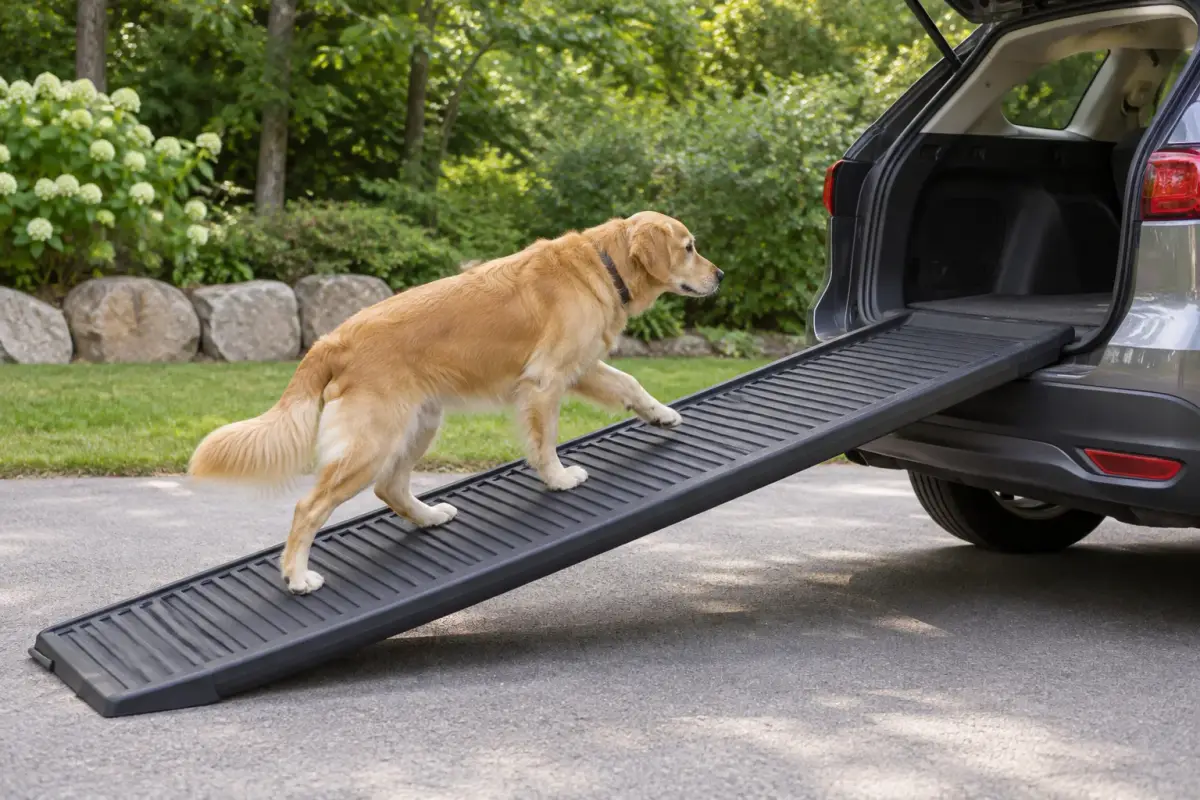
For a continuous walking surface, compare the 61-inch folding ramp with raised sides with the space behind your parked car. The same ramp will sit steeper against a higher cargo floor. Check the stated weight capacity and make sure you can lift and position the ramp yourself.
Width, traction and weight rating
Pick a width several inches wider than your dog's widest shoulder or hip point so the dog can walk normally without narrowing its stride. The AKC warns that narrow surfaces cost a dog confidence and can cause falls. Look for rubber, textured carpet or another grippy surface, since dogs may splay their toes on a hard, slick or sandpaper-like surface on the way down.
Choose a weight rating that clearly covers your dog with margin, because a dog may shift weight or stop mid-climb. PetMD gives no standard figure and tells readers to check the manufacturer specifications and confirm choices with their veterinarian. If you sometimes steady the dog on the ramp, allow for your own weight too, and check the ramp sits on a stable, non-wobbly surface.
Training your dog to use a ramp
Teach the ramp before your dog needs it, ideally while the dog is healthy. The AKC suggests short sessions, letting the dog sniff the equipment first, placing it where a barrier guides the dog on at least one side, and luring with treats or a toy while rewarding each step. Start with a few steps at a time on the ground, then build up to the car.
Never pull, push or punish a dog for hesitating, because that builds a negative association. A ramp gets your dog into the car but does not restrain it once inside, so also read our guide to the safest dog car seat and browse seat belts and car harnesses.
What to avoid, and when to see your vet
Avoid a ramp that is too short for your vehicle, has a slippery surface, or is rated close to your dog's weight. Avoid overdoing it with an injured or older dog; the AKC cautions against asking too much of a dog recovering from injury or one with joint problems. A ramp lowers the strain of jumping, but it is not a treatment.
If your dog hesitates to jump, limps, yelps or seems stiff after rides, see your veterinarian, since that can signal joint, back or other pain. PetMD suggests asking your vet which product suits a dog with arthritis, back problems or recovery from surgery. When you are ready, browse our dog car ramps.
This page is general information, not veterinary advice, and it cannot replace an examination by the vet who knows your pet.
Ramp and step storage mechanisms
| Format | How it stores | Measurements to verify |
|---|---|---|
| Bi-fold ramp | A sloping surface folds at a hinge | Open length,closed envelope and usable width |
| Telescoping ramp | Sections slide into one another | Permitted extended lengths and stored dimensions |
| Folding steps | Separate treads fold with a frame | Tread dimensions,setup height and stored envelope |
Common questions
How long should a dog ramp for a car be?
Long enough to keep the slope around 18 to 27 degrees. As a rough guide, about 47 inches for a 20-inch floor, 59 inches for 25 inches and 71 inches for 30 inches. Measure your own vehicle.
Is a dog ramp better than steps for a car?
For most cars, yes. The AKC says ramps are generally better for car use because they fold easily and are often lighter. Steps can suit small, agile dogs that only need a short boost.
What weight capacity should a dog car ramp have?
Pick a rating that clearly covers your dog with margin. There is no single standard figure, so check the manufacturer's specifications, and ask your vet if your dog has joint or back problems.
How do I get my dog to use a car ramp?
Start with short sessions on the ground, let your dog sniff it, lure with treats or a toy and reward each step. Never push or pull a hesitant dog. Build up slowly to the car.
Which dogs benefit most from a car ramp?
Arthritic and recovering dogs, puppies with developing bones, long-backed breeds such as Dachshunds and Corgis, and large dogs who are hard to lift. If your dog is in pain, see your vet first.
Sources we checked
This guide is general information, not veterinary advice. If your pet is unwell or injured, contact your veterinarian.


