






Buying guides
Best Dog Gate for Stairs and Large Dogs: How to Choose a Safe One
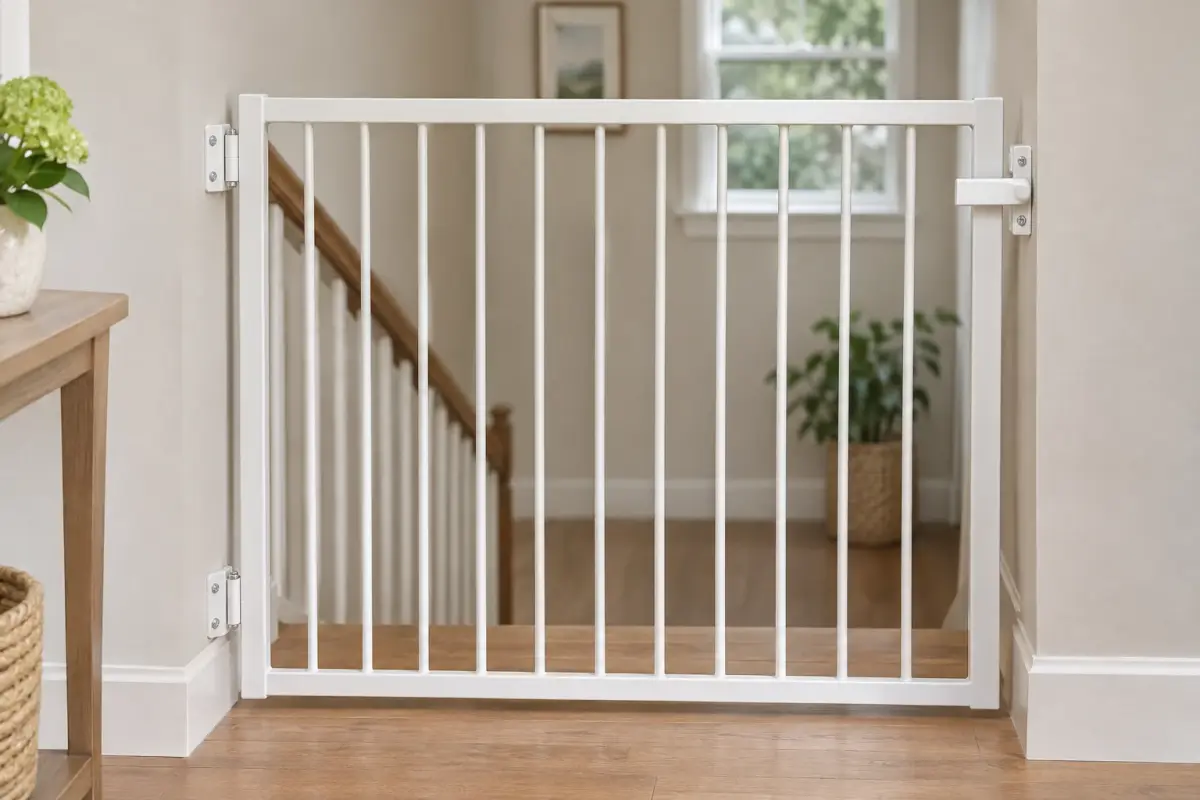
For the top of stairs, choose a hardware-mounted gate that screws into the wall, with a door that swings away from the stairs and no threshold bar to trip on. For a large dog, add height and strength: a gate taller than your dog can jump, with metal construction and a secure latch. Pressure-mounted gates suit doorways, not stairs.
By Matt GarnettUpdated November 10, 20263 min read2 sources
Hardware-mounted vs pressure-mounted
The AKC's guidance is that hardware-mounted gates, which attach to the wall or banister with brackets or screws, are generally considered the safest option for the top of staircases, because they stay firmly attached and are less likely to give way under pressure. They are also better for larger and more energetic dogs.
Pressure-mounted gates press against both sides of an opening with tension and need no tools, which makes them easy to move and suits renters and doorways between rooms. The trade-off is that a strong dog leaning or jumping can push one out, and most have a bar across the bottom that is a trip hazard at the top of stairs.
What matters most for a big dog
Height comes first. A gate should be taller than your dog can comfortably clear; for large or athletic dogs that often means an extra-tall gate of 36 inches or more. Strength comes next: metal frames and bars resist chewing and pushing better than wood or plastic, and a secure, dog-proof latch stops a clever dog nosing it open.
Bar spacing matters for smaller dogs and puppies who might squeeze through or catch their heads. Look for narrow spacing if you have a small dog as well as a big one, and no horizontal bars a dog can use as a ladder.
Gate types compared
Walk-through gates have a door so people can pass without stepping over, essential at stairs (see also our guide to the best dog gate with a door). Auto-close doors swing shut behind you. Extra-wide gates and extension kits cover open-plan spaces and wide stairways. Freestanding gates and playpen panels need no mounting but are easily pushed over by big dogs and should never be used at stairs.
Retractable mesh gates roll away when not in use and suit narrow openings with calm dogs, but are not strong enough for large, determined dogs. Banister mounting kits let you hardware-mount a gate to railings without drilling into posts.
How to measure and fit
Measure the opening width at the top and bottom, since walls and banisters are not always parallel, and choose a gate whose range covers both. At the top of stairs, mount the gate at the top step so the door swings over the landing, not over the stairs.
The AKC's puppy checklist suggests tension gates for temporary setups between rooms. For stairs, follow the manufacturer's hardware instructions exactly, use wall anchors where needed, and test by pushing firmly before trusting it.
The best gate for each situation
For the top of stairs, a hardware-mounted walk-through gate with no floor bar. For the bottom of stairs or a doorway, a pressure-mounted gate is usually enough. For a large jumper, an extra-tall metal gate. For a puppy, a gate with narrow bar spacing; the AKC suggests keeping young puppies off stairs until about four months.
Check latches and fixings monthly, and replace a gate with bent bars or a loose hinge. If your dog throws itself at a gate when you leave, it may be distressed; ask your vet or a trainer.
Gate access and mounting features
| Feature | Physical arrangement | Verify before installation |
|---|---|---|
| Walk-through | A door within the barrier | Opening,latch and required mounting |
| Auto-close | A mechanism returns the door | Exact closing and locking behavior |
| Extension system | Additional panels widen a barrier | Compatible parts and allowed span |
| Retractable | Mesh extends from a housing | Exact permitted installation location |
| Banister kit | A mount connects a gate to a railing | Gate and railing compatibility |
Common questions
Can I use a pressure-mounted gate at the top of stairs?
It is not recommended. The AKC considers hardware-mounted gates the safest at the top of stairs, and most pressure gates have a floor bar that can trip you.
How tall should a dog gate be for a large dog?
Taller than your dog can comfortably jump. For many large or athletic dogs that means an extra-tall gate of 36 inches or more, ideally metal with a secure latch.
What is the best dog gate for wide stairs?
An extra-wide hardware-mounted gate, or a gate with extension panels, fitted with a banister kit if needed, with a walk-through door that swings over the landing.
Do dog gates work for jumpers?
Only if they are tall enough and have no horizontal bars to climb. Extra-tall metal gates work best, combined with training your dog to wait calmly behind the gate.
Sources we checked
This guide is general information, not veterinary advice. If your pet is unwell or injured, contact your veterinarian.


