






Buying guides
Best Dog Gates: Height, Mounting and Wide Openings
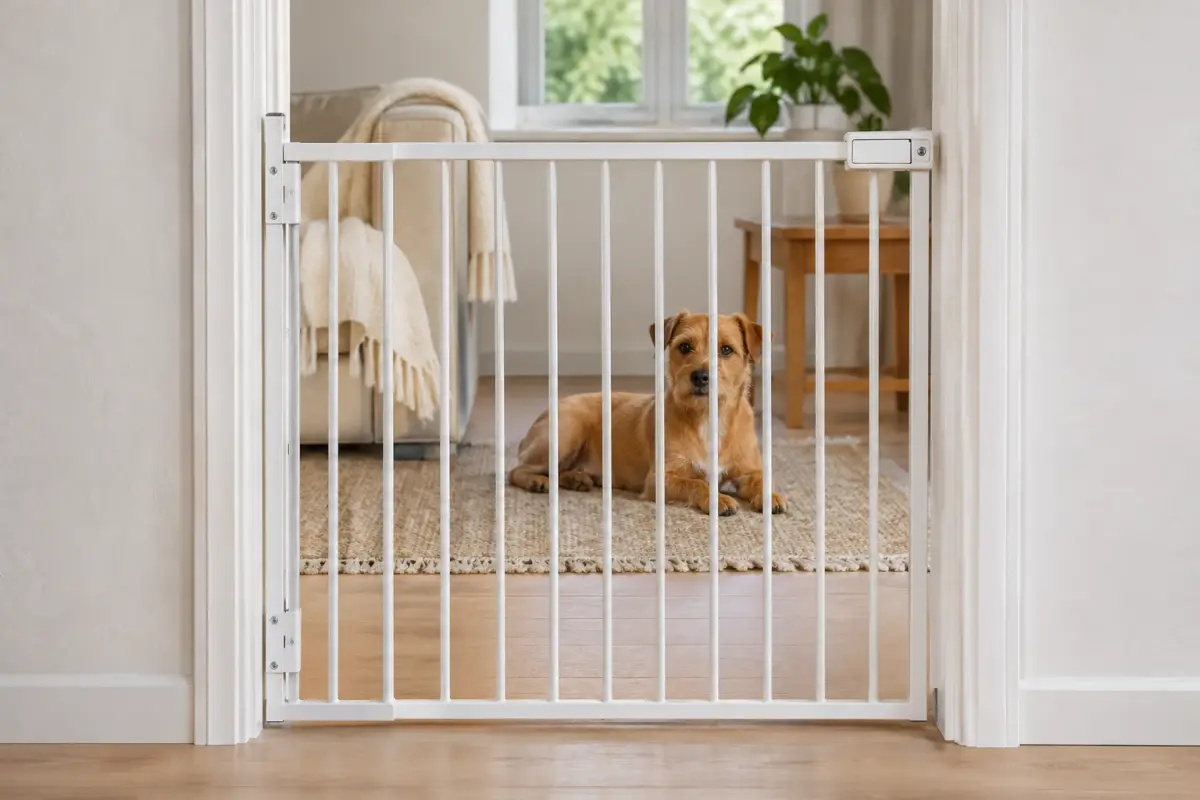
The best dog gate is tall enough that your dog cannot jump it, mounted the right way for the spot, and made from a material your dog cannot chew through. The AKC suggests about 20 inches for puppies and small dogs and at least 30 inches for larger dogs and jumpers. Use hardware-mounted gates at the top of stairs; pressure gates elsewhere.
By Matt GarnettUpdated November 10, 20263 min read2 sources
What matters most: height and mounting
Height first. The AKC says a 20-inch gate may be enough for puppies and small breeds, while bigger breeds and jumpers generally need a gate at least 30 inches high. Look at what is near the gate too, because a chair or sofa beside it can become a launch pad.
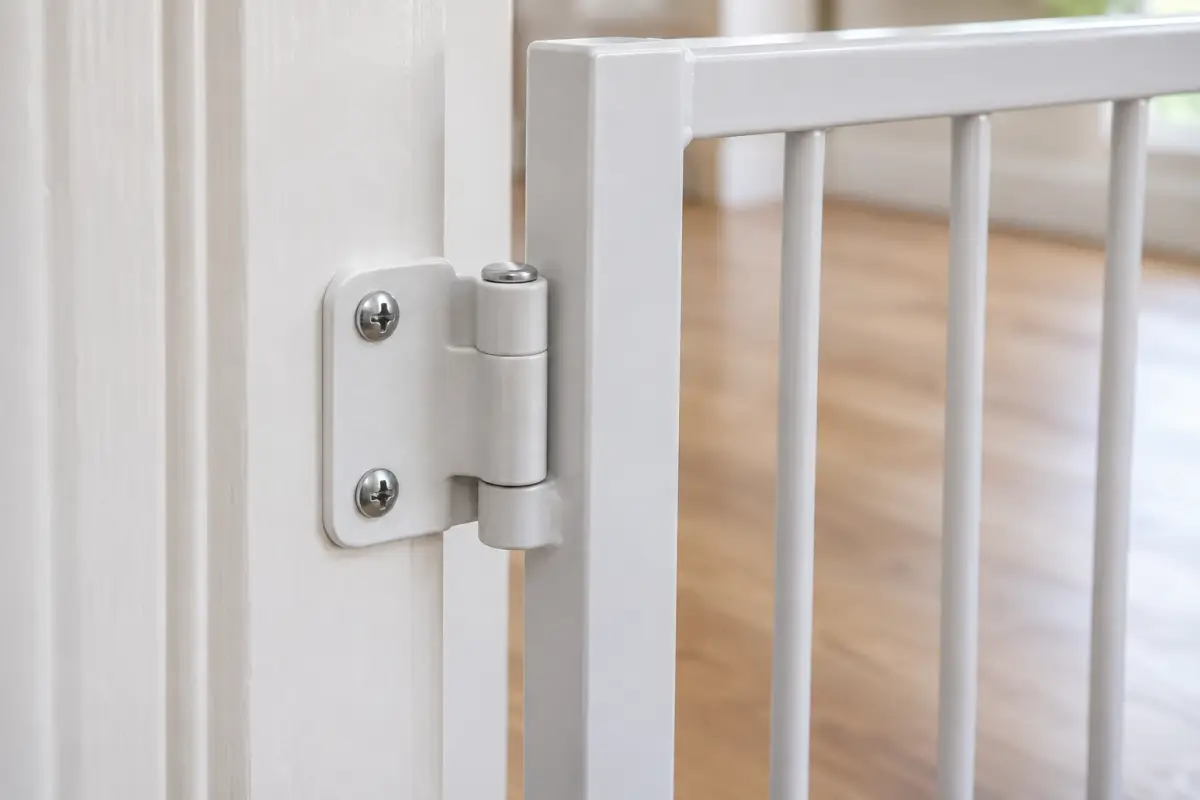
Mounting second, and it narrows the choice among any dog gates quickly. Pressure-mounted gates use tension against the frame, need no tools and suit renters, but the AKC says they are not recommended for the top of stairs. Hardware-mounted gates are screwed or bolted to the wall and are the best choice at the top of stairs and for strong or energetic dogs. Freestanding gates need no installation but are the least secure.
Gate types compared
Standard walk-through gates with a door let people pass without stepping over, which matters on stairs. Our guide to the best dog gate with a door goes deeper. Extra-tall gates suit athletic dogs, and an extra-tall gate with a door is one example. Extra-wide and configurable gates join panels to span wide openings, open-plan rooms or irregular spaces, usually hardware-mounted at each end for stability.
Retractable mesh gates roll away into a housing when not in use, which keeps doorways clear and suits wide openings. They are less resistant to chewing, scratching and pushing than rigid gates, so they suit calm dogs. Freestanding panels, such as a gray wooden pet fence, work as temporary barriers for dogs that respect them.
Best gate for each situation
For the top of stairs, a hardware-mounted metal gate that swings away from the stairs, with no trip bar across the floor. For a puppy, a gate with narrow bar spacing that a small head cannot pass through, sized for the adult dog. For a large or determined dog, heavy metal, hardware mounting and a height of 36 inches or more.
For wide openings, an extra-wide hardware-mounted gate or a configurable panel gate. For a doorway that must stay clear most of the day, a retractable gate for a calm dog. For keeping a dog out of a cat's area, a gate with a small pet door the cat can use. Our guide on how to introduce a cat to a dog covers the slower version of that setup.
How to measure for a dog gate
The AKC advises measuring the opening's width, then checking the gate's adjustable range and weight limit. Measure at the floor and at the height where the gate will mount, because older door frames are rarely square. Note baseboards, which can stop a pressure gate seating flat.
For stair gates, check there is solid wall or a banister to mount to, and buy the correct mounting kit for a banister. For extra-wide spans, add up the panel widths and check how many extensions the gate allows; each joint is a potential weak point.
Materials, latches and what to avoid
The AKC says metal is the most durable and chew-resistant, wood should have a pet-safe finish, and plastic is affordable but may fail against large or determined dogs. Choose a latch that is easy for people to operate but hard for a dog to nose open.
Avoid gates with horizontal bars a dog can climb, which the AKC warns serve as footholds, pressure gates at the top of stairs, and baby gates too short or light for your dog. If your dog panics behind a gate, injures itself trying to get through, or scratches the door, ask your vet or a trainer about separation stress. If a gate is not the right fit, our dog playpens give a contained space instead, and our dog gates cover the rest.
Gate layouts and opening access
| Layout | Physical arrangement | Check before installing |
|---|---|---|
| Walk-through | A door within a barrier | Door opening,latch and mounting |
| Extra-tall | A taller barrier | Actual height and climbable features |
| Configurable panels | Joined sections arranged across a space | Permitted layouts and end fixing |
| Retractable mesh | Fabric barrier rolls into a housing | Fixing points,maximum span and condition |
| Freestanding | Panels stand without end attachment | Base footprint and intended use |
Common questions
How tall should a dog gate be?
The AKC suggests about 20 inches for puppies and small dogs and at least 30 inches for larger dogs and jumpers. Go taller for athletic breeds.
What is the best dog gate for stairs?
A hardware-mounted metal gate with a walk-through door that swings away from the stairs. Pressure-mounted gates are not recommended for the top of stairs. Check it fits your banister or wall.
What is the best dog gate for wide openings?
An extra-wide or configurable panel gate, hardware-mounted at both ends. Check the maximum span and how many extensions the gate supports. Each extra panel adds a joint, so fix both ends firmly.
Are retractable dog gates good?
They keep doorways clear and suit calm dogs, but mesh is less resistant to chewing and pushing than metal. Use rigid gates for strong or determined dogs.
Sources we checked
This guide is general information, not veterinary advice. If your pet is unwell or injured, contact your veterinarian.


