






Buying guides
Safest Dog Car Seat: What Actually Protects a Dog in a Crash
The safest dog car seat is not really a seat: it is a restraint that has passed independent crash testing, such as a certified travel crate, carrier or harness, used in the back of the car. Booster and console seats keep a small dog contained and calm, but independent sled tests found typical designs did not hold a dog in a crash. Here is how to tell the two apart.
By Matt GarnettUpdated November 13, 20265 min read4 sources
What "safest" actually means for a dog in a car
A dog in a car faces two separate risks. The everyday one is distraction, a dog climbing onto the driver's lap. The rarer and far more serious one is a crash, where an unrestrained dog is thrown forward with enormous force. The AKC is plain about it: a dog should never ride on the driver's lap or loose in the car, and should travel in a crate or a crash-tested seat belt instead.
A product can solve the first problem without solving the second, and most car seats for dogs do exactly that. Everything in our dog car seats range is a comfort and containment product: it keeps a small dog in one place, gives them a view and keeps paws off the driver. None of it carries independent crash certification, and we would rather say so here than let a product name do the talking.
What independent crash certification means
In the United States the reference point is the Center for Pet Safety (CPS), a nonprofit that crash-tests pet travel products and accepts no funding from pet product manufacturers. Its certification is voluntary: a maker that joins commits to meet independently developed safety standards, to monitor quality control, and to keep its marketing truthful. The tests use specially built, weighted and instrumented test dogs, never live animals, and measure whether the restraint holds and how far the dog's head travels.
Certification currently covers three product types: safety harnesses, travel carriers and travel crates. Booster seats are not on that list. That matters, because the words "crash tested" on a box are the maker's own claim. When CPS crash-tested a group of car harnesses that were marketed with crash protection claims, only one of them performed well enough to offer real protection. Look for the certification itself, and check the product is listed on the CPS site.
Booster seats, console seats and carriers compared
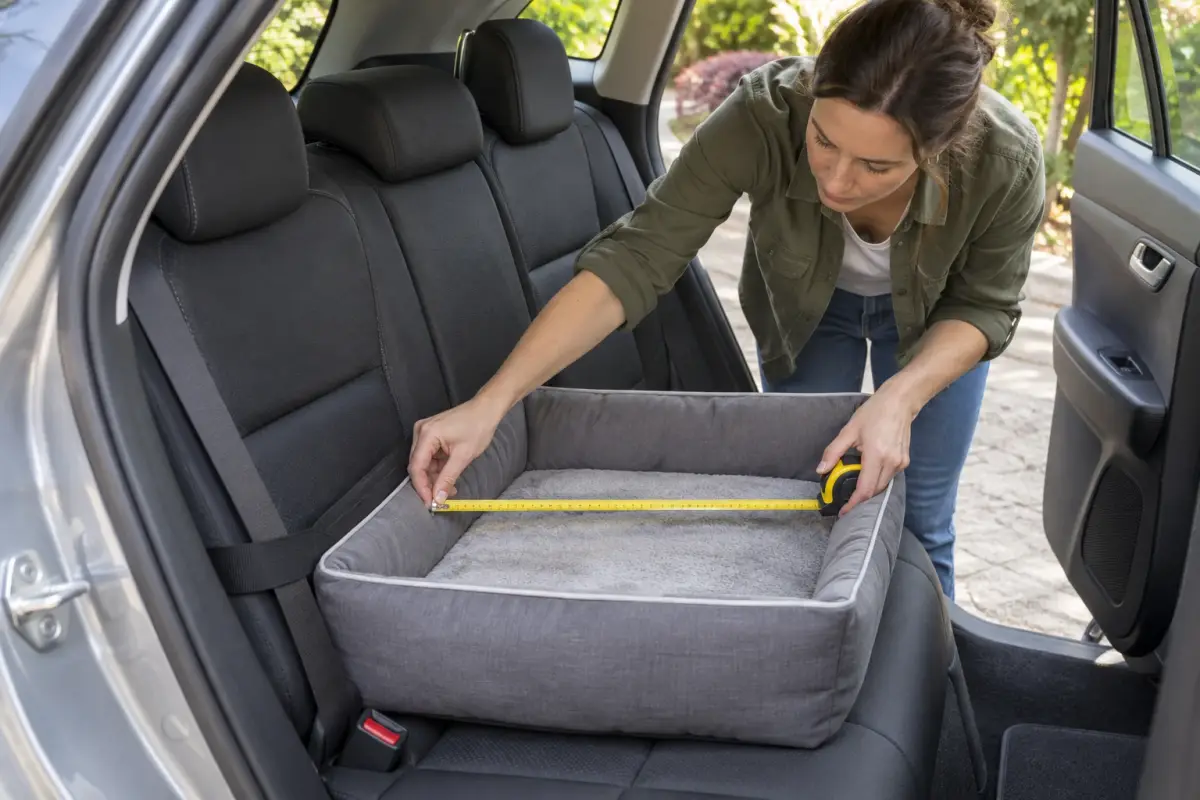
A booster seat is a padded box or basket that straps around the car seat and raises a small dog so they can see out. A console seat does the same on the armrest between the front seats. In a 2015 pilot study, CPS sled-tested several booster, console and travel seats with 25 and 30 lb test dogs. Anchor straps and plastic buckles broke, one seat rolled onto its side, and one seat came loose entirely. CPS describes these seats as tools that hold or raise a pet but do not offer full containment.
That does not make them useless; it makes them containment, not protection. A padded car seat bed or a kennel-style car seat with a cushion suits a calm small dog on short, everyday trips, clipped by a short tether to a harness. A soft-sided car seat kennel adds walls that help a dog settle. For real crash protection, a certified carrier or crate is the step up.
The safest setup for each dog
For a dog under about 20 lb, the most protective option is a certified carrier, secured as its maker directs, usually on the back seat floor behind a front seat or belted in the rear. If you use a booster seat for short local trips, put it in the back, use a harness rather than a collar, and keep the tether short enough that the dog can sit and lie down but not reach the edge.
For medium and large dogs, the choice is a certified crate secured in the cargo area, or a certified harness with a short connection to the car's belt system on the back seat. The AKC notes that a seat belt makes sense when the car is too small for a properly sized crate, and suggests using the child locks so a dog cannot paw a door open. Two dogs need two restraints, never one shared tether.
What to avoid
Never attach any car tether to a collar: in a sudden stop all the force lands on the neck. Avoid long extension tethers and zipline-style setups, which CPS found increase the risk of injury because they let the dog travel too far before the line stops them. Keep dogs out of the front seat, where CPS warns an airbag can deploy into them, and never let a dog ride loose or tethered in the bed of a pickup truck.
Be wary of vague claims. A product that says "crash tested" without naming who tested it, to what standard, or at what dog weight is telling you very little. If your dog rides on the seat itself, the next question is the harness and tether: see our dog seat belts and car harnesses, which are short restraints that clip to a harness, not crash-certified equipment.
How to fit and check a car restraint
Weigh your dog and measure the chest at its widest point before buying anything. Check the weight rating on a seat, carrier or harness and stay well inside it. A booster seat should sit flat on the car seat with its straps snug around the seat back, and should be large enough for your dog to lie down and turn around without hanging over the edge.
Check webbing, stitching and buckles every few months, and replace any restraint that has been through a collision, even if it looks fine. When comfort and containment are the goal, browse our dog car seats; for a wider look at seats, harnesses and crates side by side, our guide to the best dog car seat covers each type.
Common questions
What is the safest way for a dog to ride in a car?
In the back of the car, in an independently crash-certified crate, carrier or harness, secured exactly as the maker directs. A dog should never ride loose, on a lap, in the front seat or in a pickup bed.
Are dog booster seats safe in a crash?
Not as a rule. In Center for Pet Safety sled tests, booster, console and travel seats lost straps or buckles, and one came loose entirely. Treat a booster seat as containment and comfort, not crash protection.
What does crash tested mean on a dog car seat?
On its own, only that the maker says it ran some kind of test. Independent certification, such as the Center for Pet Safety program, means the product met a published standard tested by someone other than the maker.
Can my dog ride in the front seat?
It is best not to. A deploying airbag can seriously injure a dog, and the front of the car takes the most intrusion in a frontal crash. Keep dogs in the back seat or a secured crate in the cargo area.
Is a crate or a seat belt harness safer for a dog?
Either can work when it is independently certified and secured properly. A crate in the cargo area suits larger cars and dogs that settle in one; a short harness restraint suits cars too small for a properly sized crate.
Sources we checked
This guide is general information, not veterinary advice. If your pet is unwell or injured, contact your veterinarian.


