






Care & how-to
Dog Anxiety in the Car: Signs and How to Help
Dogs get anxious in the car for two overlapping reasons: fear of the car itself or where it usually goes, and motion sickness, which makes rides feel awful. Common signs are whining, panting, drooling, trembling, pacing, lip licking and vomiting. Most dogs improve with short, rewarding practice sessions that start with the parked car, plus a secure crate or harness. Ask your vet about motion sickness or travel anxiety that does not ease.
By Matt GarnettUpdated November 13, 20263 min read2 sources
Signs of car anxiety in dogs
Before the trip, an anxious dog may hide, refuse to jump in, or freeze at the car door. During the ride, look for panting, whining, howling or barking, pacing or trying to climb into the front, trembling, yawning and lip licking, heavy drooling and vomiting. Some dogs go very still and stare.
If drooling and vomiting happen mostly once the car is moving, motion sickness is likely part of the problem. If your dog is upset before the engine starts, fear of the car is in play. Many dogs have both, because feeling sick in the car teaches them to dread it.
Why some dogs dread car rides
Puppies often get carsick because the balance system in the inner ear is still developing, and many grow out of it, though some stay anxious because rides felt bad. A dog whose car trips nearly always end at the vet or groomer may learn that the car predicts something unpleasant.
Other dogs simply have little car experience, or had a frightening moment such as a sudden stop. The noise, vibration and moving scenery can be overwhelming for sensitive dogs. Knowing which of these fits your dog helps you plan.
Retraining car rides step by step
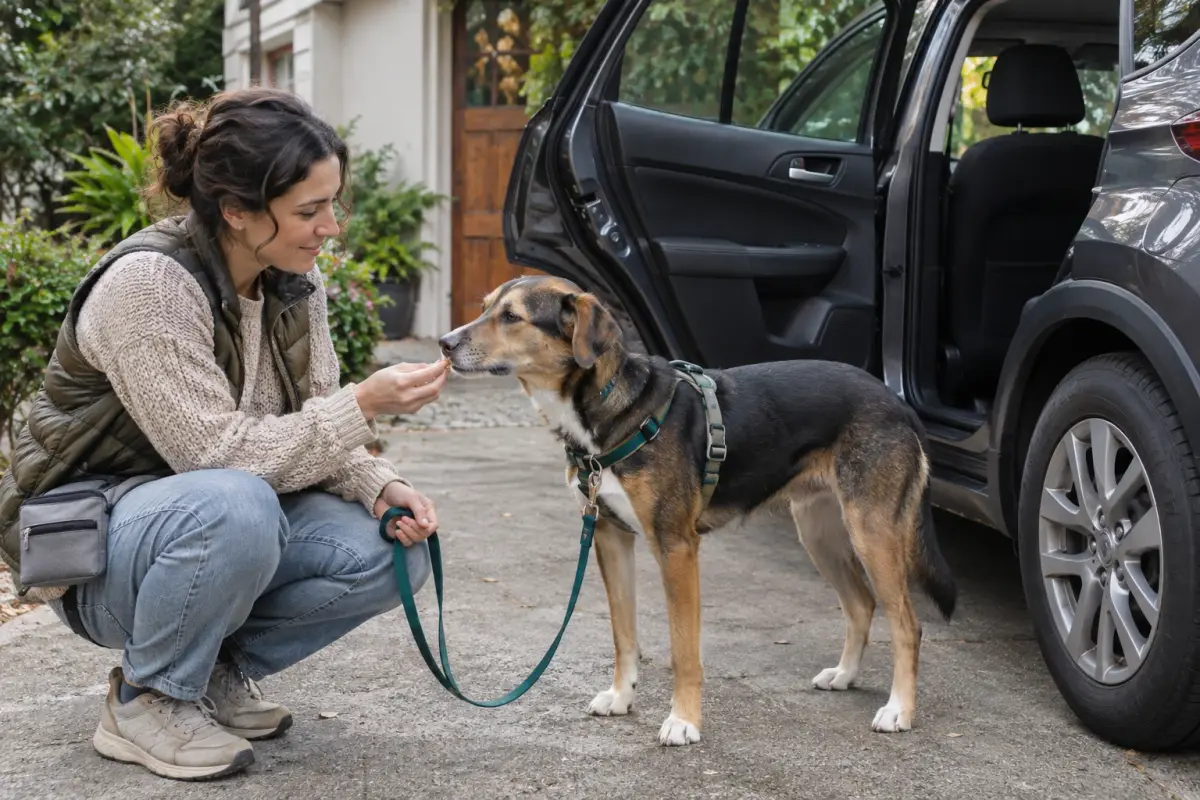
Step 1: Make the parked car good. Walk to it, give a treat, walk away. Then open a door and toss treats inside. Step 2: Let your dog climb in and eat a meal or chew in the car with the engine off and doors open. Step 3: Close the doors, sit in the driver's seat, then start the engine and turn it off again, rewarding calm each time.
Step 4: Drive to the end of the driveway and back. Step 5: Take very short trips to somewhere fun, such as a park or a sniffy walk, and slowly lengthen them. If your dog stops eating or shows stress, go back a step. Balance any vet trips with plenty of fun ones.
Making each trip easier
Secure your dog in a well-ventilated crate strapped in place or a crash-tested harness clipped to the seat belt, in the back seat. A secure dog is safer and often calmer, and cannot distract you or escape through a door. Face it forward where possible, and keep the car cool with some fresh air. When choosing gear for the back seat, a dog travel crate or, for a smaller dog, a dog car seat gives your dog a defined place to settle.
For dogs prone to motion sickness, skip food for a few hours before a trip and take a short walk first. A favorite blanket or a dog-appeasing pheromone spray in the crate may help. Never leave a dog in a parked car in warm weather; temperatures inside rise dangerously fast even with the windows cracked.
When to talk to your vet
Call your vet if your dog vomits on most trips, is distressed even on very short drives, or if you have a long journey or move coming up. Your vet can treat motion sickness and may discuss an anti-anxiety medicine for travel, which should be tested at home before the trip.
Do not give human motion sickness or allergy medicines without your vet's advice, as some contain ingredients that are harmful to dogs.
This page is general information, not veterinary advice, and it cannot replace an examination by the vet who knows your pet.
Common questions
How do I calm my dog in the car?
Secure your dog in a crate or harness, keep the car cool, play quiet music, and start with very short, rewarding trips to fun places. Retrain gradually from the parked car if your dog is very anxious.
Is my dog anxious or carsick in the car?
Distress before the car moves points to anxiety, while drooling and vomiting once moving suggest motion sickness. Many dogs have both. Your vet can help with motion sickness.
Do dogs grow out of car anxiety?
Puppies often outgrow motion sickness as they mature, but the fear can stay if rides keep feeling bad. Positive practice trips help most dogs improve.
Can I give my dog something for car anxiety?
Only what your vet recommends. Your vet can prescribe motion sickness or travel anxiety medicine. Human products may contain ingredients that are dangerous for dogs.
Sources we checked
This guide is general information, not veterinary advice. If your pet is unwell or injured, contact your veterinarian.


