






Buying guides
Best Dog Car Seat or Seat Belt Harness: How to Choose
The safest way for a dog to ride is in a crash-tested restraint: a secured crate or carrier, or a crash-tested seat belt harness that clips into the car's own belt with a short tether. Booster seats keep small dogs contained and comfortable, but only a crash-tested design adds real protection. Never attach a car tether to a collar.
By Matt GarnettUpdated November 14, 20264 min read2 sources
Why restraint matters more than comfort
An unrestrained dog is a hazard in two ways. The AKC points out that a loose dog can climb into the driver's lap, block the pedals or distract you at the worst moment, and in a sudden stop or crash it can be thrown into the windshield or injured by an airbag. A restraint that holds the dog in place protects both the dog and everyone else in the car.
The AKC advises that dogs ride either in a crate or secured with a crash-tested seat belt, and recommends equipment tested for canine safety, pointing to certification by the Center for Pet Safety. Because there is no mandatory federal standard for pet restraints, a label saying tested or safety can mean very little. Look for independent crash-test certification, not marketing words. Our guide to the safest dog car seat goes further into what to look for.
The main types compared
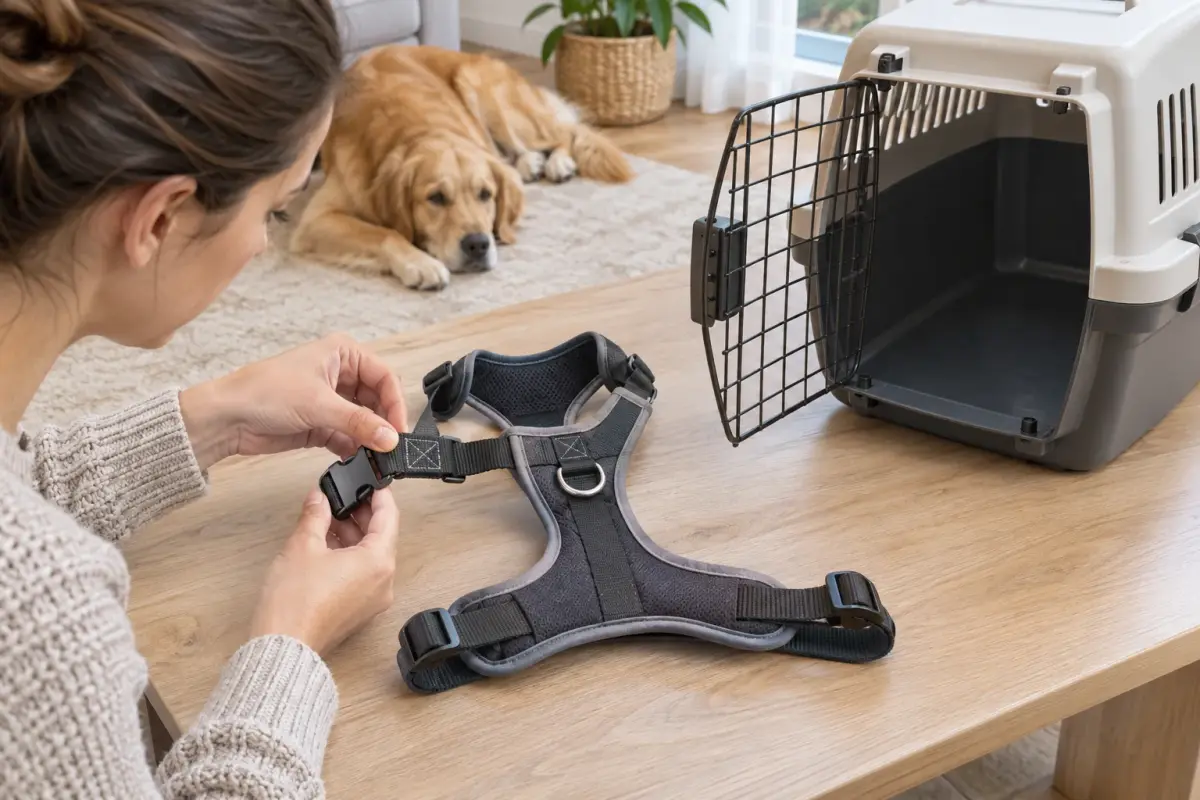
Seat belt harnesses are padded harnesses with a broad chest plate, attached to the car's seat belt or a seat anchor by a short tether. The best crash-tested versions spread force across the chest and keep the dog on the seat. They suit medium and large dogs and take up little room. Avoid long tethers: in crash coverage of Center for Pet Safety testing, long tethers let dogs be launched off the seat before the restraint caught them.
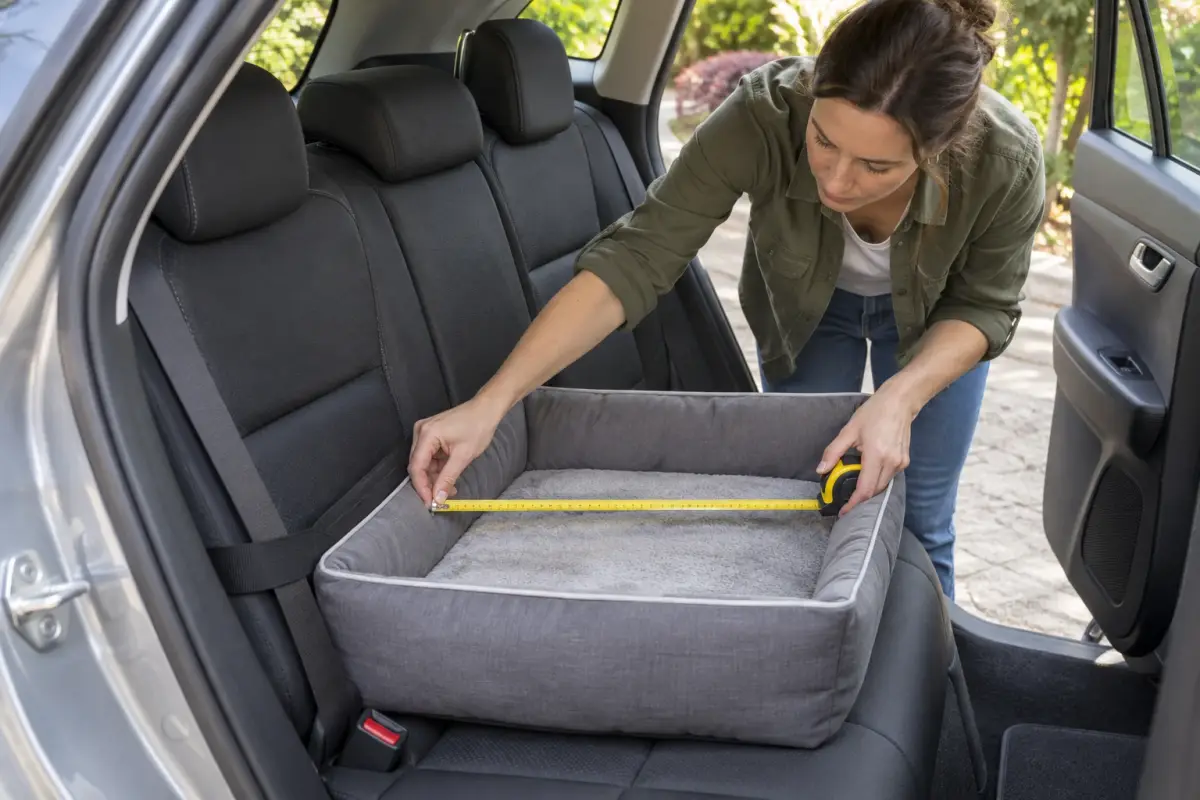
Booster seats are raised, padded boxes that strap to the seat and let small dogs see out. Most are comfort products; unless a booster is crash-tested, treat it as containment that stops roaming, not crash protection. Crates and hard carriers, strapped down or placed on the floor behind a front seat, are often the most protective option when they fit the vehicle and are secured so they cannot slide.
The best option for each dog
For dogs under about 20 lb, a crash-tested carrier secured with the seat belt, or placed on the floor behind a front seat, is a strong choice. A booster seat with a short tether to a harness keeps a small dog calm and contained on everyday trips. For medium dogs, a crash-tested seat belt harness or a crate secured in the cargo area both work well.
For large dogs, a crash-tested harness or a strong crate anchored in the cargo area is the realistic option, because few boosters fit them. For anxious dogs, a covered crate often settles them better than a harness. For long road trips, a crate the dog already uses at home is familiar and comfortable. Train first: the AKC suggests getting your dog comfortable with its crate or harness at home before the first drive.
Sizing and fitting
A seat belt harness should fit like a walking harness: snug, with two fingers under the straps of a large dog, and the chest plate centered on the breastbone. Adjust the seat belt tether so the dog can sit and lie down but cannot reach the front seats, the window or the footwell. Most guides suggest attaching to the back seat, away from front airbags.
A booster or carrier should let the dog stand, turn and lie down, with a tether that clips to a harness, never a collar, which could injure the neck in a sudden stop. A crate should be just large enough to stand and turn in; extra space lets a dog be thrown around inside it. Measure the car's footwell or cargo area before buying.
What to avoid, care and lifespan
Avoid letting a dog ride in the front seat, on a lap, in an open pickup bed or with its head out of the window, which the AKC warns against. Avoid zip lines and long tethers, clipping a restraint to a collar, and any booster that hooks over the headrest without strapping firmly to the seat. Never leave a dog in a parked car, even with the windows cracked.
Inspect harness stitching, buckles and tethers regularly and replace any restraint that has been through a crash, even if it looks undamaged. Wash removable covers on dog car seats following the label. If your dog is anxious or carsick, the restraint will help keep it safe, but ask your vet about the underlying problem rather than leaving it loose to settle.
Car containment and restraint formats
| Format | Physical arrangement | Evidence to verify |
|---|---|---|
| Vehicle harness | A body harness connects to the vehicle | Model-specific restraint tests and approved attachment route |
| Booster seat | A raised padded box fixed to the seat | Whether it is comfort containment or independently tested restraint |
| Crate or hard carrier | A rigid enclosure occupies vehicle space | Vehicle fit and exact securing instructions |
Common questions
What is the safest way for a dog to ride in a car?
In a crash-tested crate or carrier that is secured so it cannot slide, or in a crash-tested seat belt harness with a short tether, ideally in the back seat away from airbags.
Are dog booster seats safe?
Booster seats keep small dogs contained and comfortable, but most are not crash-tested. Use one with a short tether clipped to a harness, never a collar, and look for independent crash-test certification.
Do dog seat belts work?
A crash-tested seat belt harness with a short tether can keep a dog on the seat in a sudden stop. Untested harnesses and long tethers may fail, so check for independent certification before buying.
Where should a dog sit in the car?
In the back seat or a secured cargo area, restrained by a crate, carrier or crash-tested harness. The front seat exposes a dog to airbags and lets it distract the driver.
Sources we checked
This guide is general information, not veterinary advice. If your pet is unwell or injured, contact your veterinarian.


