






Care & how-to
Road Trip With a Dog: Planning Dog-Friendly Vacations
The safest way to take your dog on a road trip is secured in the back seat, either in a well-ventilated crate fixed in place or in a harness clipped to the seatbelt. The AKC warns that a loose dog can become a projectile in a sudden stop. Pack food, water, records and familiar toys, stop every few hours, and never leave your dog alone in a parked car. Plan dog-friendly stops and lodging before you go.
By Matt GarnettUpdated November 14, 20264 min read3 sources
How to secure your dog in the car
A crate is the safest option in a car, according to the ASPCA, as long as it is well ventilated, large enough for your dog to stand, sit, lie down and turn around, and secured so it cannot slide or tip in a sudden stop. Wedge it in place or strap it down in the cargo area or back seat. Never put a crate or a dog in the front passenger seat with an airbag.
If you do not use a crate, put your dog in the back seat in a harness attached to a seatbelt, as both the AKC and ASPCA suggest. Clip the belt to a harness, never to a collar, which could injure the neck in a crash. Practice with the harness or crate at home before the trip so your dog is relaxed in it. Browse dog travel gear for the extras a road trip calls for.
Do dogs need a seatbelt, and can a dog ride on your lap?
A dog loose in a moving car or on the driver's lap is a danger to everyone in it. The AKC points out that in a sudden stop or crash, an unrestrained dog can become a flying projectile, and a dog on your lap can block the steering wheel or end up between you and the airbag. A restraint protects your dog and your family.
Rules on restraining pets while driving vary by state, and in some places a dog on the driver's lap can count as distracted driving. Check the laws in every state on your route. Whatever the law says, the ASPCA also advises against letting your dog ride with its head out of the window.
What to pack for a road trip with your dog
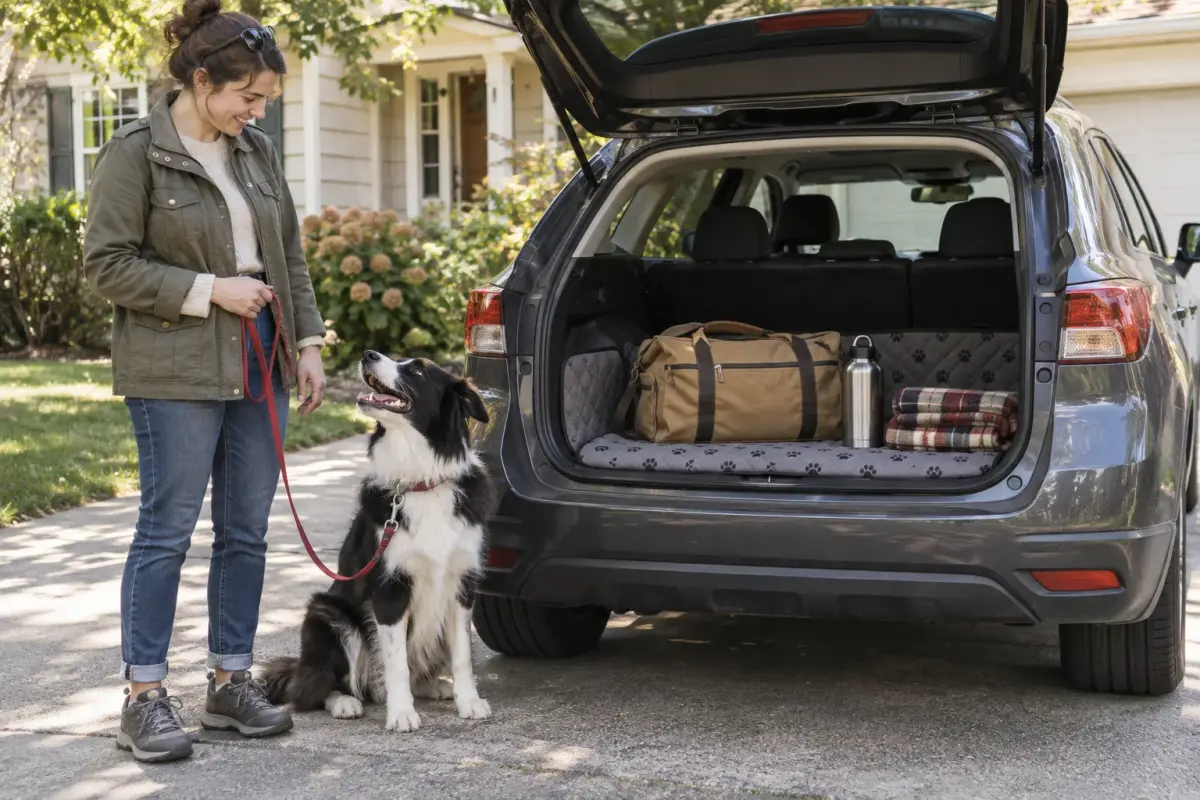
The AKC suggests packing several days' worth of your dog's usual food, collapsible bowls, a leash, poop bags and a few new and familiar toys, including a stuffed puzzle toy to keep them busy. Bring plenty of water: the AKC suggests asking your vet about using bottled water on the road, and how to handle an upset stomach.
Carry paperwork too: a recent photo of your dog, vaccination records including rabies, and a collar with ID tags. For longer trips, the AKC recommends a second tag with your destination and phone number. The ASPCA adds any medicines, a basic pet first aid kit and a familiar blanket or pillow. A pet back seat cover from our dog car seat covers collection keeps hair and mud off the upholstery.
Feeding, breaks and the drive itself
Give a light meal 3 to 4 hours before you leave, and avoid feeding in a moving car, as the ASPCA suggests. Build up to long drives with short trips first if your dog is new to the car. Stop every couple of hours for a short walk on leash, water and a bathroom break, and always clip the leash on before opening the car door.
Keep the car cool, with air conditioning in summer, and keep your dog out of direct sun through the windows. The AKC suggests teaching your dog to relieve itself on different surfaces such as gravel, mulch and concrete before the trip, because rest areas rarely have nice lawns.
Never leave your dog alone in the car
The ASPCA is blunt about this: never leave your animal alone in a parked vehicle. In warm weather, heat inside a car can cause heat stroke quickly, even with the windows cracked, and in cold weather a car can be fatal too. In several states, leaving a pet in a hot car is also illegal.
Plan stops around your dog. Choose drive-through food, rest areas with shaded walking spots and restaurants with dog-friendly patios. If you are traveling with another adult, take turns going inside so someone always stays with the dog, with the engine and air conditioning running.
Dog-friendly vacations and lodging
Check pet policies before you book: fees, size and number limits, and whether dogs can be left alone in the room. The AKC suggests puppy-proofing a rental or hotel room on arrival, checking for cords and anything harmful on the floor or under the furniture. Look up the nearest 24-hour emergency vet at each stop and save the number in your phone with your regular vet's.
A calm owner usually has a calm pet, the AKC notes, so build in time for walks and rest. If the trip includes camping, a dog tent with a carry bag is one option from our dog travel range. If your dog gets car sick or anxious, talk to your vet before the trip.
This page is general information, not veterinary advice, and it cannot replace an examination by the vet who knows your pet.
| When | What to check for an overnight stop |
|---|---|
| Before booking | Confirm the pet fee, size and number limits, and whether your dog may stay in the room without you. |
| Before leaving home | Save the lodging address and the nearest 24-hour veterinary clinic’s phone number for each overnight stop. |
| On arrival | Check the floor and under furniture for dropped items, and move accessible cords before letting your dog explore. |
Common questions
Is it illegal to drive with a dog on your lap?
It depends on the state. Some treat it as distracted driving and a few have specific pet restraint rules. Check every state on your route, and keep your dog restrained in the back seat whatever the law says.
How often should I stop on a road trip with a dog?
Every couple of hours is a good rhythm for most adult dogs, with a leashed walk, water and a bathroom break. Puppies, seniors and dogs with health conditions may need more frequent stops.
Where should my dog sit in the car?
In the back seat, in a secured crate or a harness attached to a seatbelt. Never in the front passenger seat, where an airbag can seriously injure a dog.
Sources we checked
This guide is general information, not veterinary advice. If your pet is unwell or injured, contact your veterinarian.


