






Buying guides
Best Airline Approved Dog Crate: What the Rules Require
No crate is approved by every airline, so the best airline approved dog crate is one that meets the federal enclosure rules and your specific airline's size chart. Look for a strong, leak-proof crate with ventilation on several sides, handles, and room for your dog to stand, turn and lie down. Small dogs may fly in a cabin carrier instead.
By Matt GarnettUpdated November 14, 20265 min read2 sources
Crate or carrier: which one are you actually buying?
The first decision is size, not brand. According to the AKC, small dogs may travel in the cabin, where the dog and carrier together usually come in under 20 pounds and the carrier must fit under the seat in front of you. Larger dogs typically travel as cargo, where the dog and crate together usually fall between 70 and 150 pounds depending on the airline.
That split matters because the products are different. A cabin carrier is soft or semi-soft and squeezes under a seat; a cargo crate is a rigid kennel. This guide covers the rigid crate. If your dog is small enough for the cabin, read our guide to the best airline-approved dog carrier instead, and browse airline-approved dog carriers.
What the federal enclosure rules require
Airlines carrying dogs must follow U.S. Department of Agriculture animal welfare rules, and 9 CFR 3.15 is the source for the crate standards. The enclosure must be strong enough to contain the animal and withstand normal transport, with no sharp points, edges or protrusions inside, and any paint or material must be nontoxic. Air shipments are limited to one adult dog or cat, six months or older, per enclosure.
It must also have a solid, leak-proof bottom, or a removable leak-proof tray under a slatted or mesh floor, and exterior handles or handholds that let it be lifted without tilting and keep handlers' hands away from the animal. The top and at least one side must be marked "Live Animals" in letters at least 1 inch high, with arrows showing which way is up.
Ventilation: the number that sorts good crates from bad
The rules give three ways to ventilate. With openings on two opposing walls, each wall needs openings covering at least 16 percent of its surface and total openings must cover at least 14 percent of all walls combined. With three walls, the two opposing walls need at least 8 percent each and the third wall at least 50 percent. With four walls, each needs at least 8 percent. In every case at least one-third of the ventilation area must be in the upper half.
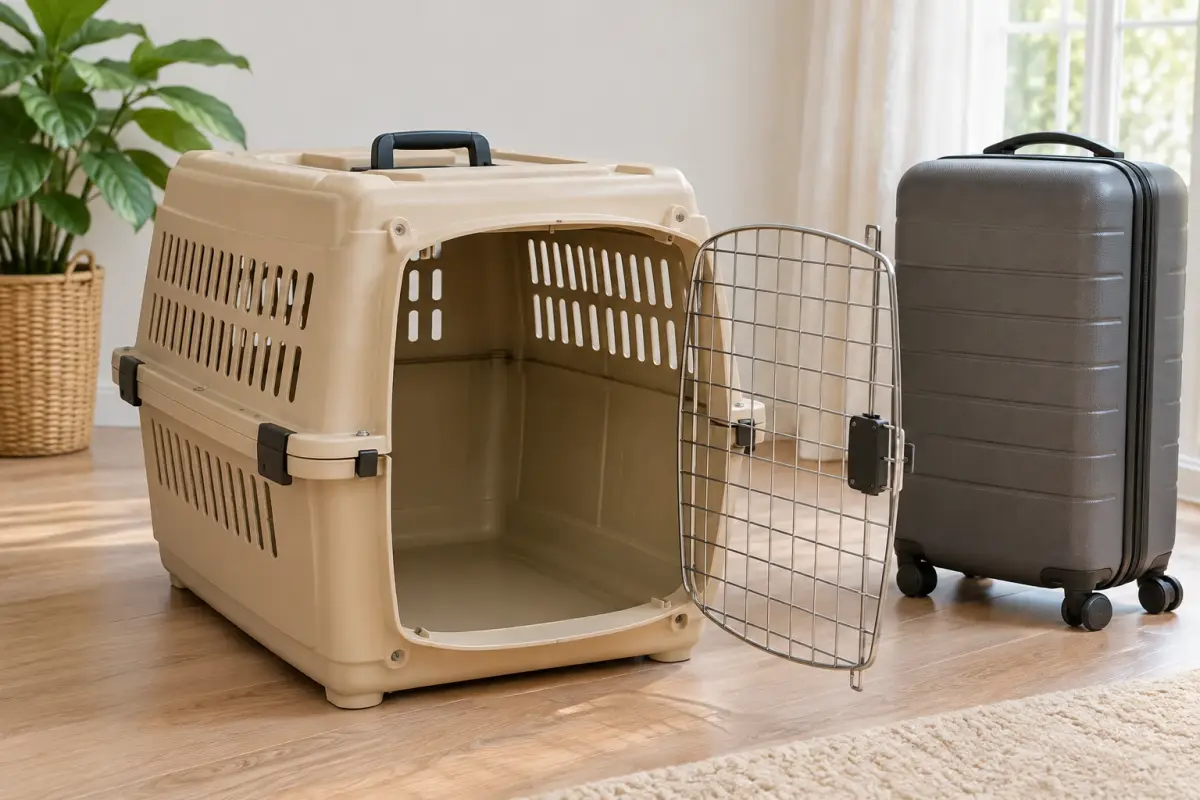
In practice, a crate with vents on all four sides and a wire-mesh door is the easiest to defend. Projecting rims or knobs must leave at least 0.75 inch of air space between the crate and any surface, so check that the vent openings are not blocked by the design. A plastic kennel with vents only on the door and one side may not meet these numbers.
Sizing: room to stand, turn and lie down
The federal standard for size is behavioral: each animal must be able to turn about normally while standing, stand and sit erect, and lie in a natural position. The AKC says the same for carriers. The crate should be large enough that your dog can do all of these without crouching or touching the ceiling.
Use the manufacturer's size chart with your dog's measurements rather than guessing by breed, and then check the airline's own maximum crate dimensions and weight limit. Airlines vary, and a crate that fits one carrier's cargo hold may be too tall for another's. Buying the largest crate you can find is a mistake, because it may exceed the airline's limit.
Best crate type for each situation
For a first flight with a dog that is already crate-trained, a rigid plastic kennel with four-sided ventilation and a metal door is the standard choice. For dogs that chew or push at doors, look for a sturdy metal door and strong hardware rather than a plastic latch alone. Heavy-duty crates that add weight can push the dog-plus-crate total toward an airline's limit, so check the weight too.
Wire crates and soft-sided bags are generally not suited to cargo, because the standards call for a strong enclosure that withstands transport. If your dog is small, a small pet carrier or a wheeled trolley carrier is a cabin option, and a breathable carrier backpack suits a small dog that you carry through the airport, though all of them still have to fit your airline's under-seat limit.
Before you fly: training, paperwork and weather
Introduce the crate weeks before the trip. The AKC recommends building a positive association with praise and treats, and getting your dog used to busy places. Book an appointment with your vet, who can check health, confirm vaccinations and issue a health certificate if the airline requires one. Airlines may also suspend cargo pet travel in extreme heat or cold, so choose flights with that in mind.
Fix an absorbent pad, secure the water dish according to your airline's instructions and tape the feeding and contact information to the crate. When you are ready to shop, browse our airline-approved dog crates and compare the vent layout, door and listed interior size against your airline's chart.
Common questions
What makes a dog crate airline approved?
There is no universal approval. A crate must meet federal enclosure standards for strength, ventilation, a leak-proof floor, handles and labeling, and then fit your airline's own size and weight limits. Always confirm with the airline.
What does IATA approved mean for a dog crate?
IATA is the trade body for airlines, and many airlines refer to its container guidance. Manufacturers use the label loosely, so treat it as a starting point and verify the actual vent layout and dimensions against your airline.
How big should an airline dog crate be?
Big enough for your dog to stand, sit erect, turn around normally and lie down naturally. Use the maker's size chart with your dog's measurements, then check the airline's maximum dimensions.
Can my large dog fly in the cabin?
Usually not. The AKC says larger dogs typically travel as cargo, because the dog and carrier together in the cabin usually come in under 20 pounds. Check your airline's policy for exceptions.
Do I need a health certificate to fly with my dog?
The AKC notes a health certificate is not always required for domestic travel, but airlines and destinations differ. Ask your vet and your airline well ahead, and carry current vaccination records.
Sources we checked
This guide is general information, not veterinary advice. If your pet is unwell or injured, contact your veterinarian.


