







Dogs
Dog crates
Cozy spots for long naps.
50 items picked for everyday life with your pet, with shipping estimates on every item.
 Their favorite place in the house.
All dogs beds & furniture →Dog blankets →Elevated dog beds →Dog couches & sofa beds →Dog cooling mats →Dog beds →Orthopedic dog beds →Dog houses →Dog mattresses →Donut dog beds →Dog couch covers →Dog crate beds →Dog steps for couch →
↗Tracked US shippingEstimates on every item↶Returns & refundsHow it works♡Here to helpTalk to Giddy Pets
Find their favorites
Shop dog crates by type
Choose a section to narrow the range.
All dog crates
Little essentials. Lots of love.


A little guidance
Help choosing dog crates
Buying guides and care advice written for this range: what to measure, what matters and what to skip.
From our guides
- Best Airline Approved Dog Crate: What the Rules Require →
- Best Crate for a Puppy: Size, Type and Divider Explained →
- Best Dog Crates: How to Choose the Right Type and Size →
- Best Plastic Dog Crates: What Matters Before You Buy →
- How Long Can a Dog Stay in a Crate? →
- Is Crate Training Cruel? What It Is and Isn't →
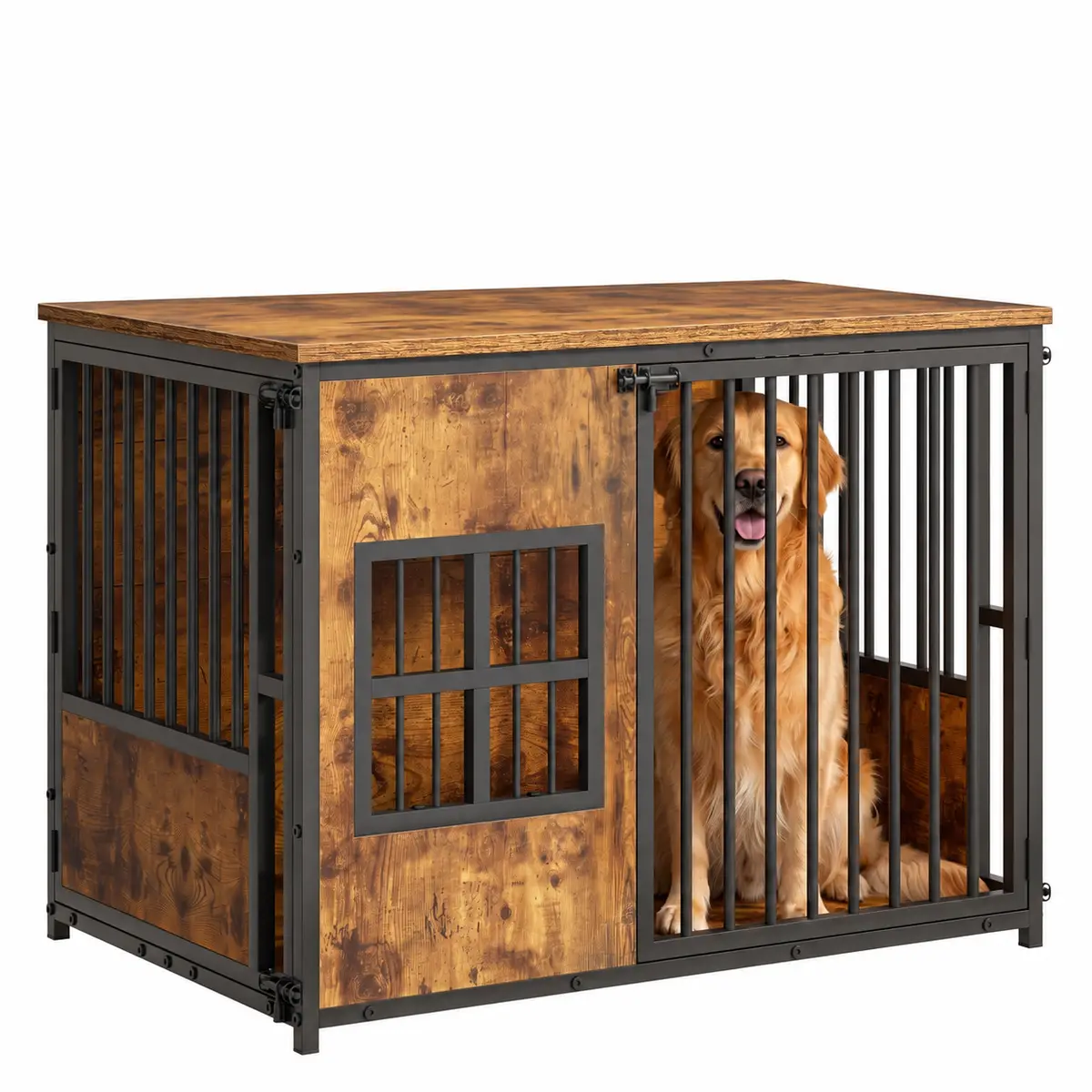
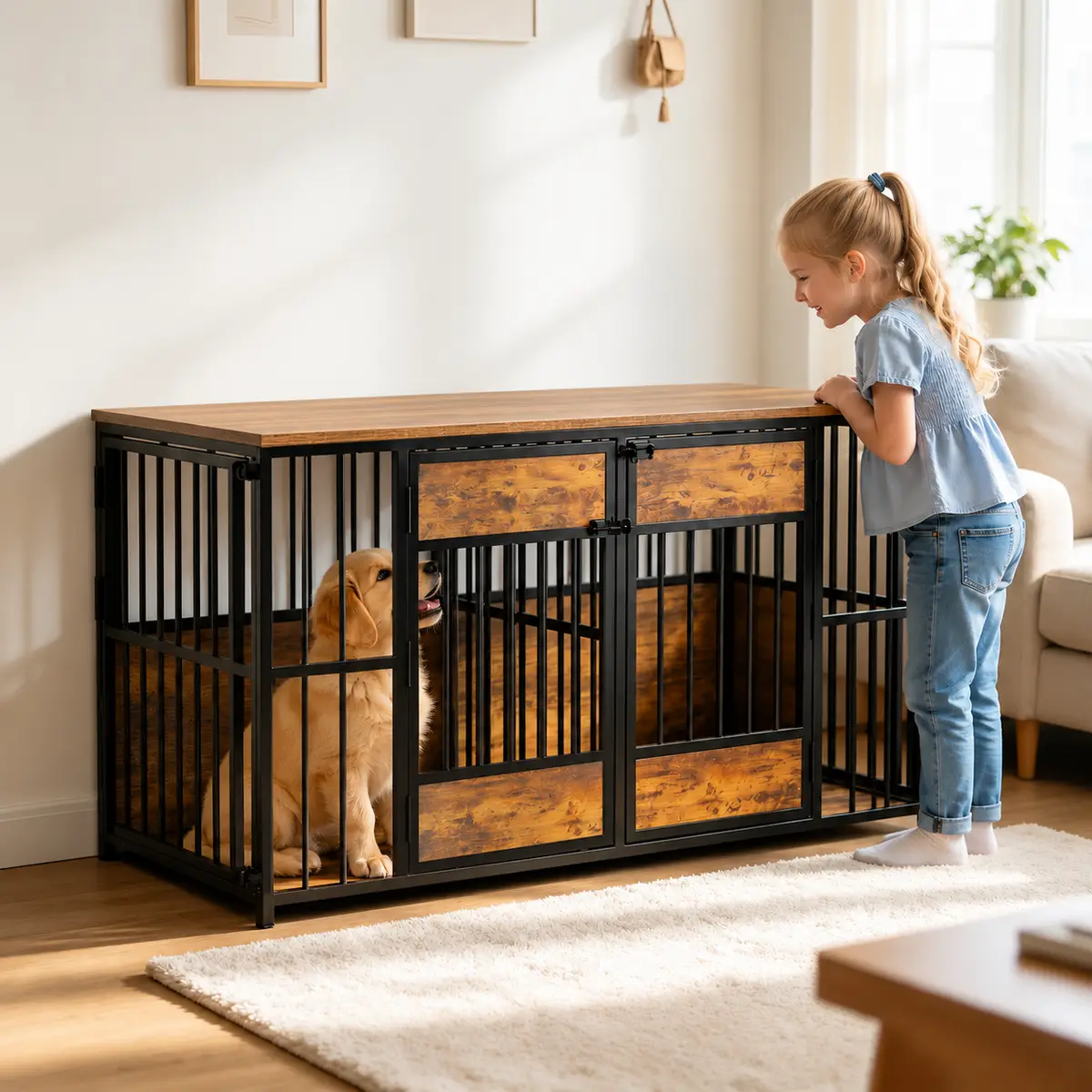
This page holds indoor dog crates: folding wire crates with one or two doors, and heavy-duty steel kennels with lockable wheels and removable trays for strong or escape-prone dogs. Sizes run from about 24 inches to 48 inches. It is for anyone crate training a puppy, giving an adult dog a safe den, or replacing a crate that a determined dog has outgrown or bent.
Folding wire crates and heavy-duty kennels
Folding wire crates are the everyday choice. They collapse flat for storage or a car trip, give good airflow and let the dog see out, and a two-door model can be placed in a corner or against a wall with whichever door suits the room. The American Kennel Club calls wire crates the sturdiest common type and the best fit for dogs that chew.
Heavy-duty crates are built from thicker steel tube with welded joints, double latches and often a flip-top or feeding door. Most sit on lockable casters so a heavy crate can be rolled for cleaning. They are meant for dogs that have broken out of a standard wire crate, paw at doors or chew bars, and they are heavier and do not fold as easily.
How to measure for a dog crate
Measure your dog standing. The American Kennel Club method is height from the top of the head to the floor and length from the tip of the nose to the tip of the tail, then add 3 to 4 inches to each figure. Compare that with the interior dimensions, which are usually an inch or two smaller than the listed outside size.
Your dog should be able to stand without ducking, turn around and lie flat on its side. Bigger is not better for house training, because a crate with room for a bed at one end and a toilet at the other undermines the whole idea. If your dog sits between two sizes, choose the larger one and use a divider panel to shorten it.
Common crate sizes by dog weight
Crate sizes are named by length in inches, and manufacturers publish weight ranges as a starting point. As a rough guide, 24-inch crates suit toy breeds up to about 20 lb, 30-inch crates small dogs to about 30 lb, 36-inch crates medium dogs to about 50 lb, 42-inch crates large dogs to about 80 lb, and 48-inch crates large and giant breeds beyond that.
Weight is only a proxy. A long, low dog may need more length than its weight suggests, and a tall, lean dog more height. Always finish with the tape measure. If you are buying for a puppy, buy for its expected adult size and add a divider, rather than buying two crates in six months.
Crate training basics
A crate works when the dog sees it as its own space. Start with the door open, feed meals inside, and drop treats in so the dog walks in on its own. Close the door for a few minutes while you are in the room, then build up time gradually. Never use the crate as punishment or leave a dog in it for most of the day.
Put a washable mat or crate pad inside and remove collars or tags that could catch on the bars. A cover over a wire crate makes it feel more like a den for some dogs. If your dog panics, injures itself on the door or chews the tray, stop and speak to your vet or a qualified trainer before trying a stronger crate.
Cleaning and placement
Every crate here has a removable floor tray, which slides out for washing. Wipe the bars and tray with warm soapy water, rinse and dry before putting bedding back. With heavy-duty models, lock the casters before the dog goes in so the crate cannot roll.
Place the crate somewhere the family spends time, away from direct sun, heating vents and drafts. Dogs settle better when they can see and hear people. A corner placement suits two-door crates well because the side door becomes the main entrance and the end door can face the wall.
What size dog crate do I need?
Measure nose to tail and floor to the top of the head while your dog stands, then add 3 to 4 inches to each. Check those numbers against the crate's interior, not its outside size.
Is a wire or heavy-duty crate better?
A folding wire crate suits most dogs and is easier to store and move. Choose a heavy-duty steel crate with double latches if your dog has bent bars, opened a door or chewed out of a standard crate.
Should a crate be big enough to walk around in?
No. Your dog should stand, turn and lie flat comfortably. Much more room than that lets a puppy soil one end, so use a divider until house training is reliable.
Why do some crates have two doors?
Two doors give you a choice of where the crate sits. You can tuck it into a corner or alongside furniture and still have an easy way in, which also helps in cars and small rooms.