






Buying guides
Best Plastic Dog Crates: What Matters Before You Buy
The best plastic dog crate is a well-ventilated one in the right size, with a secure latch, and an airline-approved build if you plan to fly. Plastic suits dogs that like an enclosed space, car trips and easy cleanup. It is a weak choice for dogs that chew. Browse our dog crates in every style, then use this guide to decide if plastic is the right one.
By Matt GarnettUpdated November 14, 20265 min read2 sources
What a plastic crate does well
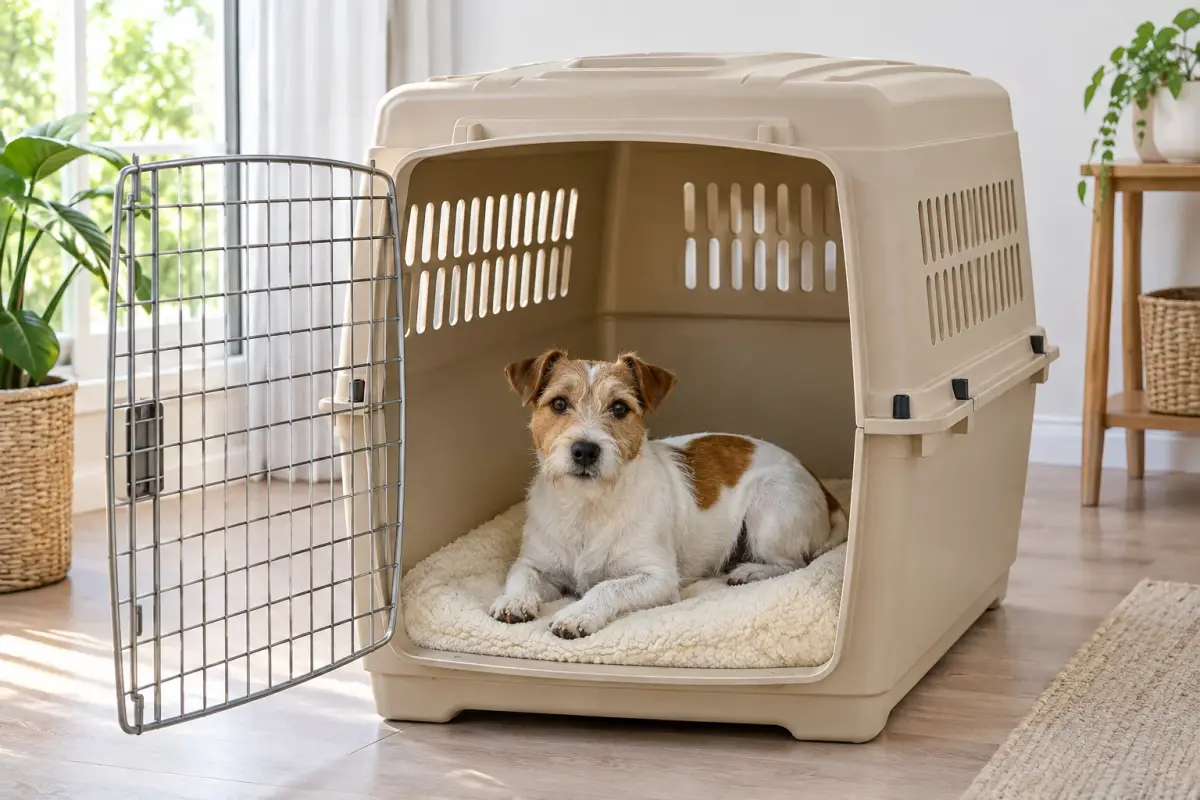
A plastic crate, often sold as a kennel or carrier, has solid sides with ventilation openings and a door at the front. The American Kennel Club notes that plastic crates are easy to clean, and that if you plan to fly with your dog you should pick one that is airline-approved. The solid walls also give a more enclosed, den-like feel than open wire, which suits dogs that settle better with less to look at.
That enclosure is also the trade-off. Wire crates give good air circulation and visibility, while a plastic crate relies entirely on its vents for airflow. Check how many openings it has and where they sit, because every crate needs ventilation holes or mesh so the dog can breathe properly. A crate is a place a dog may spend hours, so airflow matters more than a rugged look.
Plastic, wire and soft crates compared
Plastic is the all-rounder for travel and for dogs that want a cozy, closed space. A metal crate is the sturdiest option, and the AKC describes wire crates as the best choice for dogs that chew through other materials. A folding wire dog crate also gives the most visibility, and a fabric cover can add privacy if your dog wants it.
Soft crates sit at the other end. The AKC says they suit small dogs that will not chew them, and they fold flat for trips. If your dog is calm and small, a collapsible soft dog crate can be enough for visits and short stays, but it is a poor fit for a dog that scratches or mouths its walls. For a broader comparison of all the types, see our guide to choosing a dog crate.
How to size a plastic crate
Measure your dog standing. Take height from the top of the head to the floor and length from the tip of the nose to the base of the tail, then add 3 to 4 inches to each measurement, as the AKC advises. The crate should be large enough for your dog to stand up, turn around and lie down, and not much bigger than that.
Extra room is not a kindness. The AKC warns that a crate that is too large can let a dog eliminate at one end and sit away from the mess, which works against house training. Most plastic crates have no divider, so a growing puppy usually needs a wire crate with one, or a plastic crate bought for the size it fits now. Our crate size guide walks through the measurements step by step.
What to check before you buy
Look at the door and latch first. A plastic crate with a flimsy door is the weak point, and a dog that pushes at the door every night will find it. Check the hinges and the locking pins, and make sure the two halves of the shell snap or bolt together firmly, since that seam takes the stress when the crate is lifted.
Then check ventilation on several sides, not just the front, and look for a handle or carry points if you will move it. If flying is possible, confirm the crate is described as airline-approved and compare its dimensions with your airline's own size chart, because rules differ between carriers. Our airline approved crate guide covers what to confirm before you book.
Best crate for each situation
For a dog that rides in the car and flies occasionally, plastic is a sensible default, since it is easy to wipe clean and many models are built for travel. For a dog that likes a closed-in space at home, plastic gives the most den-like feel. A lightweight blanket draped over the crate can add to that, as long as the crate stays ventilated and does not overheat.
For a heavy chewer or a dog that panics in confinement, plastic is not the right tool. A heavy-duty metal dog crate is built for that job, and any dog that tries to escape needs a vet or trainer to look at the cause of the distress. For a puppy, start with a wire crate and divider, then consider plastic once the adult size is settled.
What to avoid and how to care for it
Avoid a crate that is much too big, one with few vents, and one with a cracked shell or a latch that does not close fully. Do not leave a dog crated all day. The AKC says puppies should not be crated all day and need several bathroom breaks, plus play and feeding times, and a good routine starts with 10-minute stints that grow gradually.
For care, wash the base and shell with warm soapy water, rinse well and let it dry fully before the dog goes back in. Inspect the plastic every few months for cracks, especially near the door and handle. If you want other styles to compare, browse our wire dog crates, or head back to our dog crates to see every option.
Crate body materials compared
| Body | Enclosure layout | Check separately |
|---|---|---|
| Plastic | A more enclosed rigid shell | Door,vents and inside dimensions |
| Wire or metal | Open bar panels | Bar condition,latches and any folding locks |
| Soft fabric | Fabric over a supporting structure | Zippers,frame and fabric damage |
Common questions
Are plastic or wire dog crates better?
Neither is better for every dog. Plastic is easier to clean and suits travel and dogs that like an enclosed space, while wire gives more airflow and visibility and is the stronger choice for dogs that chew.
What size plastic crate does my dog need?
Measure your dog's height standing and length from nose to base of tail, then add 3 to 4 inches to each. The crate should let your dog stand, turn around and lie down comfortably, and no more.
Can I use a plastic crate for flying with my dog?
Only if the crate is airline-approved and fits your specific airline's size and ventilation rules, which differ by carrier. Check with the airline directly before you book, and ask your vet about fitness to fly.
Is a plastic crate good for a dog that chews?
Usually not. A determined chewer can damage plastic and swallow pieces, so a heavy-duty metal crate is the safer choice. If chewing starts only when your dog is crated, talk to your vet about possible anxiety.
Sources we checked
This guide is general information, not veterinary advice. If your pet is unwell or injured, contact your veterinarian.


