






Buying guides
Best Dog Crates: How to Choose the Right Type and Size
The best dog crate is the right size first and the right type second. Measure your dog standing and add 3 to 4 inches to length and height. Then choose wire for airflow and a divider for a growing puppy, plastic for travel and dogs that like a den, soft-sided only for calm small dogs, and a heavy-duty metal crate for chewers.
By Matt GarnettUpdated November 14, 20264 min read2 sources
What matters most: size
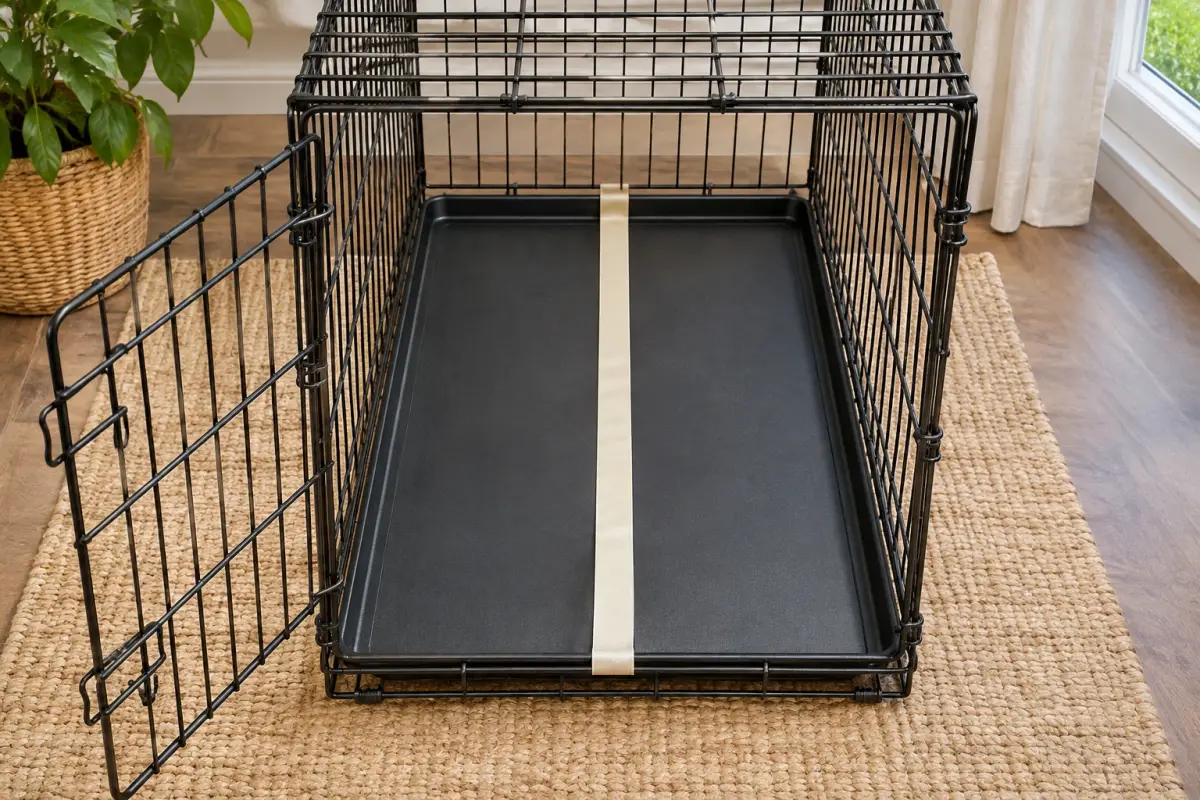
A crate should let your dog stand without ducking, turn around and lie flat on its side, and not much more. The AKC suggests measuring your dog standing, from the nose to the base of the tail and from the top of the head to the floor, then adding 3 to 4 inches to each. Choose by those measurements rather than by a weight range on the box.
Too small is uncomfortable; too large can undermine house training, because a dog may sleep at one end and eliminate at the other, which the AKC also notes. For a puppy, buy the crate for adult size and use a divider panel to shrink the space, moving it back as the puppy grows. Browse dog crates by size and type.
Wire, plastic, soft and heavy-duty crates compared
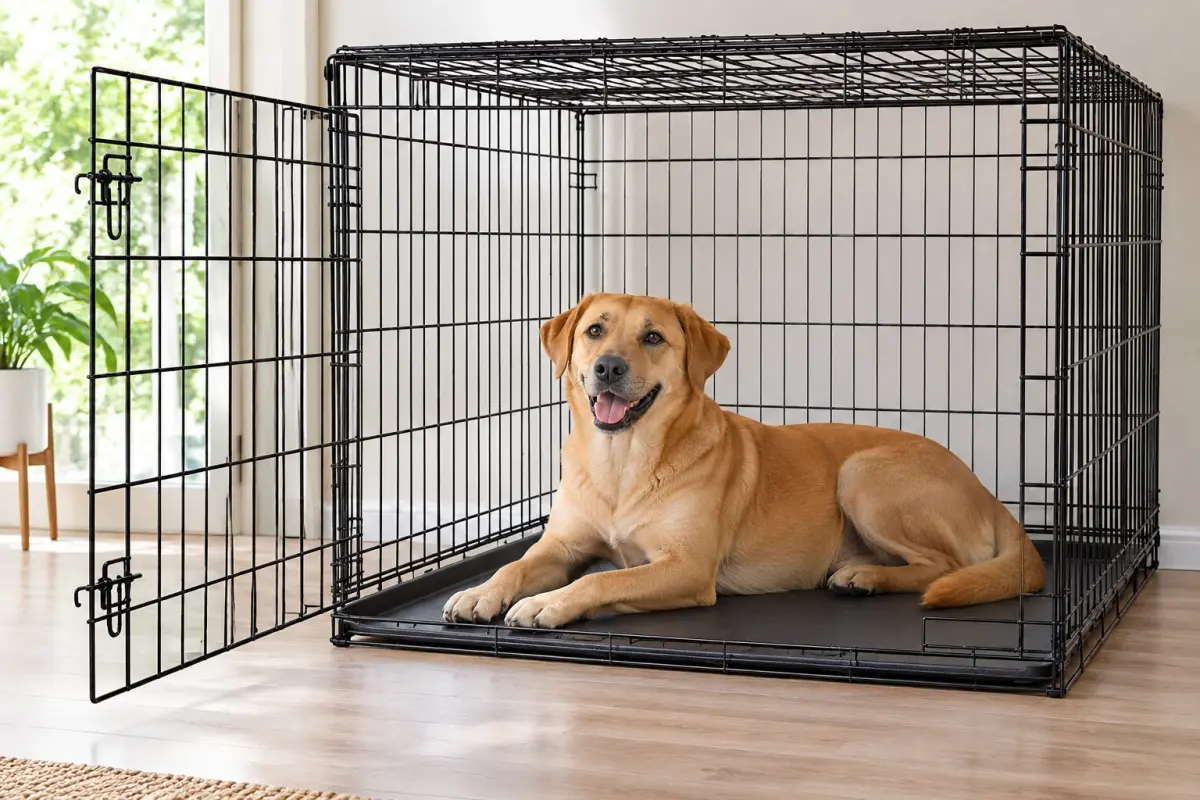
Wire crates give the best airflow and visibility, fold flat, and usually come with a divider and a removable tray that is easy to clean. The AKC describes metal crates as sturdy and suited to chewers. A cover over three sides makes them more den-like for dogs that settle better with less to look at. A folding metal dog cage with a secure lock is one example of this style.
Plastic crates are enclosed, durable and easy to wash, and many double as travel carriers; the AKC advises an airline-approved plastic crate if you plan to fly. Soft fabric crates are light and fold small for car trips, but the AKC says they are best for small dogs that do not chew and are harder to clean. Heavy-duty welded metal crates are for strong dogs that have escaped or broken other crates; a heavy-duty dog crate with lockable wheels is one example.
Best crate for each situation
For a puppy, a wire crate with a divider is the practical choice, because it grows with the dog and cleans easily. For a dog that is anxious when it can see too much, a plastic crate or a covered wire crate gives a more enclosed space. For apartments, a wire crate that folds or a furniture-style crate that doubles as a side table, such as a wooden dog crate with a storage top, saves room.
For car and air travel, a sturdy plastic crate secured so it cannot slide is the safest option, and the ASPCA calls a crate the safest way for a pet to ride in an accident. For a dog that chews bars or bends doors, move to a heavy-duty crate and talk to your vet or a trainer about the stress behind the escape attempts.
What to avoid
Avoid a crate so large the dog can use one end as a toilet, collars with tags left on inside wire crates where they can catch, and soft crates for chewers or diggers. Avoid using the crate for punishment or for longer than a dog can comfortably go without a bathroom break; puppies need frequent breaks.
Avoid forcing a dog in. Introduce the crate gradually with treats, meals and the door open, building up time slowly. A dog that drools heavily, injures itself or panics in a crate may have separation anxiety; ask your vet, and use a larger gated area in the meantime.
Care and lifespan
Wash trays and plastic crates with mild soap and water and rinse thoroughly. Check wire crates for bent bars, sharp edges and loose latches every few weeks, and check plastic crates for cracks, especially around door hinges and bolts, before any trip.
Replace a crate that has a broken latch, cracked shell or bent door, because those are exactly the failures that let a dog out on the road or in an empty house. Use bedding your dog will not shred and swallow; for chewers, a bare tray or a chew-resistant mat is safer. When a crate needs replacing, compare dog crates again, including XXL dog crates for giant breeds.
Crate structures and removable parts
| Construction | Body arrangement | What to inspect |
|---|---|---|
| Wire | Open metal panels,often folding | Tray,divider and latch configuration |
| Plastic | A rigid enclosed shell | Door opening,vents and shell fastenings |
| Soft fabric | A frame with fabric and mesh | Zippers,frame locks and fabric condition |
| Heavy welded metal | A rigid metal enclosure | Door locks,floor and any wheels |
Common questions
What type of dog crate is best?
It depends on the dog. Wire crates suit most homes and puppies; plastic is best for travel and dogs that like a den; soft crates suit calm small dogs; heavy-duty metal is for strong chewers.
What size crate should I get for my dog?
Measure your dog standing, nose to base of tail and head to floor, and add 3 to 4 inches to each. The dog should stand, turn and lie flat comfortably.
Are plastic or wire crates better?
Wire crates offer more airflow and usually include a divider. Plastic crates are more enclosed and better for travel, including flights. Many owners use wire at home and plastic for trips.
What is the best indoor dog kennel for a puppy?
A wire crate sized for the puppy's adult size, with a divider to reduce the space while the puppy is small. Move the divider back as the puppy grows.
Sources we checked
This guide is general information, not veterinary advice. If your pet is unwell or injured, contact your veterinarian.


