






Training & behavior
Is Crate Training Cruel? What It Is and Isn't
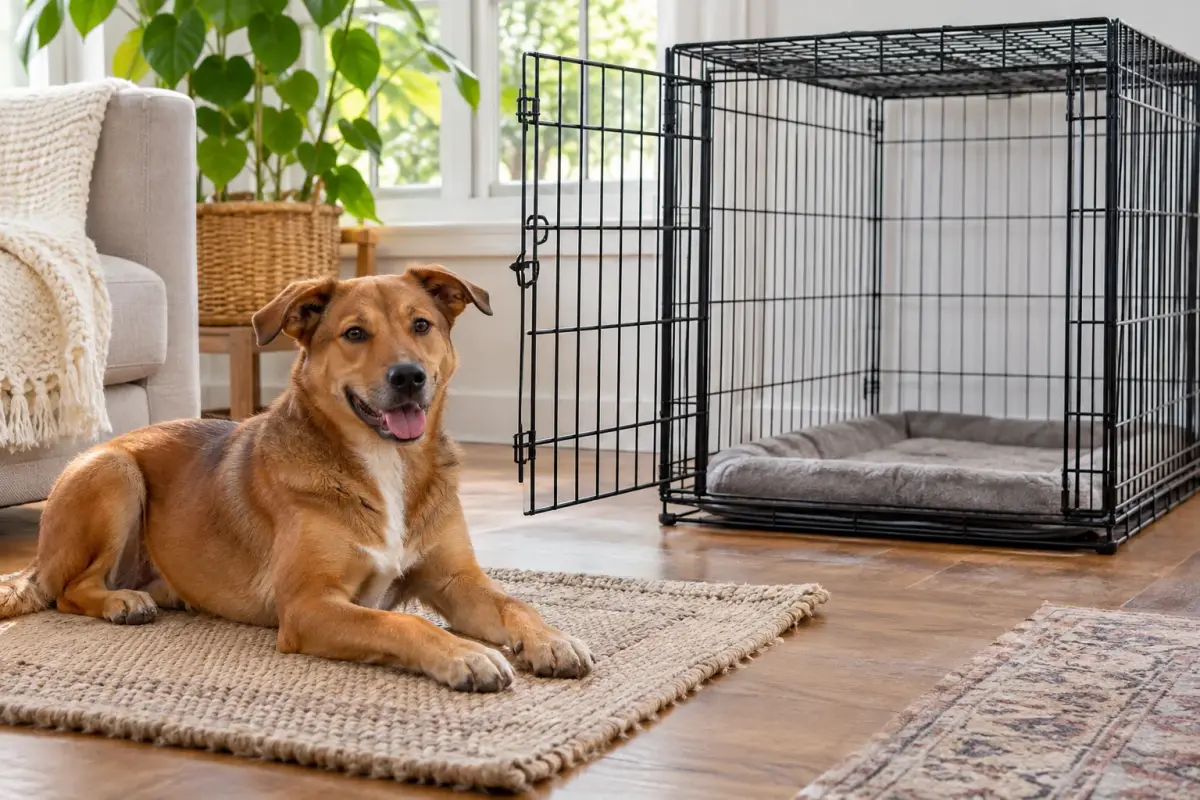
Crate training is not cruel when it is done well: a correctly sized crate, introduced gradually with rewards, used for limited stretches, and never as punishment. Many dogs come to choose their crate for naps. It becomes unkind when a dog is shut in for most of the day, forced in while panicking, or punished there.
By Matt GarnettUpdated November 13, 20264 min read3 sources
Why many dogs like a crate
Dogs often seek out small, sheltered spots to rest: under a desk, behind the couch, in a corner. A crate that has always meant meals, chews and quiet naps taps into that preference. The AKC describes the crate as a safe resting place that helps puppies with house training and helps dogs cope with storms, fireworks, visitors, travel and recovery from surgery.
In practice, dogs that were crate trained kindly often walk in on their own, door open, when the house gets busy. That is the outcome to aim for: a den the dog chooses, which happens to have a door you can close when you need to.
Our range includes a single-door wire crate and a double-door wire crate; neither replaces gradual training or an individual size check.
When crating does become cruel
The crate itself is not the problem; how it is used can be. Crating a dog for most of the day, every day, leaves it without exercise, play or company. Using the crate as a punishment teaches the dog to fear it. Forcing a frightened dog inside, or leaving it to cry it out while it panics, can create lasting anxiety. A crate that is too small, too hot or without water for long stretches is unkind.
The ASPCA advises against confining a dog in a crate for more than about six hours at a time, and the AKC warns against crating all day. Puppies need far shorter stretches because they cannot hold their bladder. If those limits cannot be met, a pen, a dog-safe room or a midday walker is a better choice.
How to crate train kindly
Go at your dog's pace. Leave the door open and reward any visit, feed meals inside, close the door only while your dog is eating happily, and lengthen time in small steps while you are home. Give a safe chew or stuffed food toy, take off the collar, and let your dog out after a moment of quiet rather than during whining.
Make sure your dog's needs are met before crate time: a potty break, exercise, play and a meal at the right time. Keep the crate in a room where people are, not a garage or basement. A crate should be one part of your dog's day, not most of it.
Dogs that should not be crated
Some dogs panic in confinement. Signs include frantic scratching, biting the bars, drooling, soiling, injuring paws or mouths, and trying to squeeze out. The AKC advises against crating dogs that show panic or severe anxiety. These dogs may do better in a gated room or pen, and many need a separate plan for separation anxiety.
Senior dogs with arthritis may also struggle in a small crate. If your dog shows distress or a sudden change in how it copes with the crate, talk to your vet, who can check for pain or medical problems and point you to a qualified behavior professional if needed.
Choosing whether to crate at all
Crate training is a tool, not a requirement. A house-trained adult dog that is calm alone and not destructive may never need to be shut in, and an open crate used as a bed is a fine result. For puppies, newly adopted dogs and dogs that will need vet stays or travel, the skill is worth teaching early, gently.
If you do crate, ask yourself regularly whether your dog walks in willingly, settles quickly and comes out relaxed. If the answer is yes, the crate is doing its job. If not, slow down, shorten the time or try another way of keeping your dog safe.
Our dog crate buying guide compares the designs within dog crates, while the dog's comfort remains the deciding factor.
This page is general information, not veterinary advice, and it cannot replace an examination by the vet who knows your pet.
Common questions
Do dogs like being in a crate?
Many do, once the crate has been introduced with rewards and kept for limited, positive stretches. Dogs that were forced in or punished there tend to dislike it, which is why the introduction matters so much.
Is it cruel to crate a dog at night?
No, not for a dog that is comfortable in its crate. A sleeping dog can rest through the night in a properly sized crate, provided it has a potty break before bed and puppies get night breaks.
Is it cruel to crate a dog while at work?
For a full workday, usually yes, because it is too long without exercise or company. Arrange a midday break, use a pen or dog-safe room, or keep crate time under about six hours.
Sources we checked
This guide is general information, not veterinary advice. If your pet is unwell or injured, contact your veterinarian.


