






Buying guides
Best Airline-Approved Dog Carrier: How to Choose
The best airline carrier for a dog is soft-sided, fits under the seat in front of you on your specific flight, lets your dog stand, turn around and lie down, and is ventilated on at least two sides with a waterproof base. No carrier is approved by every airline; under-seat dimensions vary, so check your airline's limits before buying.
By Matt GarnettUpdated November 14, 20263 min read2 sources
What airline-approved really means
There is no universal airline approval. Each airline sets its own in-cabin rules, and the AKC notes that dogs must stay in their carrier under the seat in front of you for the whole flight. Many airlines focus on whether the carrier fits under the seat, and some also set a combined weight limit for dog and carrier, often around 20 lb.
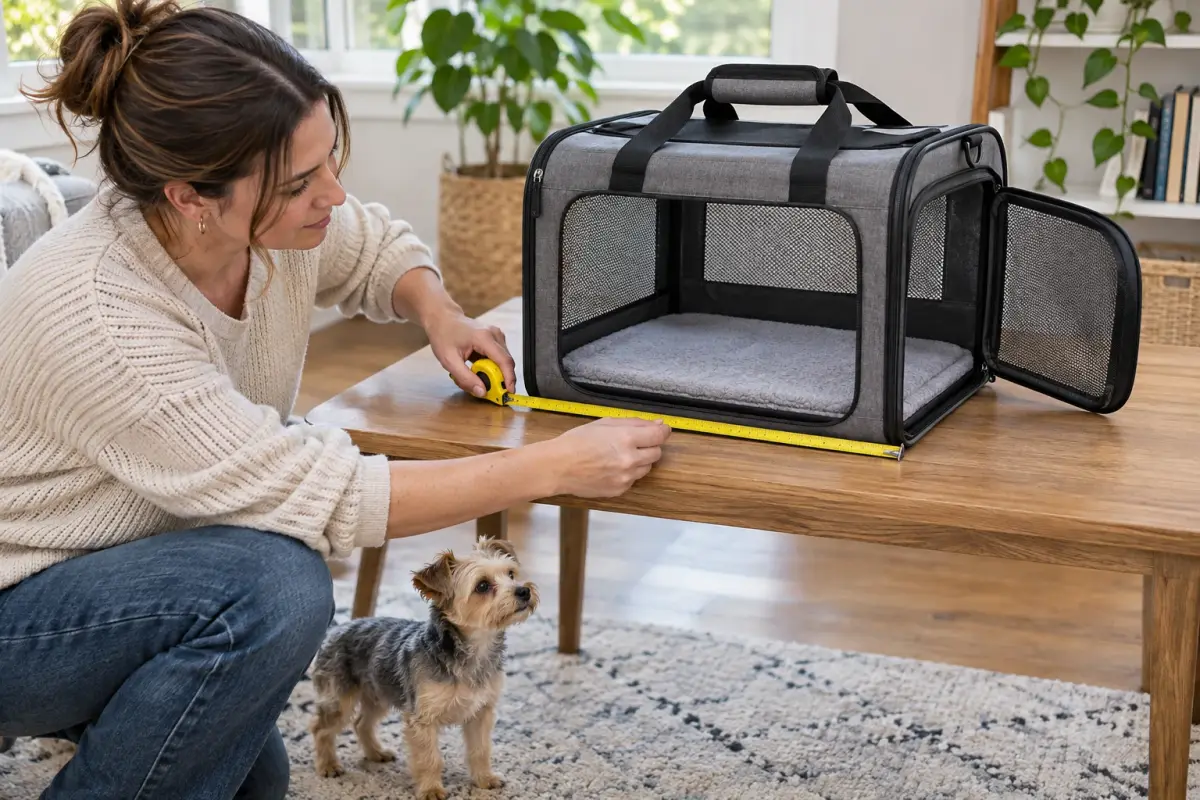
So start with your airline's published maximum carrier dimensions, and check the aircraft, because under-seat space differs between planes and seats. A carrier marketed as airline-approved usually means it fits typical limits, not every airline's. Some airlines do not carry pets in the cabin at all.
What matters most in an in-cabin carrier
Fit for the dog comes first. The AKC says the carrier should be big enough for your dog to sit, stand, lie down and turn around comfortably, and waterproof. Measure your dog from nose to base of tail and from floor to the top of its head when standing, then compare with the carrier's inner dimensions.
Flexibility comes next. Soft-sided carriers with a structured frame can compress slightly to slide under a seat, which is why most in-cabin carriers are soft. Look for mesh on at least two sides, a secure zipper that a dog cannot nose open, a padded removable floor, and a shoulder strap plus a luggage sleeve.
Carrier types compared
Soft-sided shoulder carriers are light and the most common in-cabin choice. Expandable carriers have side panels that unzip to give more room at the gate or in a hotel, but must be closed for the flight. Wheeled carriers save your shoulder in long terminals but add weight and height, and wheels can make a carrier too tall for some under-seat spaces.
Hard plastic carriers are sturdier and usually required for dogs flying as cargo, but are rarely flexible enough for the cabin. Backpack carriers are comfortable to wear but check their dimensions carefully against the airline's limit.
Preparing your dog for the carrier
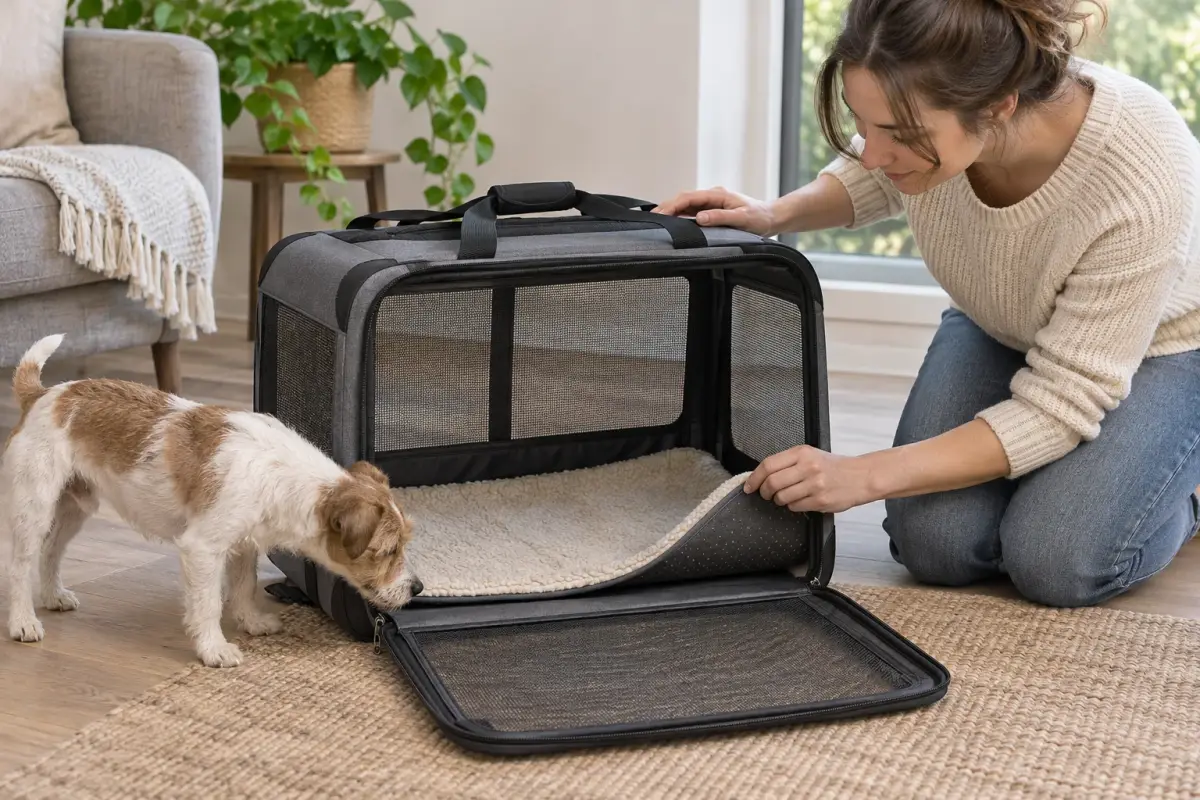
Introduce the carrier weeks before travel. Leave it open at home with a familiar blanket, feed treats inside, then zip it closed for short periods, then carry it around and take short car trips. A dog that already treats the carrier as a safe den travels far more calmly.
The AKC notes you will usually need to remove your dog from the carrier at security screening, so a secure harness and leash are essential. Airlines may require health certificates and vaccination records; ask your vet about paperwork timing and whether your dog is fit to fly.
What to avoid, care and lifespan
Avoid carriers too small for your dog to turn around in, flimsy zippers, carriers without a waterproof base, and wheels that make the bag too tall. Avoid sedating a dog for flight unless your vet specifically advises it, since sedation can affect breathing and balance at altitude.
Clean the carrier after each trip, replace absorbent pads, and check zips and mesh for tears. A good carrier lasts years, but buy a larger one if your dog grows or the airline limits change.
Carrier formats and dimensions to confirm
| Format | Construction difference | Air-travel check |
|---|---|---|
| Soft shoulder carrier | Fabric body with handle or strap | Exact outer dimensions and usable interior |
| Expandable carrier | A panel opens into a larger space | Both closed and expanded configurations |
| Wheeled carrier | Wheels and handle add to the body | Total height including wheels |
| Hard plastic | A rigid shell | The airline’s rules for the exact transport mode |
| Backpack | Shoulder straps support the body | Acceptance of that exact configuration |
Common questions
What size carrier fits under an airplane seat?
It depends on the airline and the aircraft, and limits change between planes and even seats. Check your airline's published maximum carrier dimensions for your flight, then compare them with the carrier's outer size.
Are soft or hard carriers better for flying?
Soft-sided carriers are better for the cabin because they can compress slightly to fit under the seat. Hard carriers are usually used for dogs flying in cargo.
How big can a dog be to fly in the cabin?
Many airlines allow small dogs whose combined weight with the carrier is about 20 lb or less, but the main rule is that the dog fits comfortably in a carrier under the seat.
Are wheeled pet carriers allowed on planes?
Often, as long as the carrier with its wheels still fits the airline's under-seat dimensions. Wheels add height and weight, so measure the whole carrier carefully and check the airline's rules before choosing one.
Sources we checked
This guide is general information, not veterinary advice. If your pet is unwell or injured, contact your veterinarian.


