






Buying guides
Best Dog Carrier: How to Choose One for Car, Walks and Travel
The best dog carrier depends on the trip. For car travel and vet visits, a ventilated hard or structured carrier that can be strapped in is the safest. For walks and errands, a backpack or sling suits small dogs. In every case, your pet should be able to stand, turn and lie down, and the carrier's weight limit should exceed your pet's weight.
By Matt GarnettUpdated November 13, 20263 min read2 sources
What matters most in a carrier
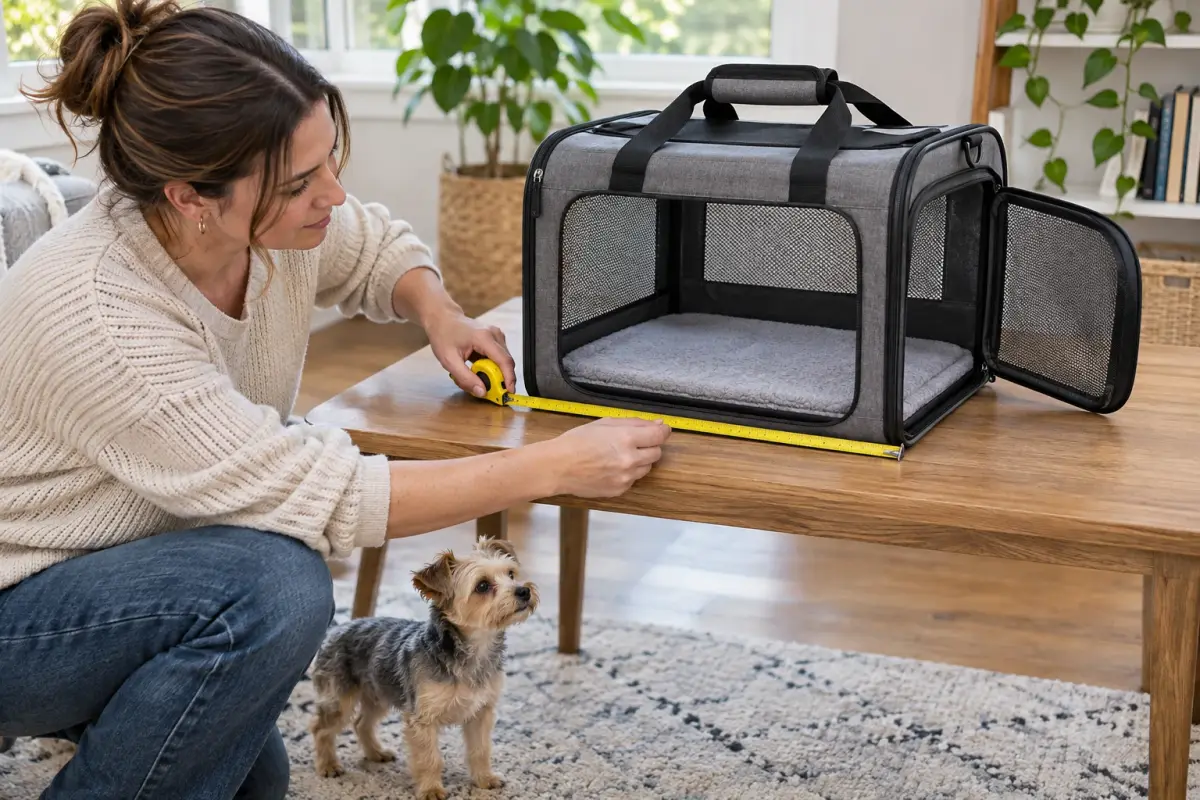
Size comes first. The AKC advises a carrier big enough for a dog to sit, stand, lie down and turn around comfortably. Measure your pet from nose to base of tail and from the floor to the top of the head when standing, add a couple of inches, and compare with the carrier's inside dimensions, not the outside.
Security comes next: strong zips or latches a pet cannot nose open, an internal leash clip, mesh ventilation on at least two sides, and a stable, waterproof base. Check the stated weight limit, especially for backpacks and slings, which strain at the seams if overloaded.
Carrier types compared
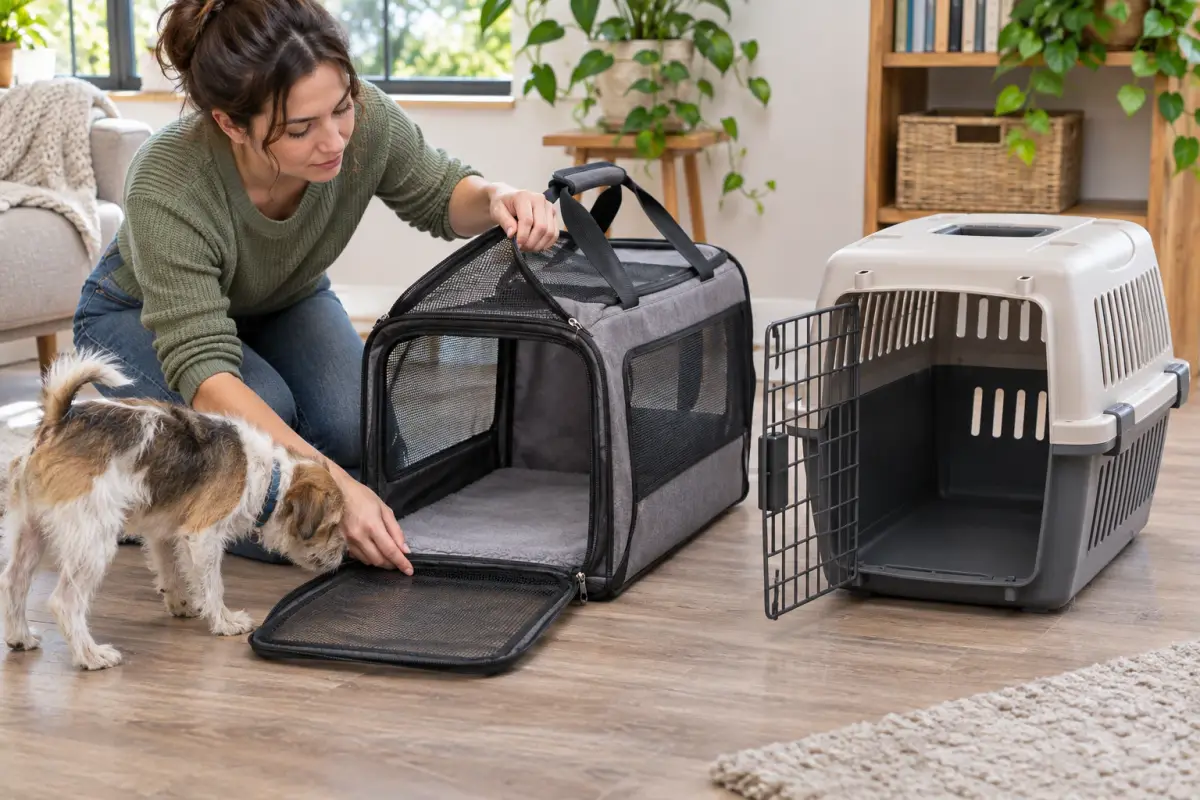
Hard plastic carriers are sturdy, easy to clean, protect best in a bump and are often preferred by vets because the top can come off for an exam. Soft-sided carriers are lighter, fold flat and suit in-cabin flying. Structured soft carriers combine a frame with a soft shell.
Backpack carriers suit small dogs on walks and hikes and spread weight across your shoulders. Slings, front carriers and purse-style carriers suit very small dogs for short outings, such as a foldable pet shoulder bag or a canvas pet tote bag. Wheeled carriers save effort in airports. Each suits a different job; many owners have two.
The best type for each situation
For car journeys, the AKC recommends that dogs ride in a crate or a crash-tested restraint; a carrier secured with the seat belt or placed on the floor behind a front seat is safer than one loose on a seat. For vet visits, a hard carrier with a removable top makes examinations calmer for cats and small dogs.
For walks with a small or senior dog that tires, a dog backpack carrier with a secure harness clip. For flying, a soft-sided carrier that fits your airline's under-seat limits. For cats, a hard or structured carrier with a top opening is usually easiest to load.
Getting a pet used to a carrier
Leave the carrier out at home with a familiar blanket, feed treats or meals inside, and close the door for short periods before any trip. A pet that only sees the carrier on the way to the vet learns to dread it.
Start with short car rides around the block, rewarding calm behavior. For a pet that panics or is carsick, talk to your vet about how to make travel easier.
What to avoid, care and lifespan
Avoid carriers that are too small, have flimsy zips or handles, or lack ventilation. Never leave a pet in a carrier in a parked car. Avoid carrying a heavy dog in a sling that strains your back or its legs.
Clean the carrier after each use, replace absorbent pads, and check zips, straps and latches regularly. Replace a carrier that is cracked or torn, and size up to a larger dog carrier if your pet grows.
If you have both a cat and a small dog, it is better to buy a carrier for each rather than sharing one, because a pet can find another animal's scent in the carrier stressful, and each carrier can then be sized correctly for its occupant.
Carrier formats and practical checks
| Format | Carrying arrangement | Check separately |
|---|---|---|
| Hard-sided | Rigid shell with a door or removable upper section | Latches, inside dimensions and cleaning access |
| Soft-sided | Fabric body with zipper openings | Base sag, zipper closures and ventilation panels |
| Structured soft carrier | Soft shell supported by a frame | Frame connections and usable inside space |
| Backpack | Shoulder straps distribute the carried load | Stated load limit and strap attachments |
| Sling or front carrier | Pet rests close to the front or side of the handler | Individual fit and the load on the handler |
| Wheeled carrier | Wheels carry the weight while rolling | Where it must be lifted and whether the route suits wheels |
Common questions
What is the best type of dog carrier?
It depends on the trip. A hard or structured carrier suits car travel and vet visits, a soft carrier suits flying, and a backpack or sling suits walks with a small dog.
What size carrier does my dog need?
One where your dog can sit, stand, lie down and turn around comfortably. Measure your dog's length and standing height and compare with the carrier's inside dimensions.
What is the best cat travel carrier?
A hard or structured carrier with a top opening and a removable lid is usually easiest for cats, because you can lower the cat in and vets can examine it without pulling it out.
Is it safe to put a carrier on the car seat?
Only if it is secured with the seat belt so it cannot move. Otherwise, placing it on the floor behind a front seat is a common safer option. Our guide to the safest dog car seat covers car restraints in more detail.
Sources we checked
This guide is general information, not veterinary advice. If your pet is unwell or injured, contact your veterinarian.


