






Buying guides
Best Dog Backpack Carriers: How to Choose One Safely
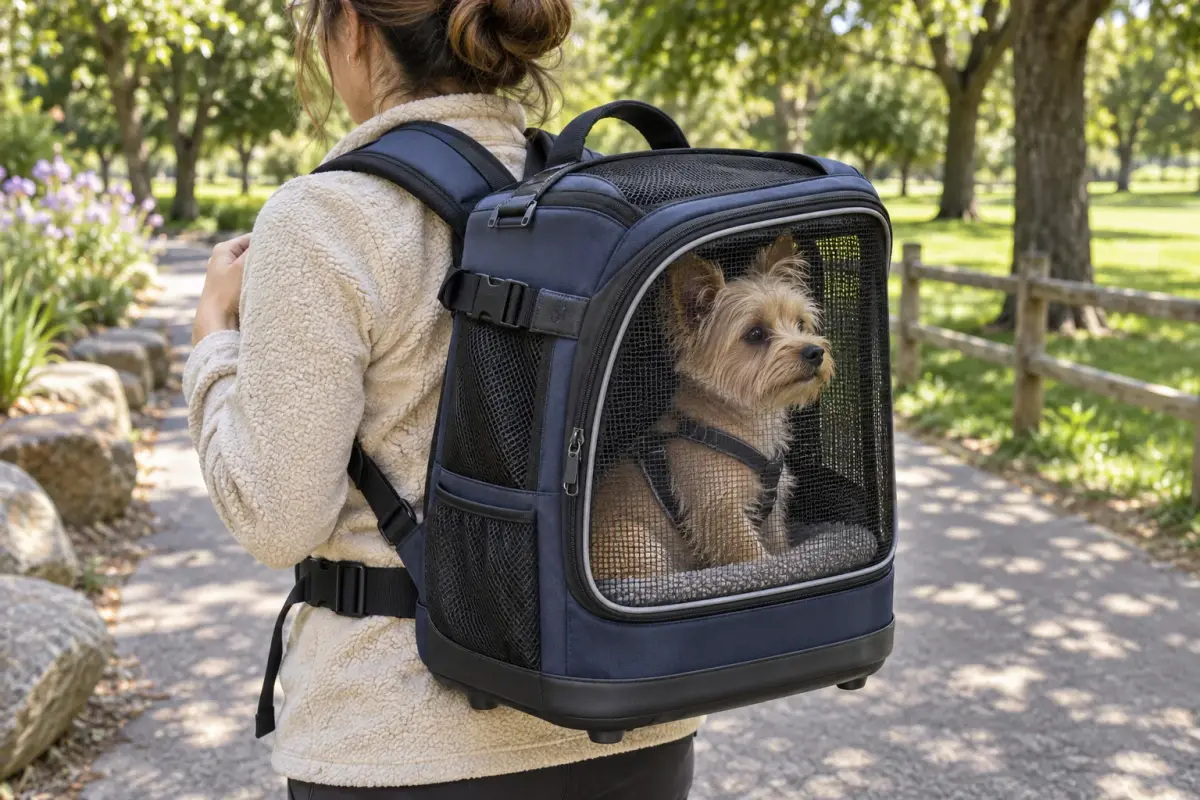
A good dog backpack carrier fits your dog's measurements, has mesh ventilation, an interior tether that clips to a harness, and padded shoulder straps with a chest or hip belt so you can carry the weight comfortably. They suit small dogs and puppies; the AKC describes wearable carriers as generally meant for small dogs. Check the weight limit against your dog plus a margin.
By Matt GarnettUpdated November 14, 20263 min read2 sources
What matters most: fit for your dog
The AKC suggests measuring your dog's back from the neck to the base of the tail and its height from shoulder to paws, then adding a few inches to each. In a fully enclosed backpack, a dog should be able to sit and shift position comfortably. Leg-out front packs fit more snugly and should not squeeze the chest.
Weight limits matter for you as well as the dog. Choose a carrier rated comfortably above your dog's weight, and be honest about what you can carry for an hour; a 15-pound dog feels much heavier on a hike than in the hallway. Browse dog backpack carriers with that weight in mind.
Backpack and front carrier types compared
Enclosed backpacks with a mesh window or bubble keep the dog fully inside, which suits nervous dogs, transit and crowds. Open-top backpacks let a calm dog look out. Front carriers, with legs out like a baby carrier, keep the dog close and let you see it, but only suit very small, relaxed dogs.
Convertible packs switch between back and front carry or add wheels. Slings carry the weight on one shoulder, which is fine for short distances but tiring on longer walks. The AKC calls wearable carriers hands-free and lightweight, and generally meant for puppies and small dogs. To see the styles side by side, look at this pet travel backpack, this pet outing backpack and this breathable pet backpack.
Safety and comfort features
Ventilation is essential. The AKC notes mesh panels provide airflow and help prevent heat exhaustion. In warm weather, a dark, enclosed pack in the sun can overheat a dog quickly, so check on your dog often and offer water.
Look for an interior safety clip that attaches to a harness rather than a collar, a firm base so the dog is not folded in half, padded shoulder straps, and a chest strap or hip belt to spread the load. Reflective trim helps on evening walks. Zippers should close fully and be hard for a dog to nose open.
Best carrier for each situation
For hiking with a small dog that tires, a structured backpack with a hip belt and good ventilation. For transit and errands, an enclosed backpack with a firm base. For a puppy that is not yet fully vaccinated, a carrier allows safe exposure to sights and sounds; ask your vet what is appropriate for your puppy's age.
For seniors or dogs recovering from surgery, a carrier can help with outings, but check with your vet about posture and support first, especially for long-backed breeds. Dogs over about 20 to 25 pounds are usually better served by a stroller or wagon.
Introducing the carrier and care
Leave the carrier open on the floor with treats inside, then let your dog sit in it while you kneel beside it, then lift it briefly, and build up to short walks. Never zip in a panicking dog. If your dog pants heavily, shakes or tries to climb out, end the session.
Wipe the interior and wash removable pads regularly, check straps and buckles before each use, and replace a carrier with worn stitching or a cracked base. For a replacement, start with dog backpack carriers. If your dog seems unable to walk distances it once managed, mention it to your vet rather than relying only on a carrier.
Wearable carrier positions compared
| Format | How the pet is positioned | What to check separately |
|---|---|---|
| Enclosed backpack | Inside a compartment on the back | Interior room,windows and openings |
| Open-top backpack | Body in the pack with the head above it | Opening fit and attachment instructions |
| Front carrier | Against the handler’s chest | Leg openings and supported posture |
| Convertible pack | More than one carrying arrangement | Fastenings in each arrangement |
| Sling | Along one side of the handler | Shoulder load and usable resting space |
| Wheeled design | Carrier rolls using a trolley handle | Lifting points and route suitability |
Common questions
What size dog can go in a backpack carrier?
Wearable carriers are generally for small dogs and puppies. Measure back length and height, add a few inches, and choose a carrier rated well above your dog's weight.
Are dog backpack carriers safe?
Yes, when they fit, are well ventilated and have an interior tether clipped to a harness. Check your dog often in warm weather, because enclosed packs can overheat.
Is a front carrier or backpack better for a dog?
Backpacks carry weight better on longer outings and suit nervous dogs when enclosed. Front carriers keep a very small, relaxed dog close where you can watch it.
Can I take my puppy out in a backpack before vaccinations?
A carrier can let a puppy see new places without touching the ground. Ask your vet which outings are appropriate for your puppy's vaccine stage.
Sources we checked
This guide is general information, not veterinary advice. If your pet is unwell or injured, contact your veterinarian.


