






Care & how-to
Flying With a Dog: How to Take Your Dog on a Plane
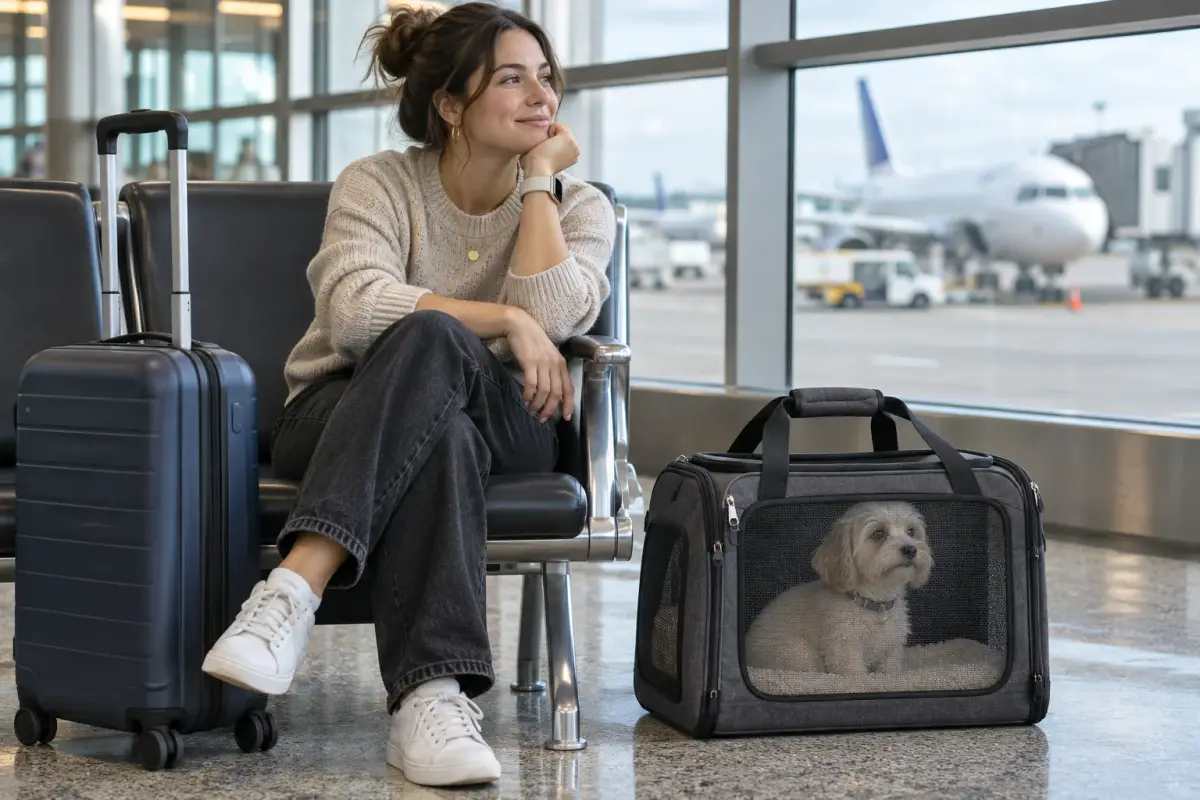
Yes, you can take a dog on a plane, but how depends on size. Small dogs usually fly in the cabin in an airline-approved carrier that fits under the seat in front of you, and the AKC says the dog and carrier together are usually under 20 pounds. Larger dogs fly in the hold as checked pets or cargo in an approved crate. Book your dog's spot before your own ticket, because airlines limit pets per flight.
By Matt GarnettUpdated November 14, 20264 min read4 sources
Cabin or cargo: which applies to your dog
In the cabin, your dog must stay inside an airline-approved carrier under the seat in front of you for the whole flight, and cannot sit on your lap, as the AKC explains. The carrier has to let your dog stand, turn around and lie down. Delta, for example, recommends a soft-sided carrier no larger than 18 by 11 by 11 inches, while Alaska Airlines sets 17 by 11 by 9.5 inches, so check your airline's exact limit.
Dogs too big for an under-seat carrier travel in the temperature-controlled hold in a crate. The AKC notes the combined weight of dog and crate typically tops out between 70 and 150 pounds, depending on the airline. Only trained service dogs may ride openly at your feet in the cabin. Since 2021, emotional support animals are treated as pets.
How to book a flight with a dog
Before buying a ticket or carrier, ask the airline operating each leg whether your dog can travel on that flight. Confirm how to reserve a pet space and whether a connection changes the carrier requirements. Keep the confirmation with your booking details.
Compare nonstop routes first. If a connection is unavoidable, ask where your dog will be during the transfer. For travel in the hold, ask the airline how it handles weather restrictions at departure, transfer and arrival, and what happens to your booking if travel is suspended.
Fees, ages and paperwork
Request a fee quote for the outbound and return journeys, including any legs operated by another airline. Give the airline your dog’s age on the travel date and confirm eligibility before paying.
Ask the airline and destination animal-health authority which records your dog needs, who must issue them and when they must be dated. Use those deadlines to schedule any veterinary appointment. Keep copies of the completed documents where you can reach them at check-in.
Getting your dog ready to fly
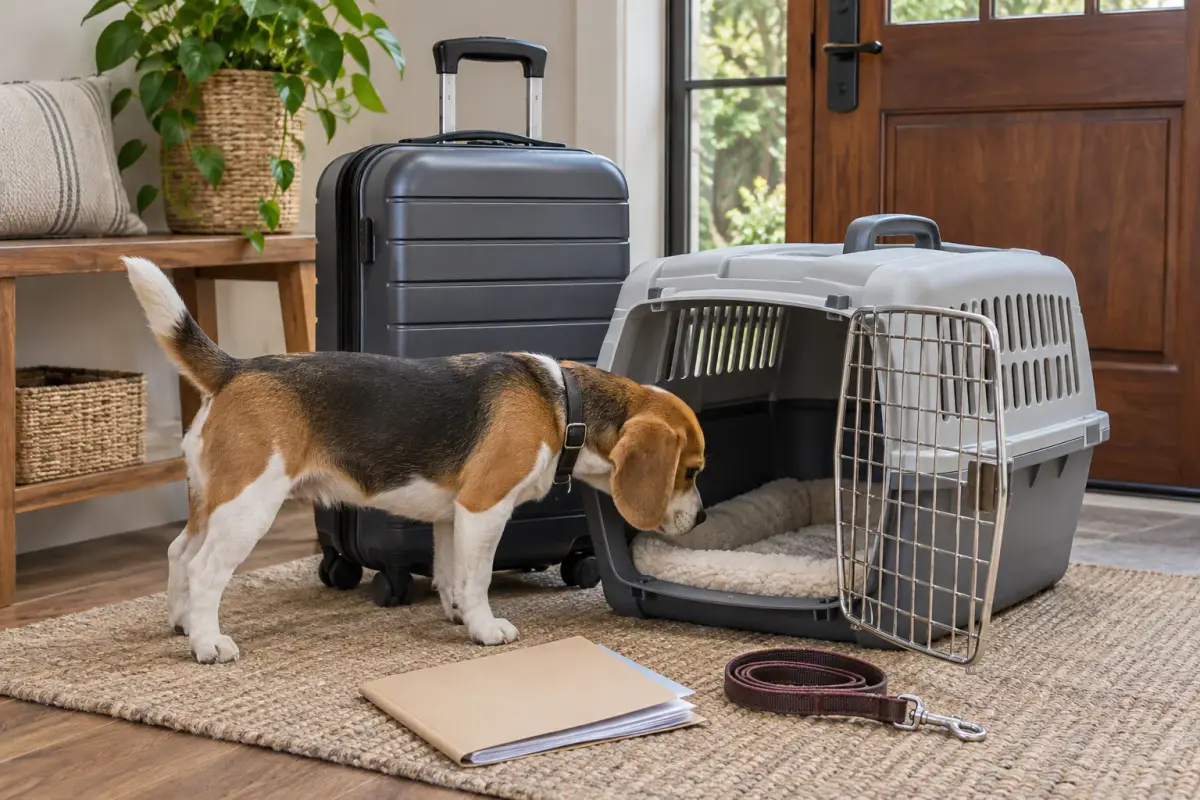
Buy the carrier or crate weeks before the trip and make it a good place: feed meals in it, leave treats and a worn T-shirt inside, and build up to short car rides in it. The AKC suggests at least a week of practice, and longer for a nervous dog. An expandable soft-sided carrier and a wheeled trolley carrier are two styles to practice with at home, and our guide to airline-approved dog carriers compares more. A dog who is relaxed in a carrier at home is far calmer at the airport.
Never give your dog a sedative or calming medicine before a flight without your vet's advice. The AKC warns that tranquilizers and sedatives can raise the risk of heart and breathing problems at altitude, and most airlines do not allow sedated pets. Flat-faced breeds face extra risk in the hold, and some airlines restrict them entirely.
What to pack and what to do on travel day
Pack a leash, poop bags, wipes, a small travel water bowl, a little food and treats, a familiar blanket and copies of your dog's records. For a crated dog, the ASPCA suggests labeling the crate Live Animal with your contact details and a photo of your dog, taping a small bag of food to the outside and freezing the water dish the night before so it does not spill.
Exercise your dog before you leave, and do not overfeed or overwater before the flight. Arrive early, because you usually need to check your pet in at the counter even for cabin travel, as the AKC notes. Use the airport pet relief area after security, and tell airline staff if your dog is in the hold.
Which dogs should not fly, and when to ask your vet
A very anxious dog, a dog with heart or breathing problems, a pregnant dog or a flat-faced breed may be better off staying home with a sitter, or traveling by car. Older dogs and dogs with medical conditions deserve a checkup before any flight. Ask your vet whether your dog is fit to fly and what to do if they get stressed.
After landing, give your dog water, a bathroom break and a quiet place to rest. Call your vet if your dog has trouble breathing, vomits repeatedly or seems unwell after the flight.
This page is general information, not veterinary advice, and it cannot replace an examination by the vet who knows your pet.
| Ask the airline | What to record |
|---|---|
| Is there a pet space on each flight? | The operating airline, flight number and pet reservation confirmation for each leg. |
| Will my carrier fit? | The permitted carrier type and dimensions for the cabin or hold you have booked. |
| What will I need at check-in? | The current fee, document checklist, arrival time and check-in location for your itinerary. |
Common questions
Can my dog sit on my lap on a plane?
No. A pet dog in the cabin must stay inside its carrier under the seat in front of you for the whole flight. Only trained service dogs may ride outside a carrier, at your feet.
How much does it cost to take a dog on a plane?
It varies by airline. Delta currently charges $150 each way for an in-cabin pet within the U.S. and Canada, and Alaska Airlines $100 in cabin or $200 in the baggage compartment. Always confirm when booking.
Do dogs need a health certificate to fly?
Often not for domestic flights, according to the AKC, but some airlines and states ask for one, and international travel always has its own requirements. Check your airline and destination before booking.
What size dog can fly in the cabin?
Usually a dog that fits comfortably in a carrier under the seat, with the dog and carrier together around 20 pounds or less. Each airline sets its own carrier dimensions, so check before you buy one.
Sources we checked
This guide is general information, not veterinary advice. If your pet is unwell or injured, contact your veterinarian.


