






Buying guides
Best Dog Ramp for a Couch: What Actually Matters
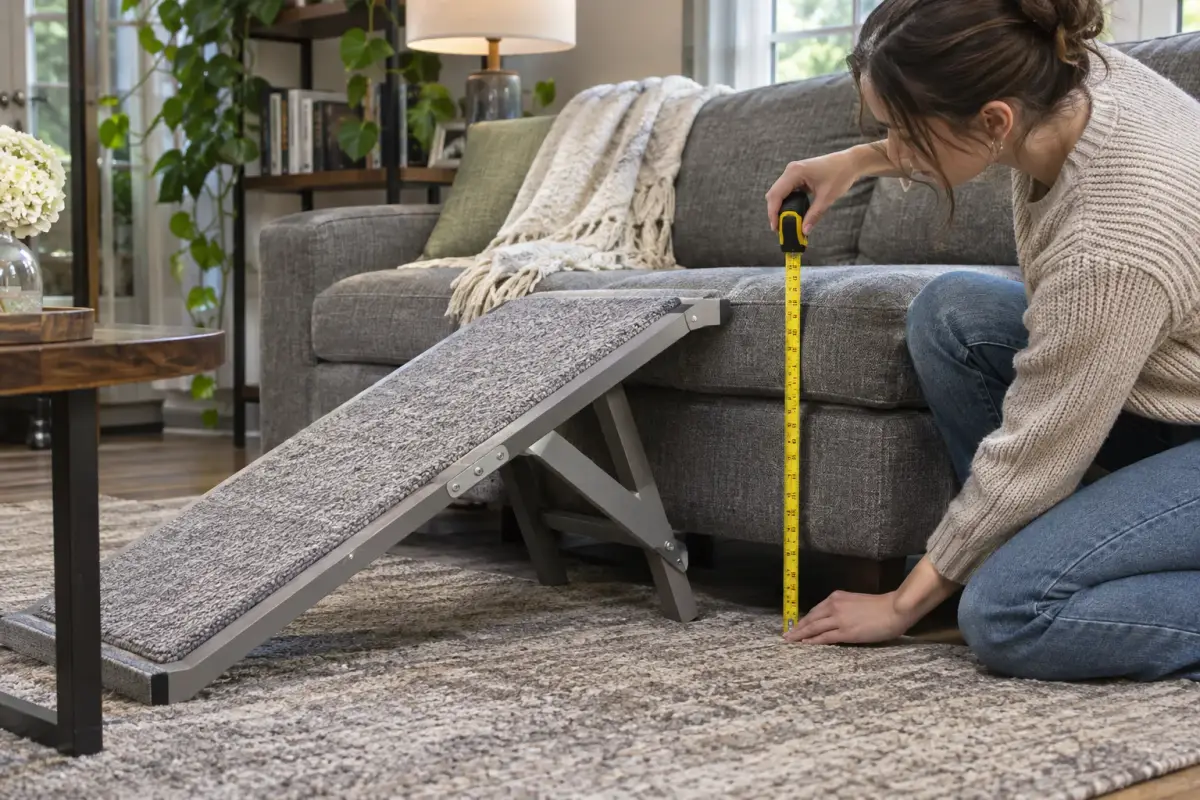
The best dog ramp for a couch reaches your seat height at a gentle slope, has a grippy surface, is wide enough for your dog's stance and stays put on the floor and against the couch. Measure from the floor to the top of the seat cushion first. Stairs suit some dogs better, and the AKC lists who needs either. Browse dog steps and ramps for couches once you have your numbers.
By Matt GarnettUpdated November 14, 20264 min read2 sources
What matters most: height, slope and stability
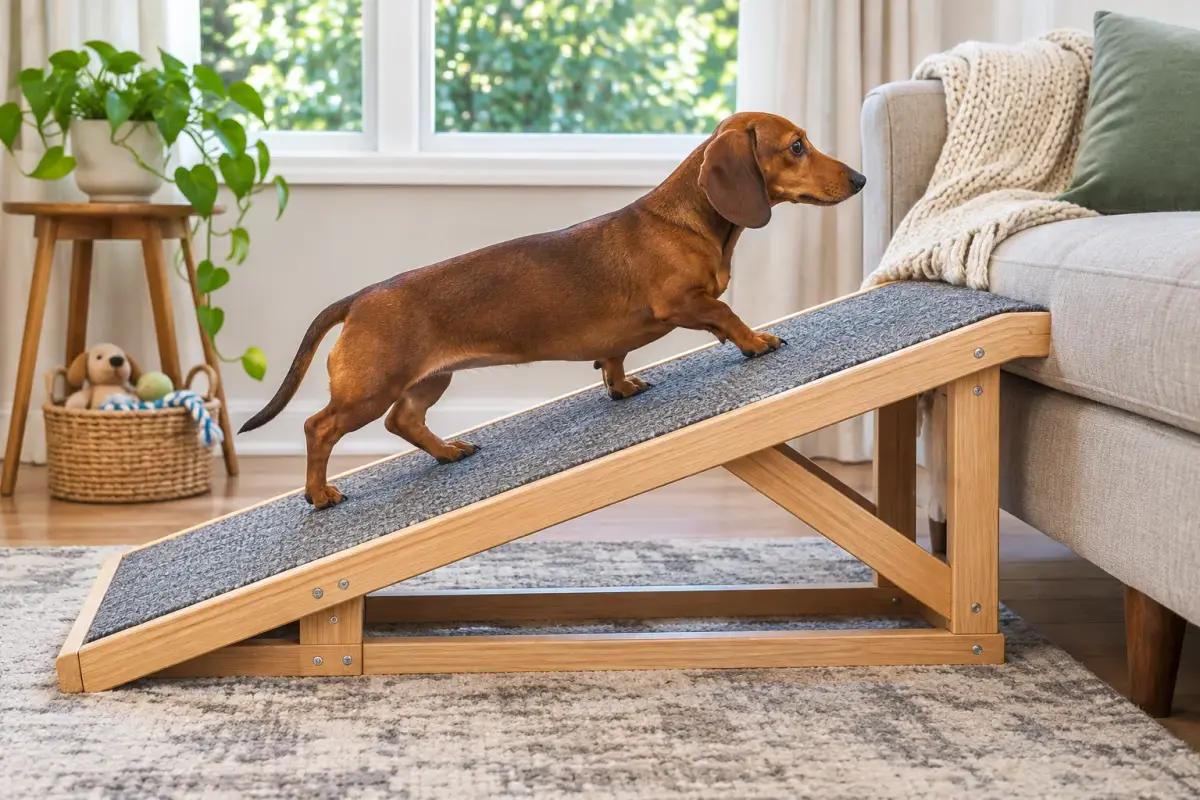
Start with the couch, not the ramp. Measure from the floor to the top of the seat cushion, because that is the height your dog has to reach. The AKC advises matching the equipment to the height of the sofa, and adjustable models help if you move the ramp between a couch and a bed. A ramp that falls short forces your dog to finish the climb with a jump, which defeats the purpose.
Slope follows from length: the longer the ramp for a given height, the gentler the climb. The AKC says to start training at a low angle and raise it gradually, which tells you what a nervous dog wants. In a small room you may not have space for a long ramp, and that is when stairs or a short adjustable ramp are the compromise. Whatever you choose, the AKC says to place it on a firm surface, since a wobbly setup is unsafe.
Ramp or stairs for a couch
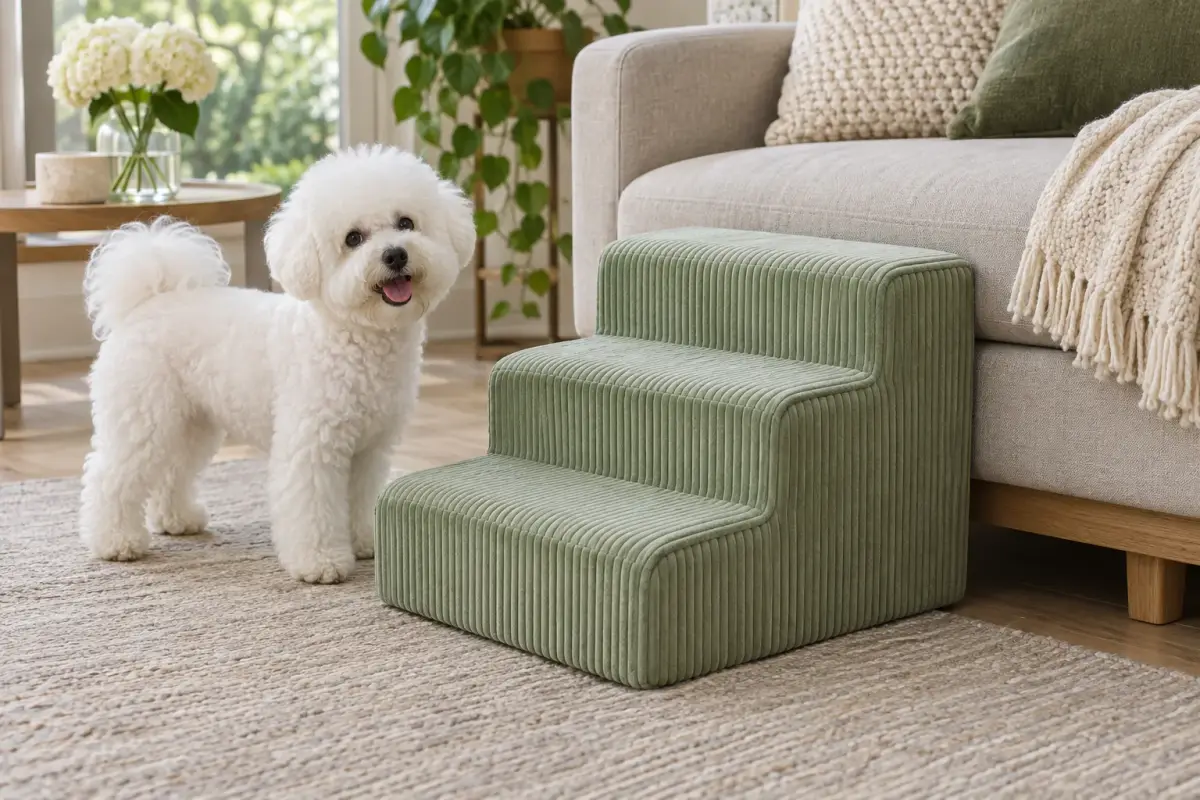
Both work, and the AKC lists the trade-offs. Ramps fold smaller, are usually lighter, may suit fearful dogs and are gentler on sore joints. Stairs take up less floor space when they stay against a sofa, and fabric-covered stairs can match your furniture. A dog with sore hips or a long back often finds a ramp easier, because it avoids lifting a leg over each step. The AKC senior-dog guide adds that stairs suit dogs with good balance, with a single step enough for a low couch, while ramps are for dogs that can no longer manage stairs.
Many couch products are 2-in-1, with folding steps that can be used as a ramp, which suits a small apartment. If you are weighing both, see our guides to dog ramps and dog stairs. A foldable wooden pet step that works as a ramp and an adjustable-height couch ramp show the two main designs in our range.
Which dogs benefit most
The AKC says stairs or ramps reduce the pain and strain of jumping onto sofas, beds and car seats for arthritic dogs, and notes that dogs often hide pain, so a vet should evaluate them. It also names Dachshunds, Pembroke Welsh Corgis and Basset Hounds as breeds predisposed to intervertebral disc disease, and lists small breeds that jump down from furniture, puppies protecting developing bones, and dogs recovering from injury or surgery.
If your dog already hesitates before a jump, limps after getting down, or has stopped joining you on the couch, that is a reason to book a vet visit as well as buy a ramp. For a small dog with no health problems, a ramp is prevention: it cuts the number of jumps over a lifetime. For a puppy, it is easier to teach early than to retrain a dog that has a jumping habit.
Traction, width and weight rating
A surface the dog trusts matters as much as the angle. The AKC advises slip-resistant surfaces, which prevent slipping and build confidence. Narrow surfaces reduce confidence and raise the risk of falls, so the width should comfortably fit your dog's body. Raised edges help a dog that tends to step off the side.
Check the rated capacity too. The AKC warns that a flimsy ramp could fail under a large dog and says to check the manufacturer specifications, since it gives no standard number. Leave a wide margin between your dog's weight and the rating, remembering that a dog moving fast puts more load on a ramp than the same dog standing still. A 4-step ramp with a removable cover is one design that adds a washable cover for a couch-side spot.
What to avoid, and how to train your dog to use it
Avoid ramps that slide on hard floors, slick fabric covers with no grip, and anything that shifts when your dog steps on it. A couch ramp that rests on a loose cushion edge can drop out from under your dog. If your couch has legs, check that the top of the ramp rests against the frame, not a soft cushion.
Training takes a few sessions. The AKC suggests letting your dog sniff the ramp first, luring with treats, rewarding each step and starting with a few steps rather than the full climb. Put a barrier on at least one side if possible, and do not pull, push or punish a dog that hesitates. Go slowly with injured or older dogs. Pair the ramp with a comfortable spot, such as one of our dog beds, so the couch stays a place your dog wants to reach.
This page is general information, not veterinary advice, and it cannot replace an examination by the vet who knows your pet.
Common questions
How do I measure for a dog ramp for a couch?
Measure from the floor to the top of the seat cushion, since that is the height your dog needs to reach. Also note the floor space in front of the couch, because a longer ramp makes a gentler slope but needs more room.
Is a ramp or stairs better for a dog on a couch?
Ramps are usually gentler on sore joints and may suit fearful dogs. Stairs take less floor space. For a dog with arthritis or a long back, a ramp is often easier, but ask your vet about your dog.
How do I get my dog to use a couch ramp?
Let your dog sniff it, lure with treats, reward each step and start with a few steps or a low angle. Never push or pull your dog. Keep sessions short and positive.
Do small dogs really need a ramp for the couch?
They do not need one, but repeated jumping up and down is hard on joints, and breeds with long backs are at higher risk of disc problems. A ramp cuts the number of jumps and is easier to teach early.
Sources we checked
This guide is general information, not veterinary advice. If your pet is unwell or injured, contact your veterinarian.


