






Buying guides
Best Dog Stairs: How to Choose Steps for a Bed or Couch
The best dog stairs reach the full height of your bed or couch, have shallow steps your dog can climb without jumping, treads deep enough for all four paws, and a non-slip base and surface. Foam steps suit small dogs and are light; framed steps suit heavier dogs. For dogs with sore joints or long backs, a ramp may be the gentler choice.
By Matt GarnettUpdated November 14, 20263 min read2 sources
Why dog stairs help
Jumping on and off furniture puts repeated impact through the joints and spine, especially for small, long-backed and older dogs. VCA Animal Hospitals lists a ramp or step for getting onto furniture among home changes for arthritic dogs, and notes that trouble with stairs and hesitating before jumping are early signs of joint pain.
The AKC compares the two options: stairs take up less floor space if they stay permanently against a sofa or bed and come in more styles, while ramps are gentler on sore joints and may suit fearful dogs better. Many owners use dog stairs for a bed and a ramp for the car.
What matters most: height, rise and depth
The AKC's first rule is to choose stairs that reach the height of your sofa or bed. Measure from the floor to the top of the cushion or mattress; if the top step is lower, your dog still has to jump the last part. Adjustable models give more flexibility.
Next, look at each step. Shallow risers let small and short-legged dogs climb rather than hop, and deep treads let a dog stand with all four feet on one step. More, smaller steps are easier for small dogs than fewer tall ones. Width should comfortably fit your dog, since the AKC notes narrow surfaces reduce confidence.
Foam, framed and storage steps compared
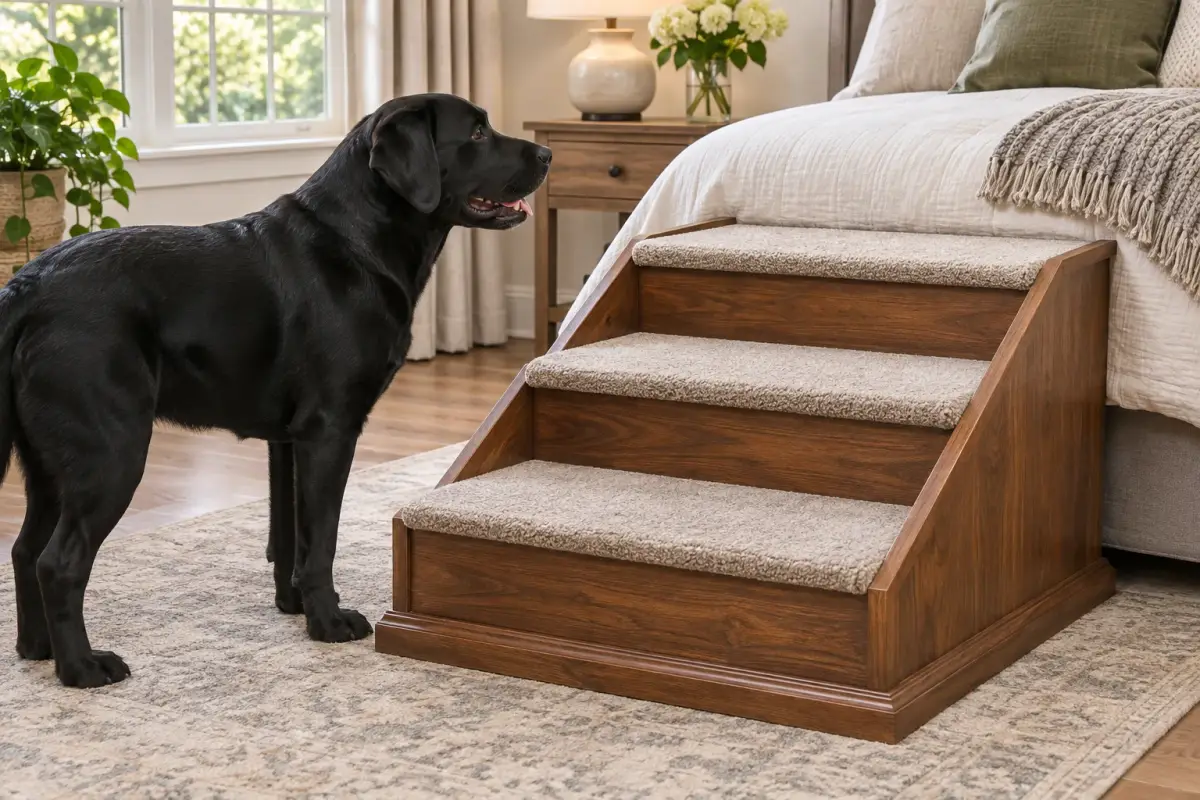
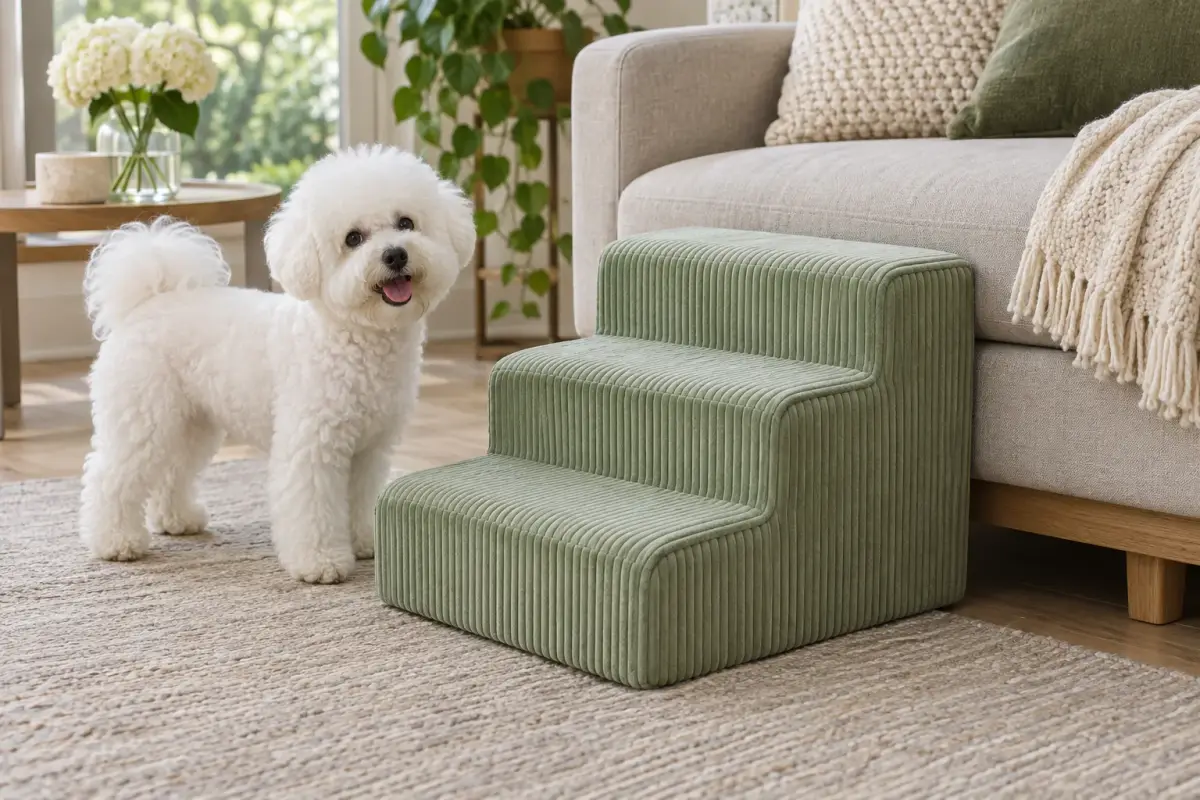
High-density foam steps with a washable cover are light, quiet, soft to land on and easy to move. They suit small and medium dogs, but cheaper foam compresses over time and can feel unstable under heavier dogs. Plastic or wooden framed steps carry more weight and stay firm; check the weight rating.
Some steps double as storage or furniture. Folding steps are handy for travel but less stable. Whatever the build, the base should not slide on hard floors; the AKC recommends slip-resistant surfaces and checking the stated weight limit.
Best choice for each dog
For Dachshunds, Corgis and other long-backed breeds, wide, shallow, deep-tread steps or a gentle ramp to the couch and bed. For toy breeds, foam steps with many low risers. For senior dogs with arthritis, consider a dog ramp first; if you use stairs, choose wide treads and a carpeted surface.
For large dogs, framed steps with a high weight rating and a wide base. For dogs that are nervous on stairs, the AKC notes ramps may suit fearful dogs better. Place steps flush against the furniture and on a non-slip rug if your floor is hard.
Training your dog to use stairs
The AKC advises short sessions, letting your dog sniff and explore first, placing the stairs on a stable surface, and luring with treats one step at a time. Reward each step and never pull, push or punish a hesitant dog. For breeds prone to back problems, teaching the stairs early makes the habit easier.
Check covers, foam and joints regularly and replace dog steps that compress, wobble or slide. If your dog stops using steps it once climbed easily, or starts limping, that can be a sign of pain, so ask your vet.
This page is general information, not veterinary advice, and it cannot replace an examination by the vet who knows your pet.
Step bodies and storage features
| Construction | What supports the steps | What to verify |
|---|---|---|
| Foam | Shaped foam under a cover | Usable tread shape and compression |
| Plastic or wood frame | Rigid body beneath the treads | Stated load rating and connections |
| Storage steps | Step structure with a storage space | Access panel and supported treads |
| Folding steps | Hinged or folding structure | Locks,deployed footprint and folded size |
Common questions
What are the best dog stairs for a bed?
Stairs that reach the full mattress height, with shallow risers, deep treads, a non-slip base and a weight rating above your dog's weight. Measure your bed before buying.
Are dog stairs or a ramp better?
Stairs take less floor space by furniture; ramps are gentler on sore joints and may suit nervous dogs, according to the AKC. Long-backed and arthritic dogs often do better on ramps.
Are foam dog stairs good?
High-density foam steps are light and soft, and suit small and medium dogs. Heavier dogs need firmer framed steps that will not compress or wobble.
How do I get my dog to use dog stairs?
Place them flush to the furniture, lure your dog up one step at a time with treats, keep sessions short and never force it. Reward every successful climb.
Sources we checked
This guide is general information, not veterinary advice. If your pet is unwell or injured, contact your veterinarian.


