






Buying guides
Best Dog Ramp for Bed: How to Choose Slope, Grip and Size
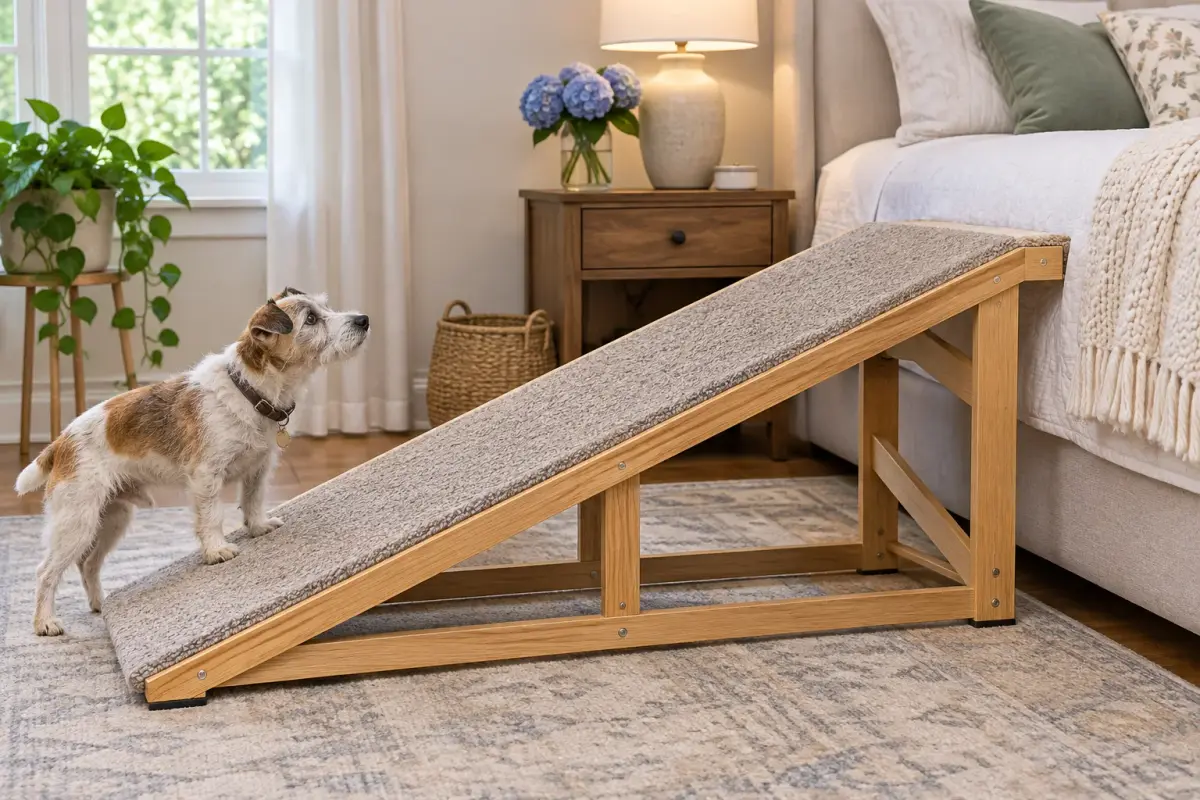
The best dog ramp for a bed reaches the full height of your mattress at a gentle slope, has a non-slip surface along its whole length, is wide enough for your dog's stance and is rated for its weight. A gentle slope means a long ramp, so measure your bed height and the floor space first. Ramps suit dogs that struggle with steps; stairs suit dogs with good balance and less space.
By Matt GarnettUpdated November 14, 20264 min read2 sources
What matters most: slope, grip and stability
A ramp only helps if your dog will use it, and dogs avoid ramps that feel steep or slippery. The AKC's guidance on dog stairs and ramps is to look for a gentle slope, a non-slip surface and a weight rating that suits your dog. For a bed, that means a dog ramp for a bed long enough to reach the mattress top without a steep climb.
Stability matters just as much. A ramp that shifts, flexes or bounces under paw will be refused. Look for rubber feet, a lip or hook that rests securely against the bed frame, and side rails or raised edges for small or unsteady dogs.
Ramps and stairs compared
Ramps suit dogs that can no longer manage steps, dogs with arthritis, long-backed breeds and dogs recovering from injury, as the AKC notes. They need more floor space, because a gentle slope at bed height is several feet long. Folding and telescoping ramps can be stored under or beside the bed, like this foldable dog ramp with a non-slip carpet top.
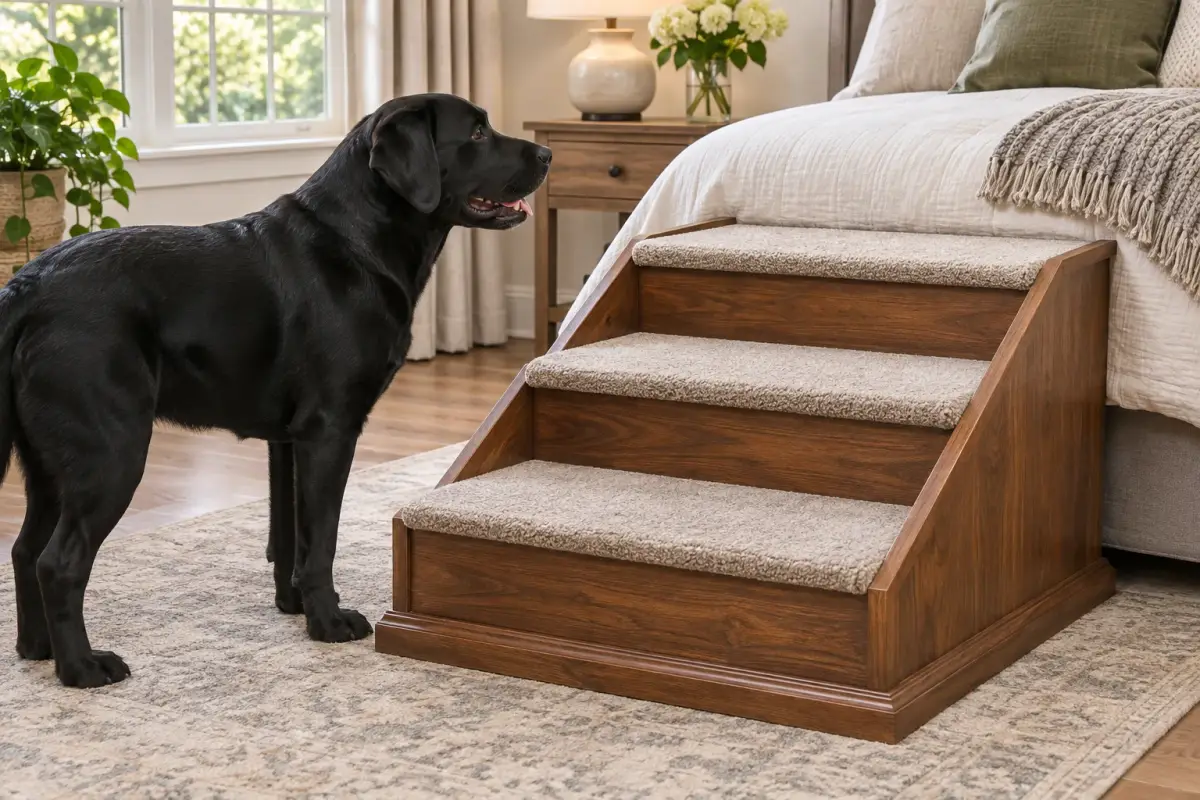
Pet stairs take less space and suit senior dogs that still have good balance but struggle to jump, according to the AKC, which recommends deep steps with an anti-skid surface. Some products combine both, with shallow, wide steps that act almost like a ramp. For tiny dogs and toy breeds, the AKC notes ramps or stairs reduce the impact of repeated jumping off furniture, which can cause injury.
Best choice for each dog
For Dachshunds, Corgis and other long-backed breeds, a ramp with a gentle slope is usually preferred over stairs, to reduce the twisting and jumping that strains the back. For senior or arthritic large dogs, choose a wide, sturdy ramp with a high weight rating and carpet or rubber grip. For toy breeds that leap off beds, a lightweight ramp or wide-stepped stairs with side edges.
For dogs recovering from surgery, ask your vet whether a ramp is appropriate and when, since some recoveries need strict rest. For dogs with poor eyesight, choose a ramp with raised sides, such as this dog ramp with removable guardrails, and a contrasting surface, and keep it in the same spot every day.
What to avoid
Avoid short, steep ramps, slick plastic or painted surfaces, and lightweight ramps that slide on hardwood floors. Avoid ramps narrower than your dog's stance, which make large dogs feel unsafe. Avoid foam ramps for heavy dogs unless the foam is dense and the ramp is rated for their weight.
If your dog suddenly refuses to jump on the bed, yelps when climbing or seems stiff, that change may be pain rather than habit, and it is worth a vet visit before or alongside buying a ramp. Long-backed breeds with back pain need prompt attention.
How to measure for a bed ramp
Measure from the floor to the top of the mattress where your dog will step off. For a comfortable slope, many ramps for beds run roughly 18 to 25 degrees; the lower the angle, the longer the ramp. As a rough guide, a 24-inch bed needs a ramp of around 5 to 6 feet for a gentle climb.
Measure your dog's width at the shoulders and choose a ramp at least a few inches wider for small dogs and 14 inches or more for large dogs. Check the floor space beside the bed, and whether the ramp's top edge will sit securely on the mattress or bed frame.
Training, care and lifespan
Introduce the ramp flat on the floor first, luring your dog across with treats, then raise it gradually. The AKC suggests starting at a low angle and making it steeper as your dog becomes comfortable. Keep sessions short and reward every success; never push or drag a dog up.
Vacuum carpeted surfaces and wipe rubber treads regularly, since hair makes them slippery. Check hinges, feet and any locking mechanisms monthly, and browse our dog ramps for beds if yours needs replacing. A well-made wooden or metal-frame ramp lasts many years; foam ramps compress and may need replacing sooner.
This page is general information, not veterinary advice, and it cannot replace an examination by the vet who knows your pet.
Bed-access formats and space to measure
| Format | Physical arrangement | Space or access check |
|---|---|---|
| Ramp | A continuous slope between floor and bed | Full deployed length and available floor space |
| Folding ramp | Ramp sections fold for storage | Both deployed footprint and folded storage space |
| Telescoping ramp | Sliding sections change the stored length | Extended length and locking arrangement |
| Pet stairs | Separate treads rise toward the bed | Tread depth, surface and approach space |
| Shallow-step hybrid | Wide, shallow treads create an intermediate layout | Individual tread dimensions and total rise |
Common questions
Is a ramp or stairs better for a dog to get on the bed?
Ramps suit dogs with arthritis, back problems or poor balance. Stairs take less space and suit dogs that can still climb steps. Long-backed breeds usually do better on ramps.
How long should a dog ramp for a bed be?
Long enough for a gentle slope. For a 24-inch bed, around 5 to 6 feet is a common guide. Measure your bed height and floor space first.
How do I get my dog to use a ramp?
Start with the ramp flat on the floor, lure your dog across with treats, then raise it gradually. Keep sessions short and positive, and never force your dog.
Do Dachshunds need a ramp for the bed?
Many owners use one to reduce jumping, which strains a long back. A gentle, non-slip ramp is usually preferred over stairs for Dachshunds. Introduce it slowly with treats so your dog trusts it.
Sources we checked
This guide is general information, not veterinary advice. If your pet is unwell or injured, contact your veterinarian.


