






Buying guides
Best Bedding for Guinea Pigs: What Is Safe and Easy to Clean
The best guinea pig bedding is either unscented paper bedding or washable fleece liners with an absorbent layer underneath, laid on a solid floor. VCA rates shredded or recycled paper as the best bedding because it is safe if eaten and not dusty, and advises against wood shavings. Choose by how often you can clean, because guinea pigs are messy.
By Matt GarnettUpdated November 10, 20263 min read2 sources
What matters most in guinea pig bedding
Breathing comes first. Guinea pigs spend their lives nose-down in their bedding, and VCA advises that shredded newspaper or commercial recycled paper products make the best bedding because they are safe if eaten and not dusty or irritating to the airways. VCA also says wood shavings should not be used for guinea pigs, as some can irritate the respiratory tract.
Absorbency and comfort come next. Guinea pigs produce a lot of urine, so bedding must pull moisture away from their feet. Wet bedding leads to smell and to sore feet. VCA recommends solid flooring rather than wire mesh, which can cause foot sores, so bedding should sit on a solid base. Whatever you choose, leave room in the cage for the hides and hay racks in our small pet supplies range.
Bedding types compared
Paper bedding is absorbent, soft, low-dust and disposable, which makes it the simplest choice. It costs more over time and needs frequent changes. Fleece liners, a top layer of fleece over an absorbent core such as towels or a purpose-made pad, wick urine away from the surface and can be washed and reused, which suits owners who prefer laundry to buying bedding.
Aspen shavings are cheaper and absorbent, but VCA's guidance against wood shavings makes paper or fleece the safer choice. Cedar and pine carry aromatic oils and should be avoided. Hay is food and enrichment, not bedding on its own, but a thick hay area for burrowing and eating is essential.
The best type for each home
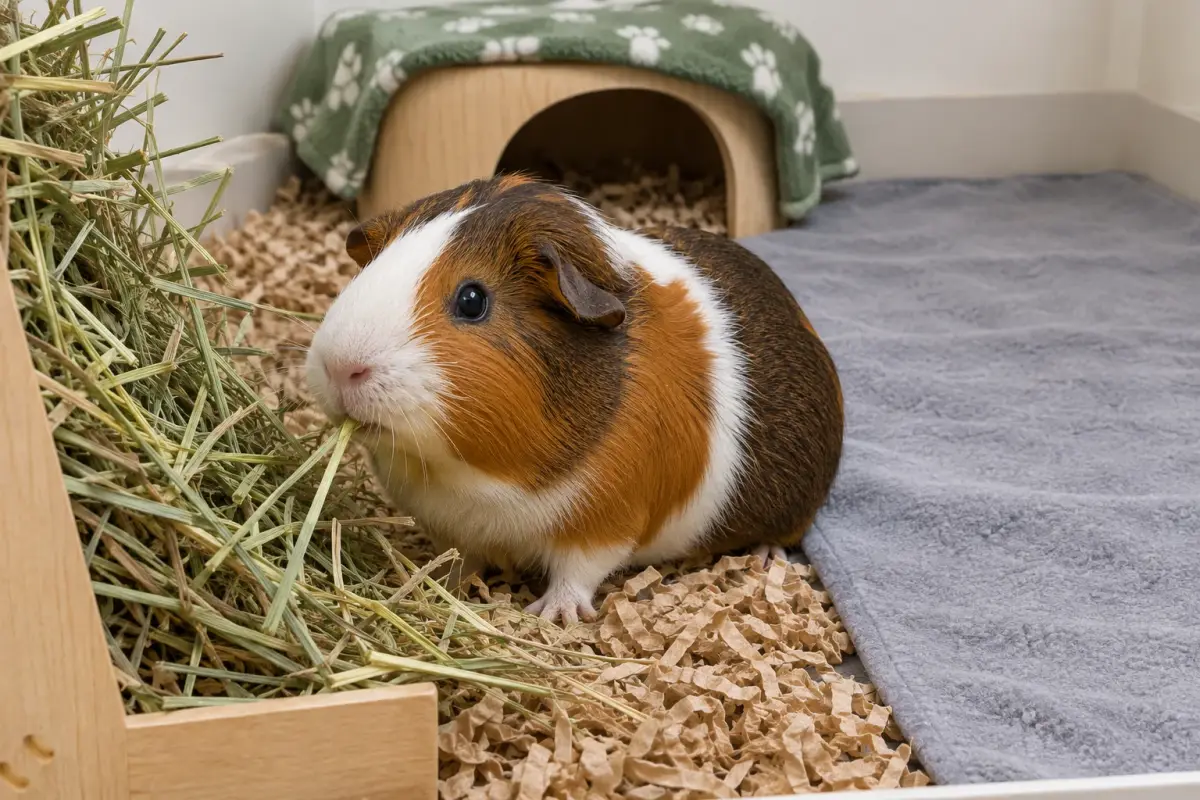
For first-time owners, paper bedding is the most forgiving: spot-clean, top up, and change fully weekly. For owners who want lower ongoing cost and less waste, fleece liners with a washable absorbent layer work well, provided you sweep droppings daily and have a second set while one is in the wash.
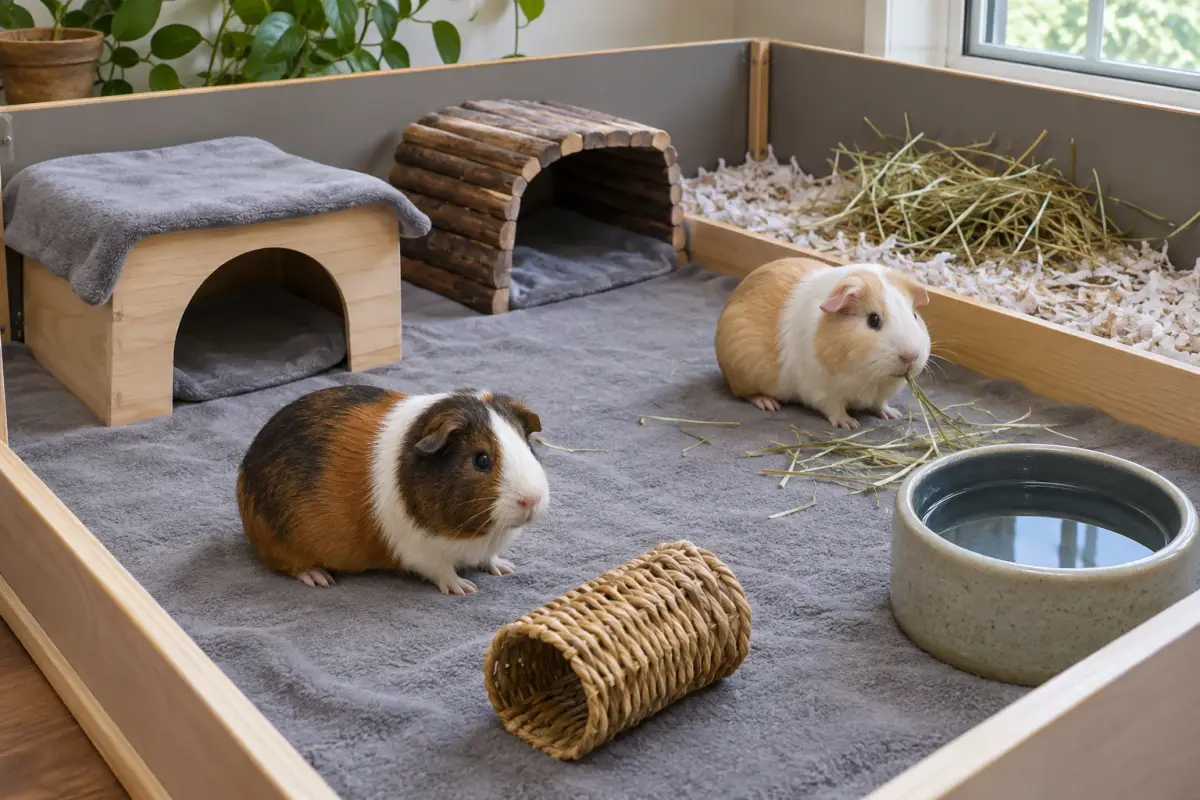
For a pair or group in a large cage, a mixed approach is common: fleece in the main living area and a paper-lined, hay-filled corner where guinea pigs tend to toilet. VCA recommends keeping at least two guinea pigs together and providing a hiding hut for each, so plan bedding for the full space.
Cage size and setup
Bedding works best in a cage big enough to keep toilet and living areas apart. VCA gives a minimum indoor cage size of 24 by 36 inches for a guinea pig, with solid flooring; many owners give a pair considerably more, because extra floor space keeps bedding cleaner for longer. A small animal playpen can add supervised daytime floor space for a guinea pig pair.
Line the base fully, add hides, a hay rack or hay pile, a water bottle or bowl, and chew items. Keep the cage away from drafts, direct sun and heaters, and off cold floors in winter. Once the bedding is sorted, browse small pet supplies for the bowls and hides to finish the guinea pig setup.
Cleaning routine and what to avoid
VCA advises spot-checking the cage daily and cleaning thoroughly at least once a week. In practice, remove wet patches and droppings every day, replace paper bedding fully each week, and wash fleece liners every few days to a week depending on the number of guinea pigs.
Avoid cedar and pine shavings, scented bedding, cat litter, sawdust and corn cob. Watch for sneezing, discharge, crusty eyes, sore feet or reduced eating, and see a vet who treats guinea pigs promptly, because they can go downhill fast.
Common questions
What is the best bedding for guinea pigs?
Unscented paper bedding or washable fleece liners over an absorbent layer. Both are low in dust, comfortable and absorbent. Avoid cedar, pine and scented beddings.
Are fleece liners good for guinea pigs?
Yes, when they have an absorbent layer underneath and you sweep droppings daily and wash them often. They reduce waste and cost but need more laundry.
Can guinea pigs use hay as bedding?
Hay is mainly food and should always be available, and guinea pigs love burrowing in it, but on its own it is not very absorbent and soils quickly. Use it alongside paper or fleece bedding.
How often should guinea pig bedding be changed?
Spot-clean wet patches and droppings daily and do a full bedding change at least once a week. VCA advises checking the cage every day and cleaning it thoroughly weekly.
Sources we checked
This guide is general information, not veterinary advice. If your pet is unwell or injured, contact your veterinarian.

