






Buying guides
Best Dog Stairs for Large Dogs: What Actually Matters
The best dog stairs for a large dog have a weight rating well above your dog's weight, steps wide and deep enough for a big frame, a grippy surface and a base that does not wobble. For a car or a dog with sore joints, a ramp is often the better tool. Check the weight limit first, because everything else depends on it.
By Matt GarnettUpdated November 14, 20264 min read2 sources
Why large dogs need a different kind of stairs
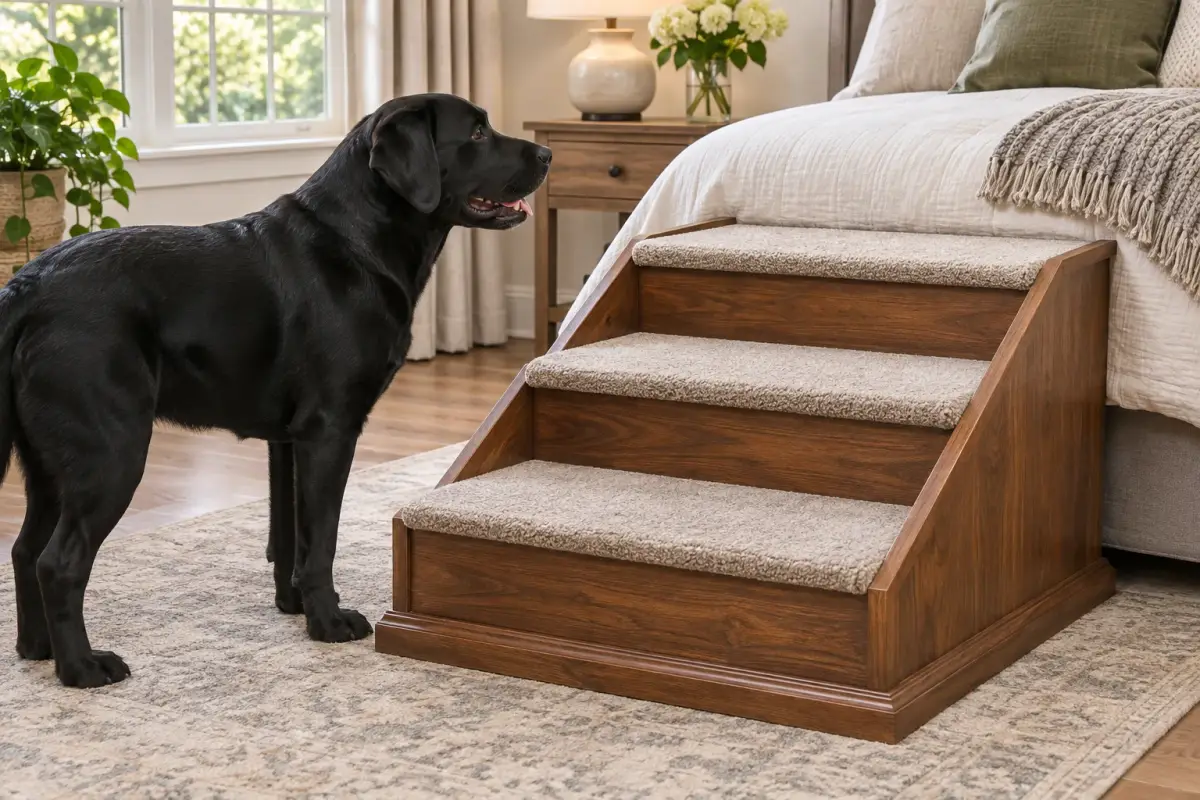
Many stairs are built for small dogs and sofas, and a large dog can outgrow them or break them. The AKC says a flimsy ramp or step set can snap under a giant breed, and that lifting a heavy dog is dangerous for you both. Our dog stairs for large dogs are the starting point if you want steps rather than a ramp.
Stairs help most when a big dog is still fairly agile but struggles to jump onto a bed, couch or into a vehicle. Skipping the leap spares the shoulders, hips and back, which take a pounding when a heavy dog jumps down. Working out the height, weight and width you need before you shop avoids a purchase that does not fit.
What matters most: weight rating, width and step depth
Weight rating comes first. The AKC advises checking the manufacturer's weight limit against your dog's weight. It is sensible to leave a margin, because a dog landing from a jump puts more force on a step than standing still. If a listing does not state a limit, treat that as a reason to look elsewhere.
Width matters next. The AKC notes that if stairs are too narrow your dog may lose confidence or fall off the side, so choose a width that comfortably fits your dog's shoulders. Deep treads let all four paws land on one step, and a gentle rise between steps keeps a large dog from having to hop. Measure the height of your bed, couch or vehicle floor and match it.
Grip, stability and side protection
A non-slip surface is not optional. The AKC says to choose non-slip surfaces to prevent slipping, and VCA Hospitals recommends adding a carpet runner or grip tape to indoor stairs. Rubber feet on the base and a rug-style or textured tread help, and a set that rocks when you press on it will not give your dog the confidence to climb.
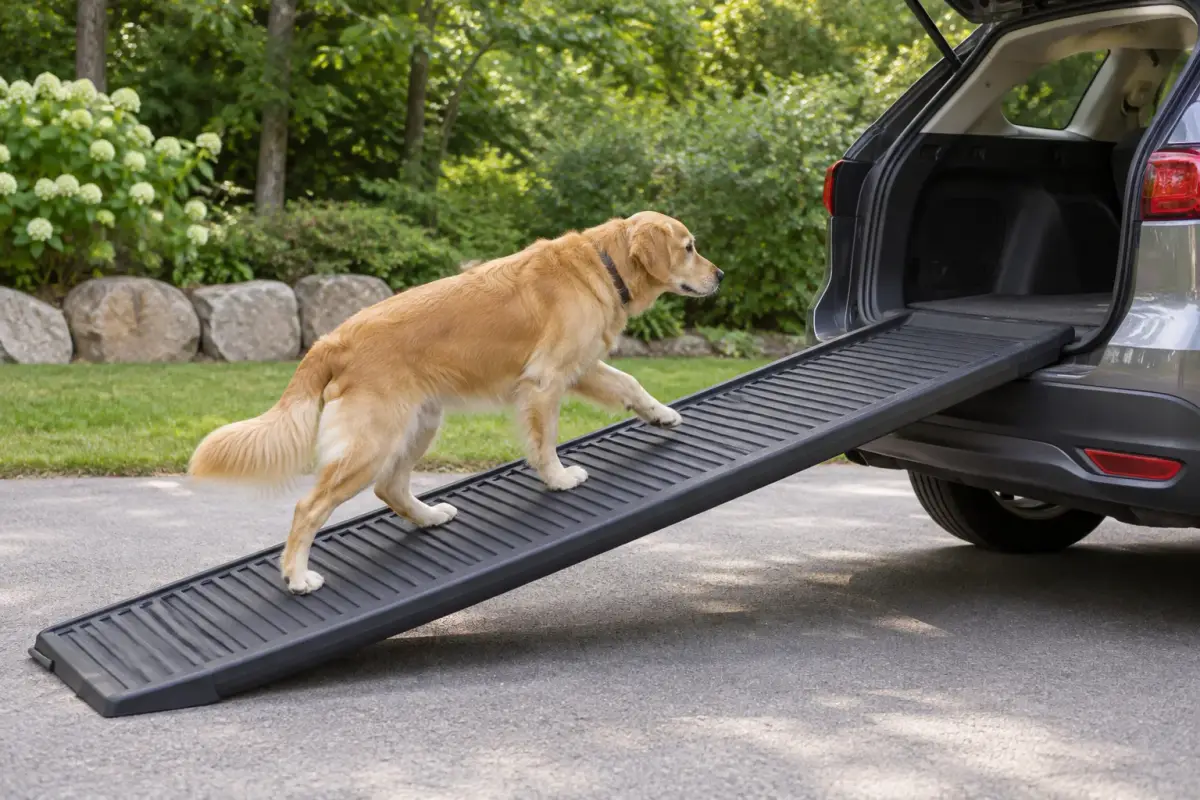
Place stairs on a flat, stable surface, and if you can, put a barrier on at least one side so your dog is guided up and cannot leap off the edge early. Outdoors, VCA Hospitals suggests that a ramp with good traction is often the better choice, with side protection so your dog cannot fall off.
Stairs, steps and ramps compared
For a bed or couch, a foldable step set such as the 2-in-1 dog stairs for bed and couch can double as a ramp, so check which weight rating applies in each mode. A wide, folding set such as the extra-wide foldable dog stairs with a non-slip surface suits vehicle use and stores flat.
For a car, SUV or truck, the AKC says ramps are lighter and fold more easily than quality stairs, which is why they suit vehicles. A portable style like the foldable dog ramp for cars, SUVs and trucks is one example. Adjustable-height steps like the pet stairs with adjustable height help when the surface you are climbing to varies.
Joint problems: stairs are not always the answer
Stairs and ramps reduce jumping, but they are not risk-free for a dog with arthritis or other joint pain. The AKC says to have a vet evaluate your dog first, because dogs often hide pain, and it lists hesitating, carefully positioning before a jump and climbing sideways as warning signs. Your vet can tell you whether stairs, a ramp or limiting access suits your dog.
VCA Hospitals notes that if your vet advises limiting stairs, baby gates can block access, and a support harness can help you assist your dog up and down. A ramp starts at a low angle that you can raise as your dog becomes comfortable, which is gentler on sore joints than a steep set of steps.
Training your dog to use stairs
Start with short sessions and let your dog sniff and explore the stairs. Lure with a treat or favorite toy and reward each step, building up a few steps at a time. The AKC says never to push, pull or punish, and to go easy with older dogs and dogs recovering from injury.
Keep the first sessions low, for example with the stairs flat against the floor or only the first step in use, and stay beside your dog. If your dog refuses, check the stairs for wobble, noise or a slippery surface before you blame your dog, and see our dog stairs for large dogs range for a sturdier fit.
This page is general information, not veterinary advice, and it cannot replace an examination by the vet who knows your pet.
Steps and ramps for different destinations
| Format | Configuration difference | Measurement or rating to verify |
|---|---|---|
| Step-and-ramp combination | The same item changes mode | Dimensions and rating in each mode |
| Wide folding steps | A wider step set folds for storage | Deployed tread space and folded footprint |
| Vehicle ramp | A continuous slope toward a vehicle | Landing interface and extended length |
| Adjustable-height steps | The upper level changes | Height settings and locking method |
Common questions
Are dog stairs or a ramp better for a large dog?
A ramp suits cars and heavy dogs that struggle to climb, while stairs suit agile dogs getting onto furniture. The AKC says ramps are lighter and fold more easily, so they are usually the better choice for vehicles.
How do I know the stairs will hold my dog?
Check the manufacturer's stated weight limit and leave a margin above your dog's weight. The AKC warns that a flimsy set can snap under a giant breed, so avoid listings that give no weight rating.
Are dog stairs good for dogs with arthritis?
They can reduce jumping, but ask your vet first. The AKC says dogs often hide pain, and stairs can be risky for some joint conditions, so your vet should judge whether steps, a ramp or blocked access is safest.
How do I teach my dog to use stairs?
Use short sessions, lure with treats and reward each step, adding one or two steps at a time. Never push, pull or punish your dog, and take extra care with senior dogs or dogs recovering from injury.
Sources we checked
This guide is general information, not veterinary advice. If your pet is unwell or injured, contact your veterinarian.


