







Dogs
Undercoat rakes
Ready for any weather.
17 items picked for everyday life with your pet, with shipping estimates on every item.
 Snug, dry and looking the part.
All dogs grooming & hygiene →Dog bath brushes →Dog nail clippers →Dog combs →Slicker brushes →Dog nail grinders →Dog paw balm →Dog paw cleaners →Dog brushes →Dog drying towels →Dog grooming tables →Deshedding tools →Puppy pads →
↗Tracked US shippingEstimates on every item↶Returns & refundsHow it works♡Here to helpTalk to Giddy Pets
All undercoat rakes
Little essentials. Lots of love.
Dematting combs & tools
Dematting Comb and Undercoat Rake, Single or Double Sided
- Options
- 10 to choose from
From $15.99

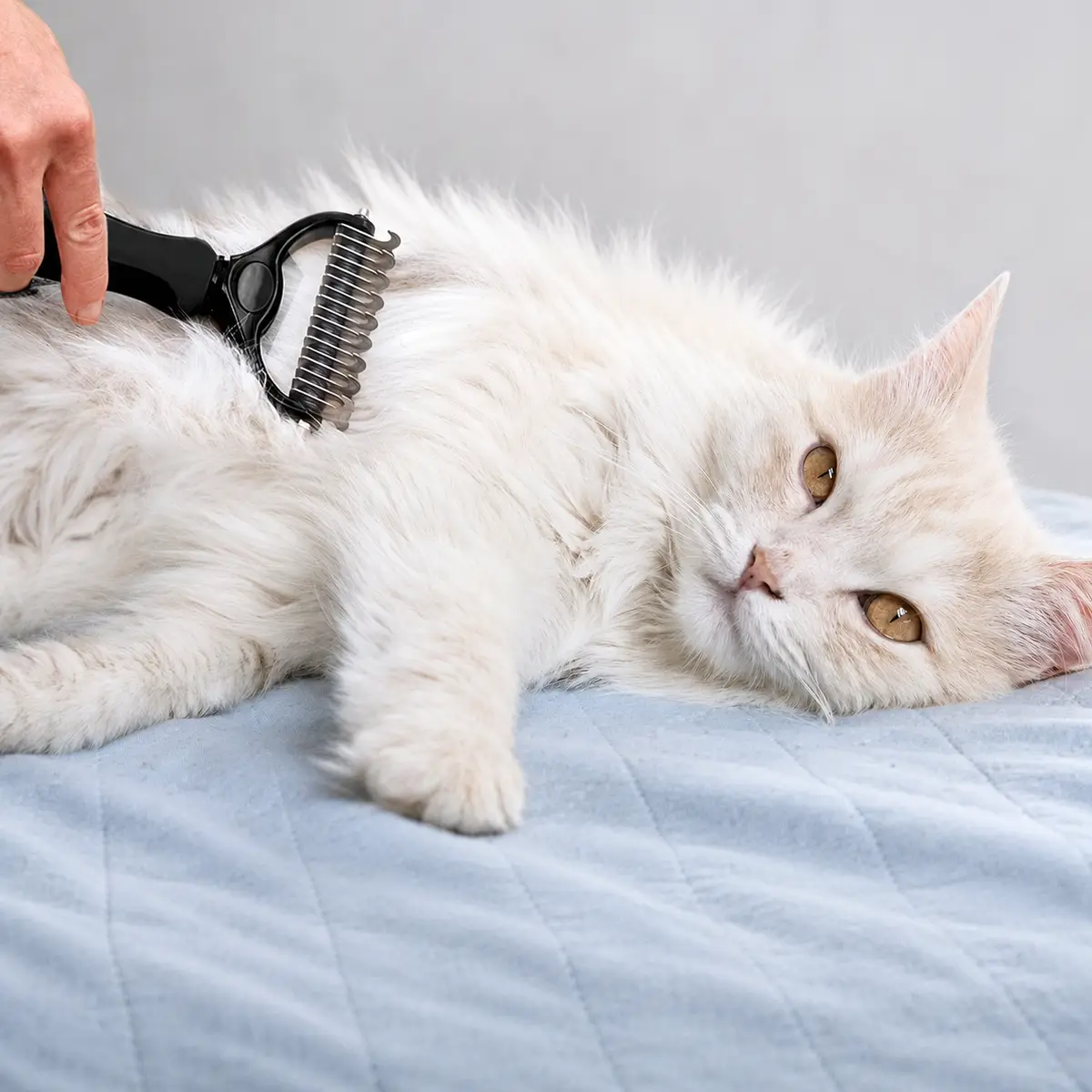


Dematting combs & tools
Double-Sided Dematting and Undercoat Comb for Cats and Dogs
- Options
- 2 to choose from
$18.99


Dematting combs & tools
Double-Sided Pet Grooming Rake, 2.8 or 3.7 in Wide
- Options
- 14 to choose from
From $15.99


Dematting combs & tools
Two Sided Pet Grooming Rake with Fine Tooth Comb
- Options
- 6 to choose from
From $19.99


Undercoat rakes
Stainless Steel Undercoat Dematting Rake for Dogs and Cats
- Options
- 2 to choose from
$19.99

A little guidance
Help choosing undercoat rakes
Buying guides and care advice written for this range: what to measure, what matters and what to skip.
From our guides
This page narrows our dog grooming tools to undercoat rakes: stainless steel dematting rakes for dogs and cats, wooden-handle rake combs, ergonomic dematting combs, double-sided rakes that combine coarse and fine teeth, large deshedding rakes for big dogs, round-tipped rakes that are gentler on skin, and double-row rakes. They are for double-coated breeds that blow their coat, such as Huskies, shepherds and Golden retrievers. The guide below covers using one well.
What an undercoat rake does
Double-coated breeds have a coarse outer coat of guard hairs and a dense, soft undercoat beneath. The undercoat sheds heavily, often in seasonal blowouts in spring and fall, and if loose undercoat is left in, it packs down, mats and traps moisture against the skin.
An undercoat rake has long, widely spaced teeth that reach through the top coat and pull out loose undercoat without cutting the guard hairs. It is the tool to reach for on Huskies, Malamutes, German shepherds, Golden retrievers, Samoyeds, Collies and similar breeds.
Single, double-row and dematting rakes
Single-row rakes are the classic design and work well for routine deshedding. Double-row rakes have two staggered rows of teeth that catch more undercoat in each pass. Round-tipped teeth glide more comfortably over the skin, which suits sensitive dogs.
Dematting rakes and double-sided combs have sharpened or bladed teeth on one side designed to work through tangles and mats, with finer teeth on the other for finishing. Use the bladed side carefully, working at mats from the outer edge, and switch to the fine side for smoothing.
How to use an undercoat rake
Work on a dry, brushed coat. Hold the rake at a slight angle and pull it in the direction the hair grows, with gentle, short strokes. Work in sections, starting at the neck and moving back, and lift the outer coat with your other hand to reach the undercoat.
Do not press down hard or scrape the skin, and stop when the rake comes away with little hair. Over-raking can thin the coat and irritate the skin. Follow with a slicker brush or comb to tidy the top coat. During a heavy shed, short daily sessions work better than one long one.
Never shave a double coat to stop shedding
It can be tempting to shave a heavily shedding dog, but the undercoat helps insulate against both cold and heat, and the outer coat protects the skin from sun. Shaving can leave the coat growing back patchy and uneven in some breeds. Regular raking is the better way to manage shedding.
VCA Animal Hospitals notes that regular grooming keeps the coat and skin healthy and gives you a chance to check for lumps, parasites and sore spots. If your dog's skin is red, scaly or the coat is thinning in patches, see your vet.
What is an undercoat rake used for?
It removes loose undercoat from double-coated dogs without cutting the outer guard hairs. It reduces shedding, prevents matting and helps the coat stay healthy, especially during seasonal coat blows.
How often should I use an undercoat rake?
Once or twice a week for most double-coated dogs, and daily during heavy seasonal shedding. Stop each session when the rake brings out little hair.
Can I use an undercoat rake on a short-haired dog?
Undercoat rakes are designed for double coats. Short, single-coated dogs such as Boxers do better with a rubber curry brush or grooming mitt. Using a rake on a single coat can scratch the skin.
Is a dematting rake the same as an undercoat rake?
Not quite. A dematting rake has sharpened or bladed teeth for cutting through tangles, while a standard undercoat rake simply pulls out loose undercoat. Double-sided tools combine both.
Can an undercoat rake be used on cats?
Yes, on long-haired and dense-coated cats such as Maine Coons, with a light touch. Choose a small rake with rounded teeth and stop if your cat becomes uncomfortable.