






Breeds
Deshedding Tool vs Undercoat Rake: Which Do You Need?
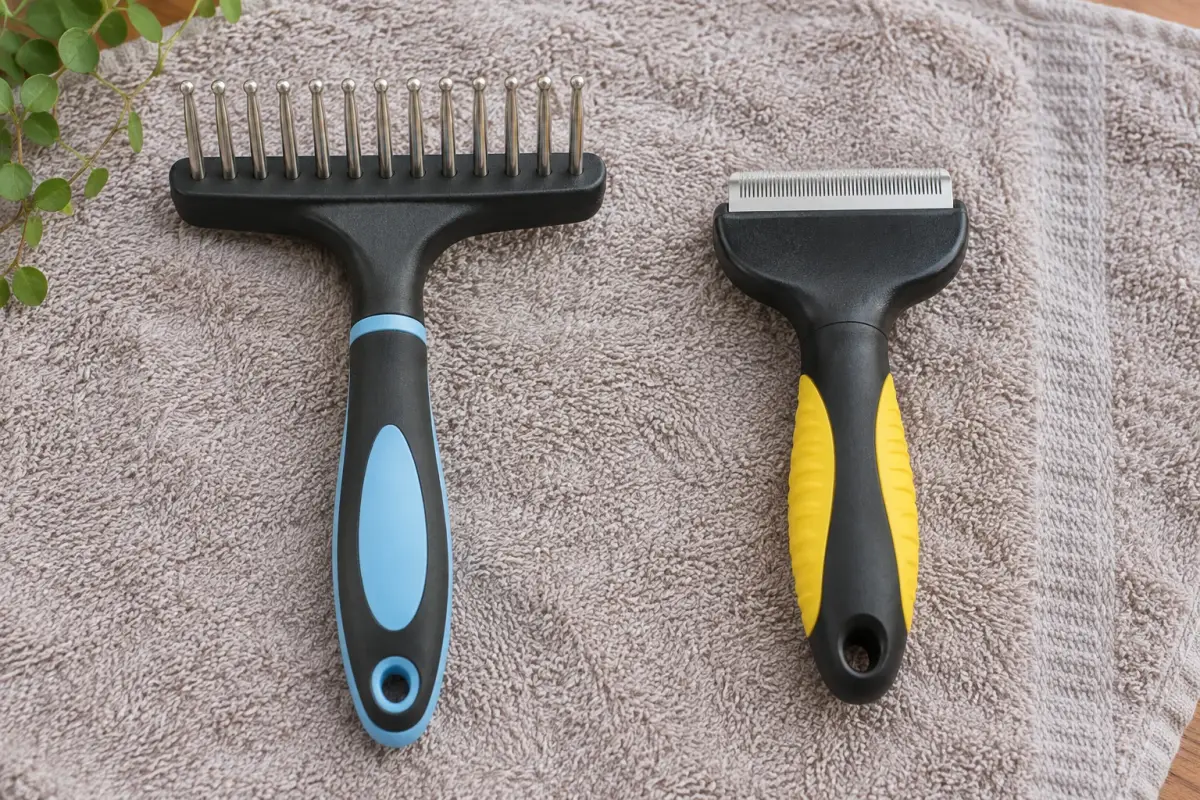
Both tools remove loose undercoat from double-coated dogs. An undercoat rake has long, widely spaced metal teeth that reach deep into thick or long coats and pull out dense, packed undercoat. A blade-style deshedding tool has a fine-toothed edge that skims loose hair close to the topcoat, and works well on short and medium double coats. Many owners of heavy shedders use both.
By Matt GarnettUpdated November 9, 20263 min read3 sources
How an undercoat rake works
An undercoat rake looks like a small garden rake: a handle with one or two rows of rounded metal teeth, often rotating, spaced apart. Examples in our range include a double-sided undercoat rake and a wooden-handle undercoat rake comb. You pull it through the coat in the direction of growth, and the teeth slide past the long guard hairs to catch and draw out the soft, dead undercoat beneath. An AKC breeder guide describes it as a tool that penetrates and removes loose hair from deep in the coat.
Rakes suit long, thick double coats, such as Huskies, Malamutes, Samoyeds, Bernese Mountain Dogs, Collies and long-coated German Shepherds, especially during a seasonal coat blow when the undercoat is packed and matted. The rounded teeth are generally gentle on skin, and choosing a tooth length close to the depth of your dog's coat gives the best results. Our guide to the best undercoat rakes goes through the options in more depth.
How a deshedding tool works
A deshedding tool has a short, fine-toothed steel edge, like a very fine comb set in a handle. Drawn lightly along the coat, it catches loose undercoat hairs sitting just under the topcoat. It removes a lot of hair quickly on dogs with short to medium double coats, such as Labradors, Golden Retrievers, Corgis, Beagles and Pugs.
The AKC notes some German Shepherd owners use a deshedding tool weekly, increasing to daily during heavy shedding, but warns that used incorrectly it can damage the coat. Pressing hard, working the same patch repeatedly, or using it daily outside shedding season can cut or thin guard hairs and irritate skin.
Which to choose for your dog
For long or very thick coats, start with an undercoat rake, which reaches deep without dragging. For short to medium double coats, a deshedding tool often removes more loose hair, faster. For dogs with a thick coat of medium length, owners commonly use the rake first to loosen packed undercoat, then a deshedding tool or slicker brush to finish.
Neither tool suits single-coated, curly or wiry dogs such as Poodles, Bichons, Schnauzers or Yorkies. Those coats need slicker brushes, dog combs and professional trims instead. Smooth single coats such as Boxers do best with a rubber curry brush or grooming mitt.
How to use either one safely
Brush out tangles first, ideally after a bath and once your dog is fully dry. Work in sections, in the direction of hair growth, with light pressure, then lift the tool up and away at the end of each stroke. The AKC advises light pressure on any tool with blades. Stop when only a little hair comes out of an area, and move on.
Avoid sore spots, lumps, the belly, armpits and other thin-skinned areas with blade tools. Check the skin as you go; redness or brush burn means you are pressing too hard or going over the same spot too often. Brush outdoors if possible, as these tools release a lot of hair.
How often to use them
During a seasonal shed, every day or two is reasonable for a short session with either tool. Outside shedding season, once a week is usually plenty with a rake, and a deshedding tool may only be needed every week or two. A slicker brush or comb covers routine brushing in between. When you are ready to buy, browse our undercoat rakes.
If your dog is shedding heavily outside the normal seasons, has bald patches, red or scaly skin, or scratches a lot, a brush is not the answer. Ask your vet to check for fleas, allergies, skin infection or hormonal problems.
This page is general information, not veterinary advice, and it cannot replace an examination by the vet who knows your pet.
Common questions
Is an undercoat rake better than a deshedding tool?
Neither is better overall. Rakes suit long, thick coats and packed undercoat; deshedding tools suit short and medium double coats. Many owners of heavy shedders use a rake first and a deshedding tool after.
Can a deshedding tool hurt my dog?
It can if you press hard or overuse it, causing brush burn or cut guard hairs. Use light pressure, work with the hair, avoid thin-skinned areas and limit sessions outside shedding season.
Should I use a deshedding tool on a Golden Retriever?
Many Golden owners do during shedding season, with light pressure and short sessions. An undercoat rake and slicker brush also work well for the longer feathering on legs, chest and tail.
Sources we checked
This guide is general information, not veterinary advice. If your pet is unwell or injured, contact your veterinarian.


