






Buying guides
Best Dog Undercoat Brush: How to Choose an Undercoat Rake
The best undercoat brush for most double-coated dogs is an undercoat rake with rounded metal pins long enough to reach the skin through the outer coat. Match pin length to coat length: short pins for Labradors and Corgis, longer pins for Huskies, Shepherds and Malamutes. A double row of pins pulls more hair; a single row is gentler. Rounded tips and light pressure keep it comfortable.
By Matt GarnettUpdated November 14, 20264 min read2 sources
What matters most: pin length and rounded tips
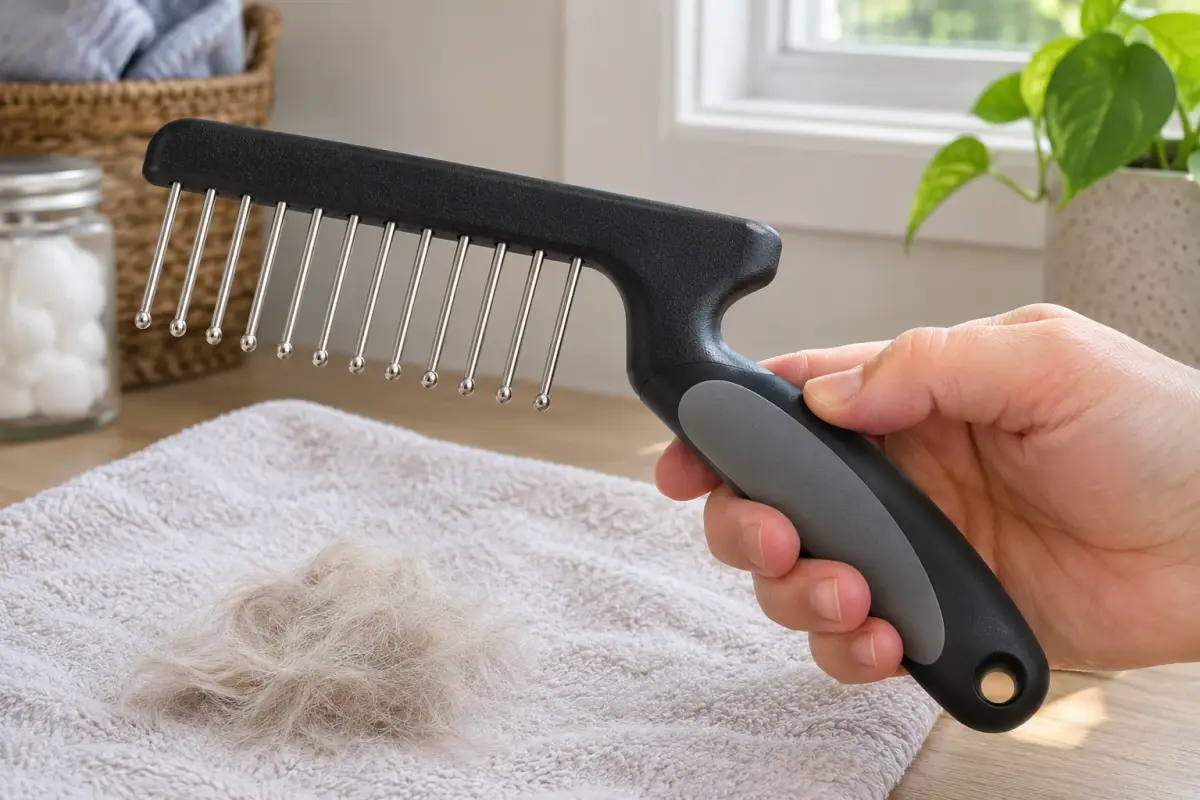
An undercoat rake works by reaching under the outer coat and pulling out loose, shed undercoat. The AKC's brush guide describes rakes as having one or two rows of metal pins that reach the undercoat to remove loose fur and prevent mats, and stresses choosing a pin length that matches your dog's coat. Pins that are too short skim the surface; pins too long dig into the skin.
Rounded or rotating pins are the comfort feature. They slide through the coat rather than scratching, which matters because you will be pulling the rake through thousands of hairs. A handle with a good grip, such as the wooden handle on this undercoat rake comb, and a balanced head makes long sessions on a big dog less tiring.
Rake types compared
Single-row rakes are gentler and suit medium coats, sensitive dogs and finishing work. Double-row rakes, with long and short pins staggered, pull more undercoat per stroke and suit very dense coats during a blowout. Rotating-pin rakes have pins that turn as they pass through the coat, reducing pulling.
Undercoat rakes differ from bladed deshedding tools, which have a fine-toothed edge that grabs undercoat but can also cut or thin outer guard hairs if overused. Dematting rakes have sharpened blades for cutting through mats and are a separate tool. For routine undercoat removal, a rake is the safer everyday choice. Our comparison of deshedding tools and undercoat rakes covers the trade-offs.
Best rake for each coat
For short double coats such as Labradors, Pugs and Beagles, a short-pin rake or a rubber curry brush is enough. For medium double coats such as Corgis, Border Collies and Australian Shepherds, a medium-pin single or double-row rake, such as a double-sided undercoat rake. For long, dense coats such as Huskies, Malamutes, German Shepherds and Great Pyrenees, a long-pin double-row undercoat rake.
For single-coated breeds such as Poodles, Maltese and Shih Tzus, an undercoat rake is not needed; a slicker and comb suit them better. For puppies, wait until the adult coat begins to come in and start with a gentle single-row rake in short sessions.
What to avoid
Avoid pressing down hard, which scrapes the skin, and avoid raking the same spot repeatedly. Avoid using bladed deshedding tools as everyday brushes on double coats, since they can damage guard hairs over time. Avoid shaving instead of raking; the AKC's double-coat guidance warns shaving does not stop shedding and damages the coat.
Stop if you see redness, scratches or your dog flinching. Sores, hot spots, bald patches or flaky skin found while raking should be shown to your vet, since they are not normal shedding.
How to use an undercoat rake
Brush when the coat is dry, or after a bath once fully dried. Work in small sections, pulling the rake through in the direction of hair growth and lifting it away at the end of each stroke, as the AKC describes for rake technique. Start at the back legs and work forward, so you are always brushing into coat you have not yet raked.
Clear hair from the pins often. Finish with a slicker brush on the outer coat and a comb to check for tangles. During a heavy shed, a bath and a high-velocity dryer before raking loosen far more undercoat.
How often to rake, and tool care
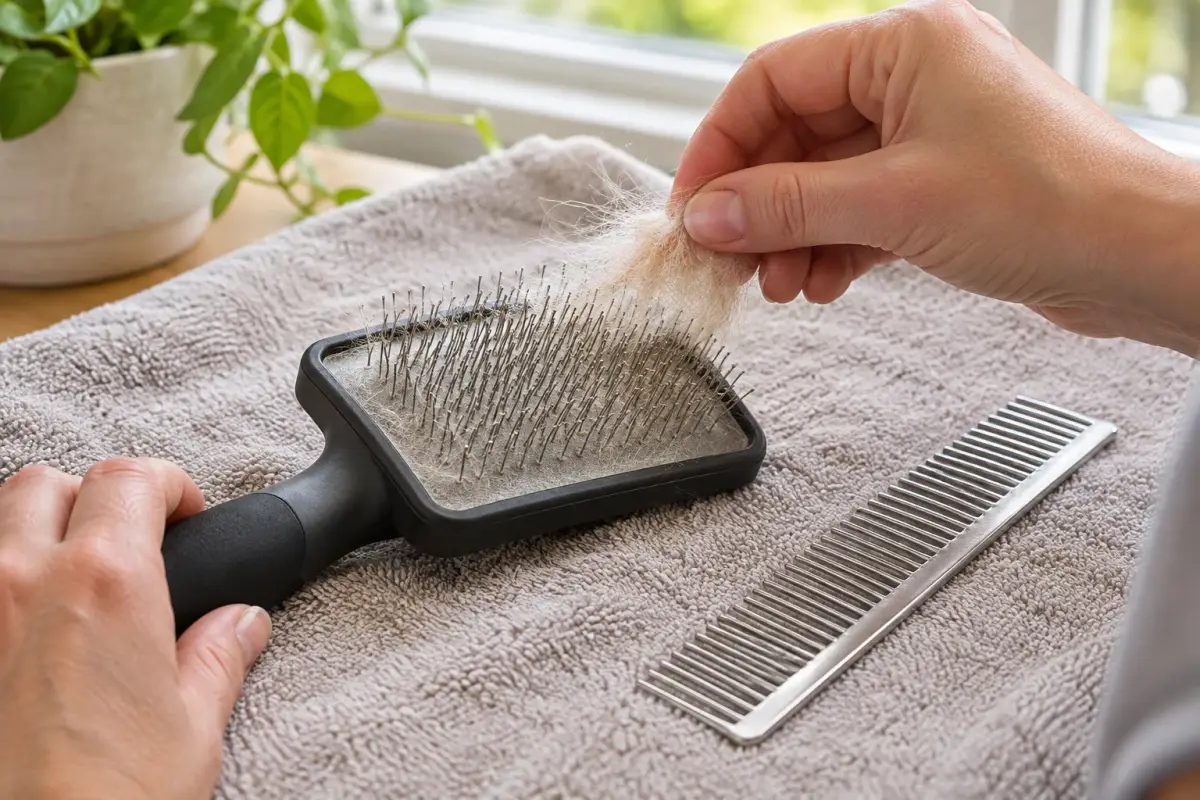
Rake once or twice a week most of the year and every day or two during seasonal blowouts (see how much huskies shed for what that looks like). Regular raking prevents mats and reduces hair around the house far more than bathing does.
Wash the rake occasionally in warm soapy water and dry it fully to prevent rust. Replace it when pins loosen, bend or lose their rounded tips. A sturdy metal rake lasts many years; you can browse every undercoat rake we list.
Hang the rake or store it pins-up in a drawer so the tips are not bent by other tools.
Rake tooth and edge construction
| Type | Working surface | Check separately |
|---|---|---|
| Single-row rake | One row of spaced pins | Pin ends,length and spacing |
| Double-row rake | Two staggered rows of pins | Both pin lengths and spacing |
| Rotating-pin rake | Pins turn within the head | Pin movement and condition |
| Bladed deshedding tool | A fine edged working surface | Exact directions and coat suitability |
| Dematting rake | Sharpened edges intended to cut mats | Professional guidance before unfamiliar use |
Common questions
Is an undercoat rake better than a deshedding tool?
For everyday use on double coats, usually yes. Rakes remove loose undercoat without cutting guard hairs. Bladed deshedding tools remove more hair but can damage the outer coat if overused.
What pin length do I need for my dog's undercoat rake?
Short pins for short double coats, medium for Corgis and Collies, and long pins for Huskies, Shepherds and other long, dense coats. The pins should reach the skin without digging in.
How often should I use an undercoat rake?
Once or twice a week normally, and every day or two during heavy seasonal shedding. Light pressure and short sessions keep it comfortable, and clearing hair from the pins often makes each stroke work better.
Do Poodles need an undercoat rake?
No. Poodles and other single-coated breeds have no undercoat to remove. Use a slicker brush and a comb instead. Mats in those coats are handled with a comb or splitter.
Sources we checked
This guide is general information, not veterinary advice. If your pet is unwell or injured, contact your veterinarian.


