







Tactical dog collars
Handled Dog Collar and Double-Handle Bungee Leash Options
- Options
- 32 to choose from
From $18.99
Free US shipping over $49 · 30-day free returns · Happy pets, happy homes
Pet care guidesDogs
Better walks, every day.
8 items picked for everyday life with your pet, with shipping estimates on every item.
 Out the door and ready for anything.
Tactical dog collars
From $18.99

Dog collars
$21.99

Tactical dog harnesses
$58.99
Tactical dog collars
$19.99

Dog collars
$18.99

Tactical dog collars
From $20.99

Tactical dog collars
From $19.99

Tactical dog collars
From $20.99
A little guidance
Buying guides and care advice written for this range: what to measure, what matters and what to skip.
Shop tactical dog collars: wide heavy duty nylon collars in the K9 working style, with metal buckles and a built-in control handle, a two-inch-wide tactical collar for large dogs, and a camo tactical harness, collar and lead set. This page narrows our Dog Collars range to rugged, working-style collars for strong, active dogs. Below is what makes a collar tactical, how to size a wide collar, and when a harness is the better tool.
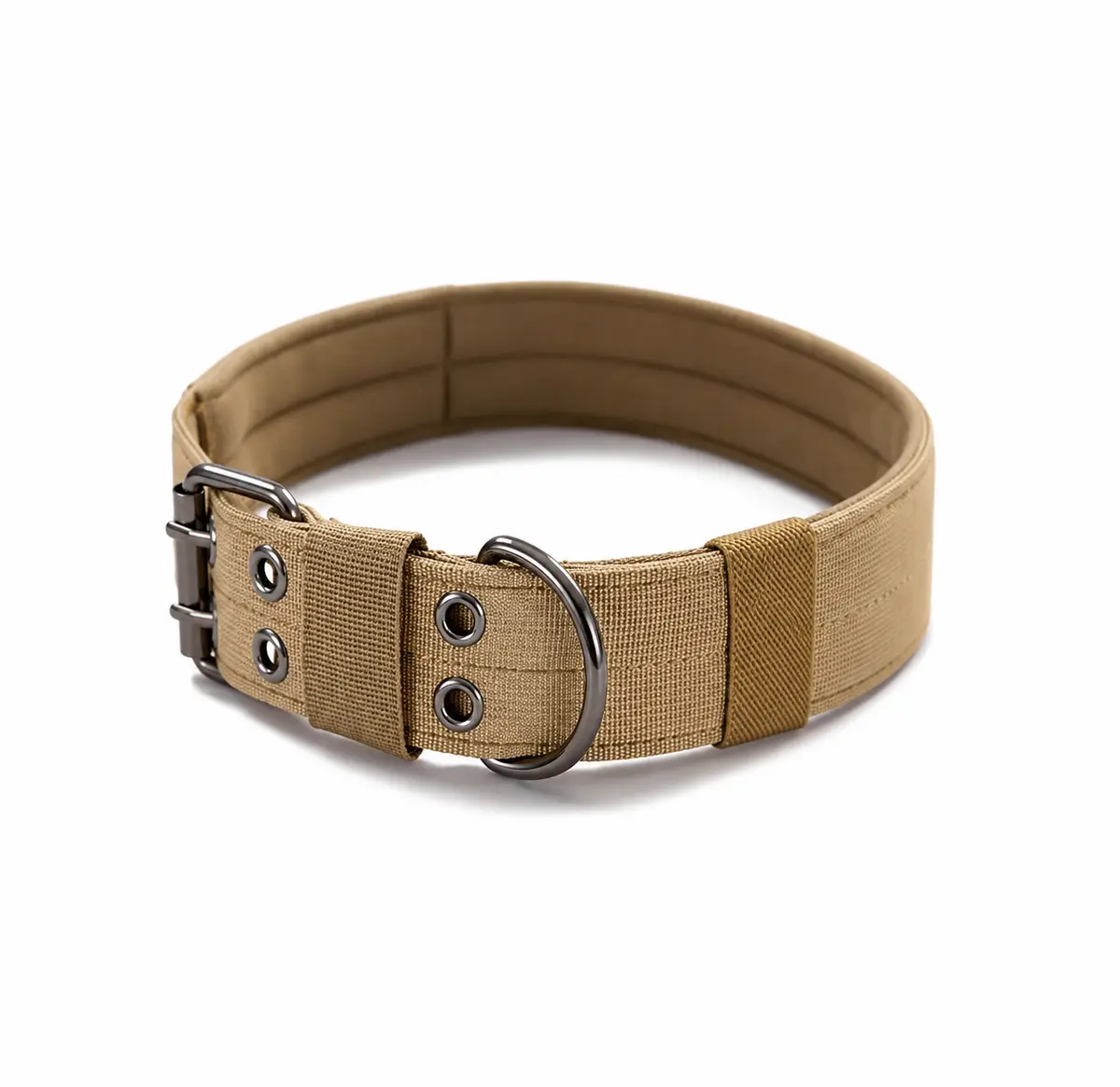
Tactical collars borrow from the gear used by working and service dogs. They are wider and thicker than everyday collars, usually made of layered heavy duty nylon, with metal buckles rather than plastic clips and a strong D-ring for the lead. Many add a padded control handle on top.
That build suits large, strong dogs, outdoor and hiking dogs, and owners who want a collar that will not wear through in a season. The wide band spreads pressure across more of the neck than a thin collar does.
A handle stitched onto the top of the collar lets you take hold of your dog quickly: steadying it when another dog passes, guiding it through a doorway or helping it into a car. It is useful for close control, not for lifting or dragging a dog.
Use the handle gently. Sudden hard pulls on any collar put force on the throat and neck. For dogs that lunge or pull constantly, a harness with a handle spreads that force across the chest instead.
Measure your dog's neck where the collar will sit, with a soft tape, and add about two to three inches. Choose a size whose adjustment range puts your dog's measurement near the middle. Wide collars like a two-inch band suit large and giant breeds; on small dogs they are bulky.
Check the fit with two fingers flat under the collar. Wide nylon can feel stiff at first and soften with wear, so recheck the fit after a week, and check for rubbing on dogs with short coats.
The camo tactical set combines a collar, a harness and a lead in matching heavy duty material. The collar carries your dog's ID tags, while the harness takes the lead for walks. The AKC notes that no-pull and front-ring harnesses help when a dog is stronger than its handler.
Fit the harness by measuring the neck base and the widest part of the chest, and check you can slide two fingers under the straps. Walk your dog and back it up to make sure it cannot slip out.
Rinse nylon collars after muddy or salty walks and air dry them. Check stitching, buckles and the D-ring regularly, and replace a collar if the webbing frays or the buckle loosens.
Take tactical collars off in a crate or when your dog is left alone, since a wide collar with a handle can catch on wire. Keep ID tags attached and your dog's microchip details current, as the collar's main job is still getting a lost dog home.
It is a wide, heavy duty collar modeled on working dog gear, usually layered nylon with a metal buckle, a strong D-ring and often a control handle. It suits strong, active and outdoor dogs.
They are strong enough to hold a puller, but pulling on any collar presses on the throat. For dogs that pull, clip the lead to a well-fitted harness and use the collar for ID.
Large and giant breeds are comfortable in wide collars of about 1.5 to 2 inches, which spread pressure. Small dogs need narrower collars, as wide bands are heavy on a small neck.
It gives you a quick hold for close control, such as steadying your dog near traffic or other dogs. Use it gently, and never to lift or drag your dog by the neck.
Snug enough not to slip over the head, with two fingers fitting flat underneath. Recheck after a week, since stiff nylon softens with wear, and check short-coated dogs for rubbing.