






Buying guides
Best Designer Dog Collars: How to Choose Style That Is Also Safe
The best designer dog collar looks good and still does the basics: it fits so you can slide two fingers under it, it is made from a material that suits your dog's coat and activity, and nothing on it can snag or irritate. Rhinestones, studs and bows are the part to judge hardest. Browse our designer dog collars with those checks in mind.
By Matt GarnettUpdated November 14, 20264 min read2 sources
What matters most: fit before fashion
The American Kennel Club's fit test is simple: wrap a soft measuring tape around the neck, then try to slide two fingers under the collar. If you cannot, it is too tight, and if more than two fingers fit, it is too loose. Its harness-versus-collar guide gives a slightly finer rule, one finger for small dogs and two for large breeds. Go by your dog's measurement, not by the size estimate on a label.
Puppies need extra attention. The AKC notes a rapidly growing Great Dane puppy could outgrow collars on a near-weekly basis, so check fit often and do not spend heavily on a collar a puppy will outgrow. Recheck after grooming too, because a clipped coat changes how the collar sits. Our designer dog collars range lists the adjustment span on each collar, so compare it to your measurement before you decide.
Materials: what each one is good for
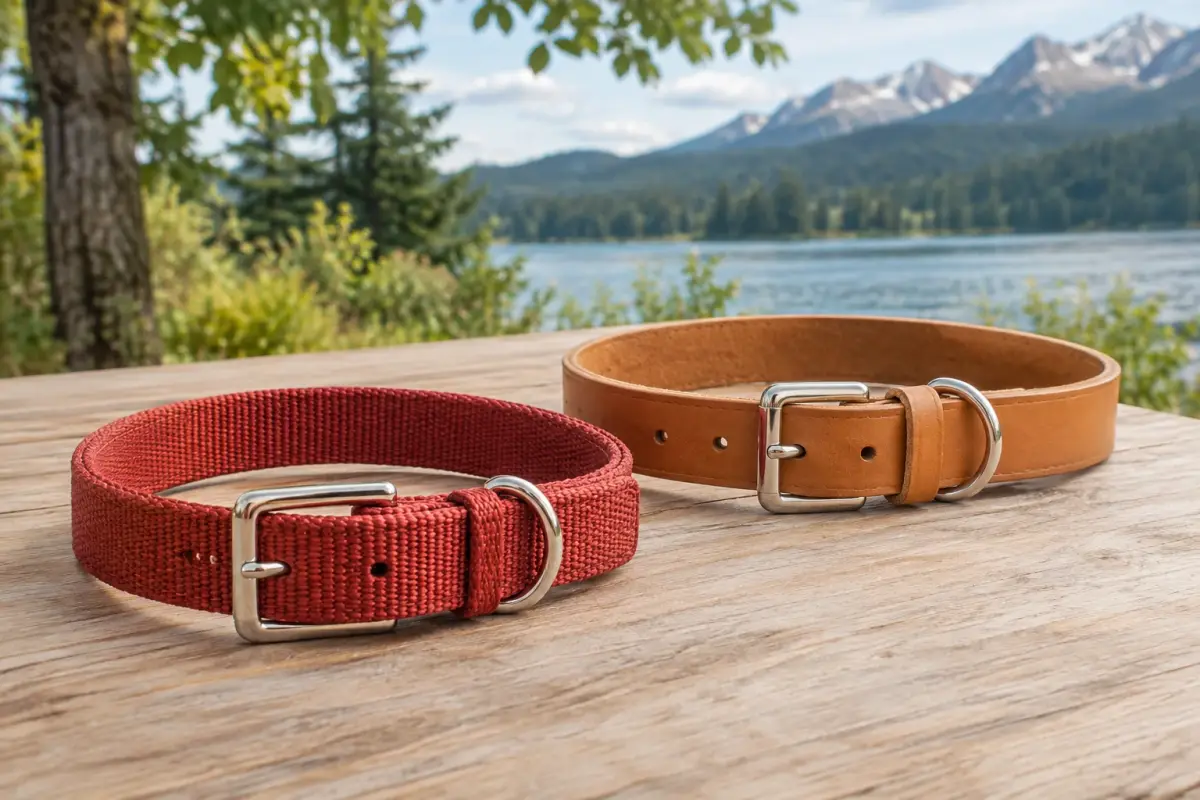
The AKC describes nylon as inexpensive and a sensible choice for growing puppies, leather as durable and suited to adult dogs, lightweight aluminum as easy to wipe clean, and neoprene as resistant to dirt and debris and useful for longer-haired dogs whose coats mat easily. A designer collar usually adds a surface layer on top of one of those, such as velvet, embroidery or metal fittings.
A fabric collar such as a velvet dog collar is soft against the neck, but check the lining, because the underside is what touches skin, and check how the fabric handles dirt and washing. If you prefer natural materials, browse leather dog collars and avoid furniture or shoe leather cleaners on them, since the AKC warns their chemicals can be toxic to dogs.
Decoration: rhinestones, studs and bows
This is where designer collars differ from plain ones, and where most problems start. The AKC says studs and sewn-on bow ties can irritate skin or snag during play, and its advice is to choose safety over style. Padded or rolled leather helps prevent chafing on short-furred or sensitive-skinned dogs. Run a finger along the inside of any decorated collar; if you can feel prongs, rough backing or seams, your dog will feel them all day.
A diamante rhinestone dog collar should have stones set firmly with a smooth back, and loose stones are a swallowing hazard, so check them regularly. A studded design such as a rivet pet collar deserves the same inside check. For dogs that wrestle, swim or dig, plain styles are safer; save heavily decorated collars for walks and photos.
Which collar suits which dog
Small and toy dogs do best with light collars, because heavy chains and large stones are a lot to carry on a thin neck. Short-furred, sensitive dogs suit padded or rolled leather, while thick-coated dogs may suit neoprene or a slightly looser fit with two fingers sliding in easily. Choose a size by neck measurement, not by breed name.
Dogs with narrow heads, such as Greyhounds and Whippets, are named by the AKC as dogs whose heads are often smaller than their necks, so an ordinary collar can slip off. For them, a martingale collar, which tightens slightly to stop slipping, is the safer base before any decoration. If you like a playful look, cute dog collars cover lighter, fabric-led designs.
What to avoid, and when a harness is better
A collar is not ideal for a dog that pulls. The AKC says a body harness with a back attachment can prevent potential throat damage if your dog pulls, and that a harness may be more comfortable for tuggers. If your dog lunges or pulls, use a harness for walks and keep the fashion collar for the house and for ID. See our dog harnesses when walking is the main job.
Avoid a decorative collar as the only ID. The AKC notes personalized embroidered collars can replace dangling tags and help if your dog is lost, so if you choose a designer collar, add ID tags or embroidered contact details. Avoid anything with loose parts, thin straps that dig in, or hardware that cannot be adjusted. When you are ready, browse our designer dog collars and shortlist two or three that pass the inside check.
Decorative collar layers and material checks
| Part or material | What it describes | What to check |
|---|---|---|
| Nylon base | The structural webbing beneath a finish | Width,edges and stitching |
| Leather base | A different strap material | Care directions and inside finish |
| Neoprene layer | A lining or material option | The actual area in contact with the coat |
| Velvet or embroidery | A decorative surface treatment | Lining and washing directions |
| Metal fittings | Hardware added to the strap | Connection points and snagging details |
Common questions
How tight should a designer dog collar be?
Snug enough that it cannot slip over the head but loose enough to slide two fingers underneath. The AKC suggests one finger for small dogs and two for large breeds, rechecked as puppies grow or coats are clipped.
Are rhinestone dog collars safe?
They can be, if the stones are firmly set, the back is smooth and you check regularly for loose stones. Plain styles are safer for dogs that wrestle, swim or chew.
Can a fashion collar be an everyday collar?
Yes, if it fits properly, has no snagging parts and carries ID tags or embroidered contact details. Many owners keep a decorative collar for outings and a plain one for rough play.
Should a dog that pulls wear a collar or a harness?
For walks, a harness is usually more comfortable for a dog that pulls, because it spreads pressure across the body instead of the throat. Keep the designer collar for ID and the house.
Sources we checked
This guide is general information, not veterinary advice. If your pet is unwell or injured, contact your veterinarian.


