






Buying guides
Best Leather Dog Collars: What to Check Before You Buy
A good leather dog collar is a flat buckle collar sized so two fingers slide underneath, with smooth edges, solid hardware and a width that suits your dog. Leather is durable and handles water, heat and scuffs, but it costs more and needs care. For a puppy that will outgrow it in weeks, nylon is usually the more sensible choice.
By Matt GarnettUpdated November 14, 20263 min read3 sources
What matters most in a leather collar
Fit comes first. The AKC says to measure your dog with a soft tape rather than trusting a label, then try to slide two fingers under the collar: if you cannot, it is too tight, and if more fingers fit, it is too loose. Pick the larger size if you are between two, so the collar is never tight.
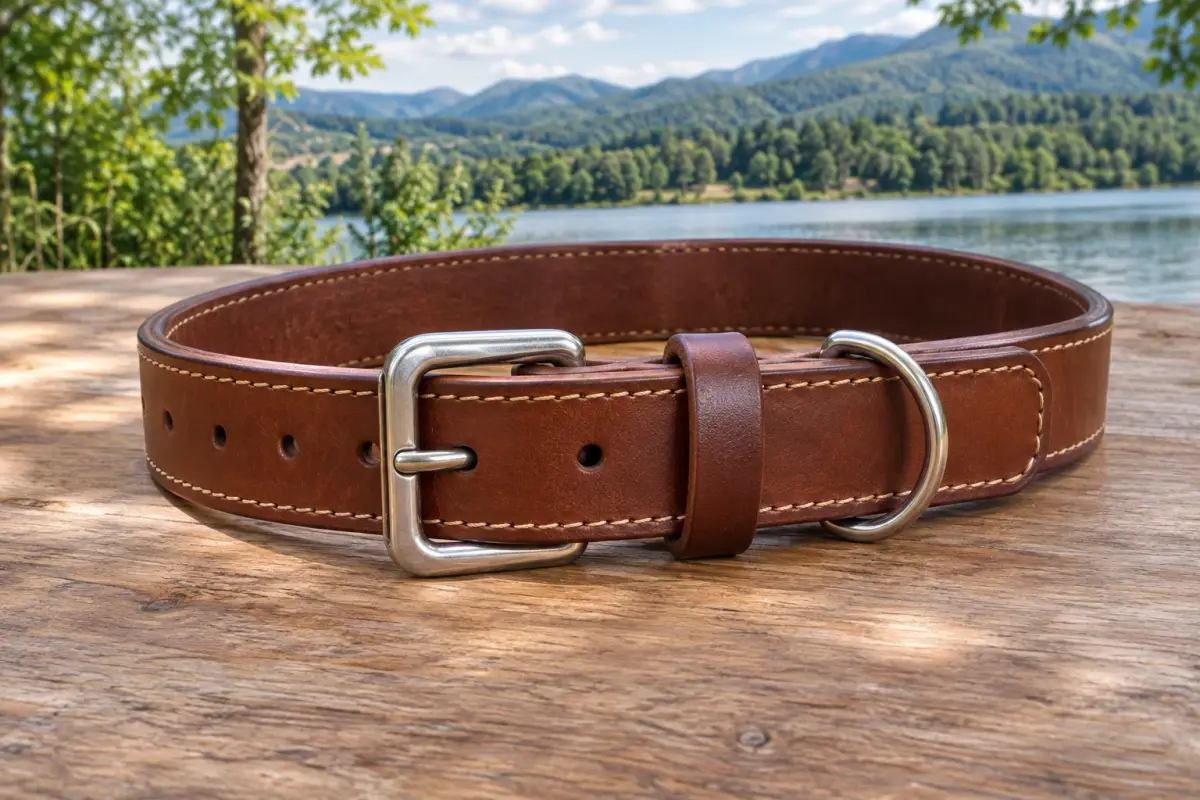
Next is build quality. Look for smooth, finished edges, even stitching and a buckle that closes firmly. Padded or rolled leather can help prevent chafing on short-coated or sensitive dogs. Our leather dog collars are sorted so you can compare these details side by side.
Leather compared with other materials
The AKC describes leather as durable and able to tolerate water, heat and scuffs, with cost as the downside. It may not be worth the price for a collar used only briefly. Nylon is inexpensive, which suits a growing puppy that may need several collars, since a fast-growing large puppy can outgrow a collar almost weekly.
Other materials fill other needs: aluminum is lightweight and wipes clean, while neoprene resists dirt and suits long coats that mat easily. For an adult dog that has finished growing, leather is a sensible long-term choice. A cowhide collar or a padded suede collar with a brass buckle are examples of the style. For the other materials, browse all dog collars.
Best collar for each dog
For an adult dog that wears a collar daily, a flat leather collar with an ID tag holder or a buckle for tags is the usual pick. The AKC notes flat buckle collars are the most common way to carry an ID tag, and an embroidered or tagged collar helps if your dog gets lost. A vintage suede collar is a softer-looking variation.
For dogs with necks wider than their heads, such as greyhounds and whippets, VCA and the AKC describe martingale collars, which tighten only by a preset amount. For small dogs and short-nosed breeds, VCA suggests a harness because neck pressure can harm them. For heavy pullers, a dog harness is usually the better tool than any collar.
What to avoid
The AKC warns that decorative studs can cause skin irritation or snag on something while a dog plays, so keep studded styles for dress-up rather than daily wear, and check the stitching around any hardware. Avoid collars that do not fit, and avoid calming collars that use plant ingredients such as cloves, which the AKC notes are toxic to dogs.
Do not clean leather with furniture or shoe polish products, since those can be toxic. Never leave a wet collar on a dog for long, and check the neck for redness or hair loss where the edge sits. If your dog has sore skin under any collar, see your vet.
Care and when to replace
The AKC suggests spot-cleaning leather with a mild baking soda and vinegar mix and a toothbrush, and notes that leather needs routine care to prevent drying and cracking. Do not soak a leather collar or leash; wipe it with a damp sponge instead and let it dry naturally.
Replace any collar that cracks, frays, loses a stitch or has a buckle that no longer closes cleanly. Check fit every few weeks, especially after a haircut or weight change. A collar worn daily should come off sometimes so the skin and coat can rest, and your dog should always carry current contact details.
This page is general information, not veterinary advice, and it cannot replace an examination by the vet who knows your pet.
Collar materials and care questions
| Material | Difference described | Question to check |
|---|---|---|
| Leather | Durable strap with a higher initial cost | Care directions and inside finish |
| Nylon | Lower-cost webbing option | Edges,stitching and adjustment range |
| Aluminum | Lightweight wipe-clean construction | Exact shape,attachments and fit |
| Neoprene | A different surface used for easy cleaning | The actual lining and care instructions |
Common questions
How tight should a leather dog collar be?
Snug enough that you can slide two fingers underneath but not more. If two fingers will not fit, it is too tight, and if several fit, it is too loose.
Is leather or nylon better for a dog collar?
Leather is durable and handles water, heat and scuffs but costs more and needs care. Nylon is cheaper, which suits a growing puppy that will outgrow collars quickly.
How do I clean a leather dog collar?
Spot-clean with a mild baking soda and vinegar solution and a toothbrush, wipe with a damp sponge and air dry. Avoid soaking and avoid furniture or shoe leather cleaners, which can be toxic.
Are studded collars safe for everyday wear?
The AKC warns that decorative studs can irritate skin or snag during play, so they are better for occasional wear. Check the fit and the skin underneath regularly if your dog wears one.
Sources we checked
This guide is general information, not veterinary advice. If your pet is unwell or injured, contact your veterinarian.


