






Buying guides
Best Breakaway Dog Collars: When They Make Sense
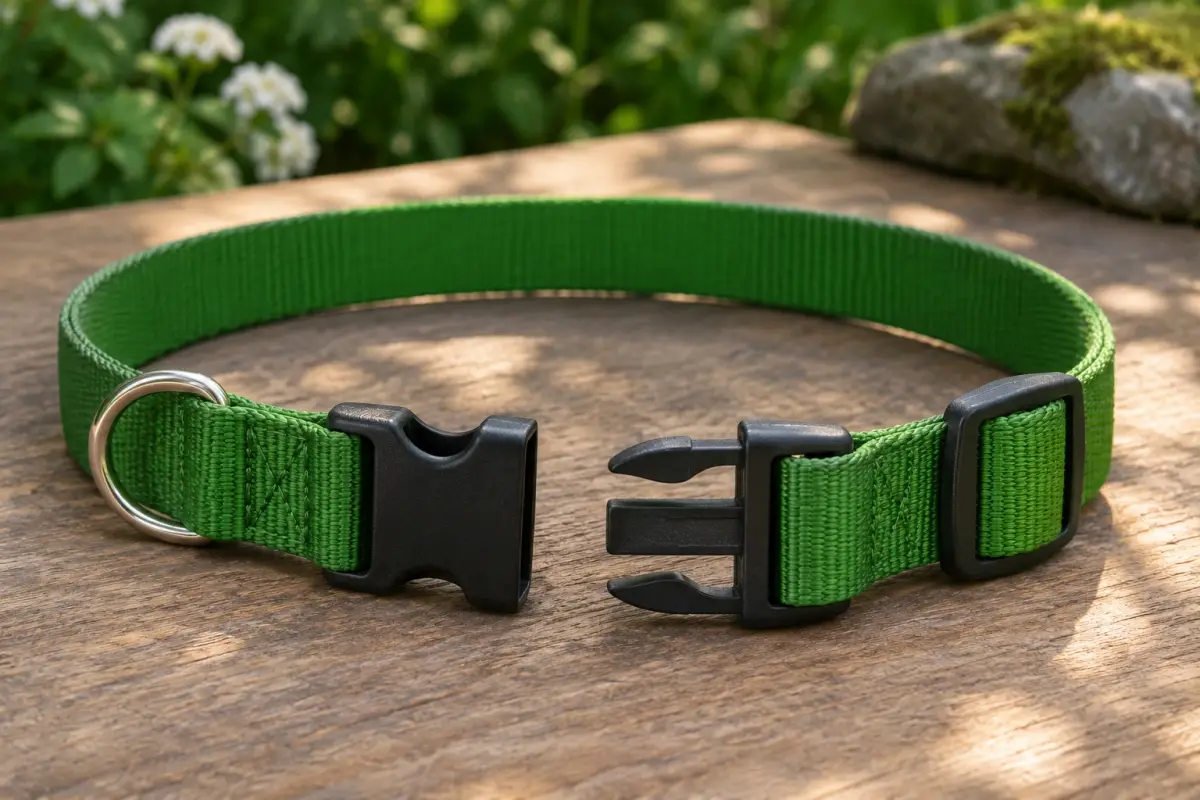
A breakaway collar has a buckle that opens under sudden pressure, so a collar that snags on something comes off instead of tightening on your pet's neck. Three things decide whether one suits you: whether your pet is likely to snag, how you will walk them, and how you will keep ID on them. Browse our breakaway collars once you have those answered.
By Matt GarnettUpdated November 14, 20265 min read4 sources
What a breakaway collar does
VCA Animal Hospitals describes a breakaway buckle collar as one that releases quickly when pressure is applied, such as when a dog gets caught during play. That is a different thing from a quick-release clasp, which is simply a fast way to take a collar on and off and will not open by itself if the collar catches. The difference matters, because many collars are sold as quick-release and the two phrases are easy to confuse.
The risk it answers is real. VCA warns that serious injury can occur if a dog's collar becomes entangled and twisted tightly, with crates, kennels, heat registers and cabinet handles as examples, and that dogs can be frightened or hurt when a tooth or leg catches in a playmate's collar. A breakaway release gives way before that happens. The cost is that the collar can come off when you would rather it stayed on.
Who should consider one
Breakaway collars are most common for cats, which climb, squeeze through gaps and are often outdoors. Humane World for Animals says breakaway collars have plastic fasteners that open when pulled, and that they may come off more easily but release safely if the collar snags. For a cat, that trade is usually worth making.
For dogs the case is narrower. A dog that wears a collar all day at home, plays roughly with other dogs, or lives with a crate or kennel is the most obvious candidate for a release. A dog that pulls on walks is a poor match, because the buckle may open under the same pull you are trying to manage. Dogs that are walked every day on a leash often do better with a flat collar for ID plus a harness for walking.
Never clip a leash to the breakaway buckle
This is the most important rule on the page. VCA says a dog can escape if the leash is clipped to the breakaway ring, and notes that some breakaway collars have a second ring for walks, in which case the leash must be attached to both rings when walking. A single ring on a breakaway buckle is built to open under strain, which is exactly what a leash puts on it.
The simplest way to avoid the problem is to separate the jobs. Use the breakaway collar for ID and everyday wear, and clip the leash to a properly fitted harness. The American Kennel Club notes that a harness can be a more comfortable option for dogs that pull, and that a back-attachment harness can help prevent throat damage when a dog tugs. Humane World gives the same advice for cats: do not use a collar for leash walks.
Fit, and the escape problem
A breakaway collar must be snug enough to stay on in ordinary wear, but not so tight that it opens early or restricts the neck. The AKC advises that you should be able to slip one finger between the collar and a small dog's skin, and two fingers for a large breed. Humane World gives two fingers, side by side, for a cat. A loose fit lets a dog wiggle out and escape, so the check matters just as much for a collar that is meant to open.
Sighthounds such as Greyhounds and Whippets are especially prone to slipping collars because their heads are often smaller than their necks, according to the AKC. For those dogs a breakaway collar may slip off with no snag at all, and a martingale or a harness may be a better walking choice. Compare options in our martingale collars and in the wider dog collars range.
ID: why the collar should not be the only record
A collar that is built to come off is, by definition, not a permanent ID. The ASPCA says collars can come off, leaving a pet without identification, and supports microchip identification paired with a collar and a personalized ID tag. Ask your vet about a microchip, and keep the registry details current, since the ASPCA stresses that reunification depends on up-to-date contact information.
Keep a spare collar and replace one whose release has worn. Test the buckle by pulling it open with your hands before every new collar goes on, and check that the tag is legible and sized to suit the pet. Our cat collars and the best cat collars guide cover tags and fit for cats, and the best dog collars guide does the same for dogs.
Breakaway styles to look at for cats
The range here is mostly cat collars, which is where the release earns its place. A boho breakaway cat collar with a bell and a reflective cat collar with a bell and ID tag are the two types to look at if you want a release, a visible tag and some reflectivity for dusk.
Whichever you choose, confirm the listing names a breakaway or safety buckle, check the sizing range against your cat's neck, and measure the fit with two fingers once it is on. If your cat scratches at the collar, shows redness or hair loss under it, or seems uncomfortable, take it off and talk to your vet.
Common questions
What is a breakaway collar?
It is a collar with a buckle that opens under sudden pressure, so the collar comes off if it snags on something instead of tightening around the neck. It protects against entanglement but can come off when you would not want it to.
Can I walk a dog on a breakaway collar?
Not safely on the breakaway ring alone. A leash clipped there can pop the buckle open and let the dog escape. Use a harness for walks, or a collar with a separate ring designed for the leash.
Are breakaway collars better than regular collars?
They are safer against snagging, which matters for cats and for dogs left in crates or playing with other dogs. They are worse for leash walking, so many owners pair one with a harness.
How do I know my breakaway collar fits?
For a cat, two fingers should slide between the collar and the skin. For a dog, one finger on a small dog and two on a large breed. Check again whenever your pet changes size.
Do dogs need a breakaway collar?
Not every dog does. It suits dogs that wear a collar around crates or rough play, but a dog that pulls or slips collars is better served by a harness. Your vet can advise on your dog.
Sources we checked
This guide is general information, not veterinary advice. If your pet is unwell or injured, contact your veterinarian.


