






Buying guides
Best Cat Collars: What Actually Matters
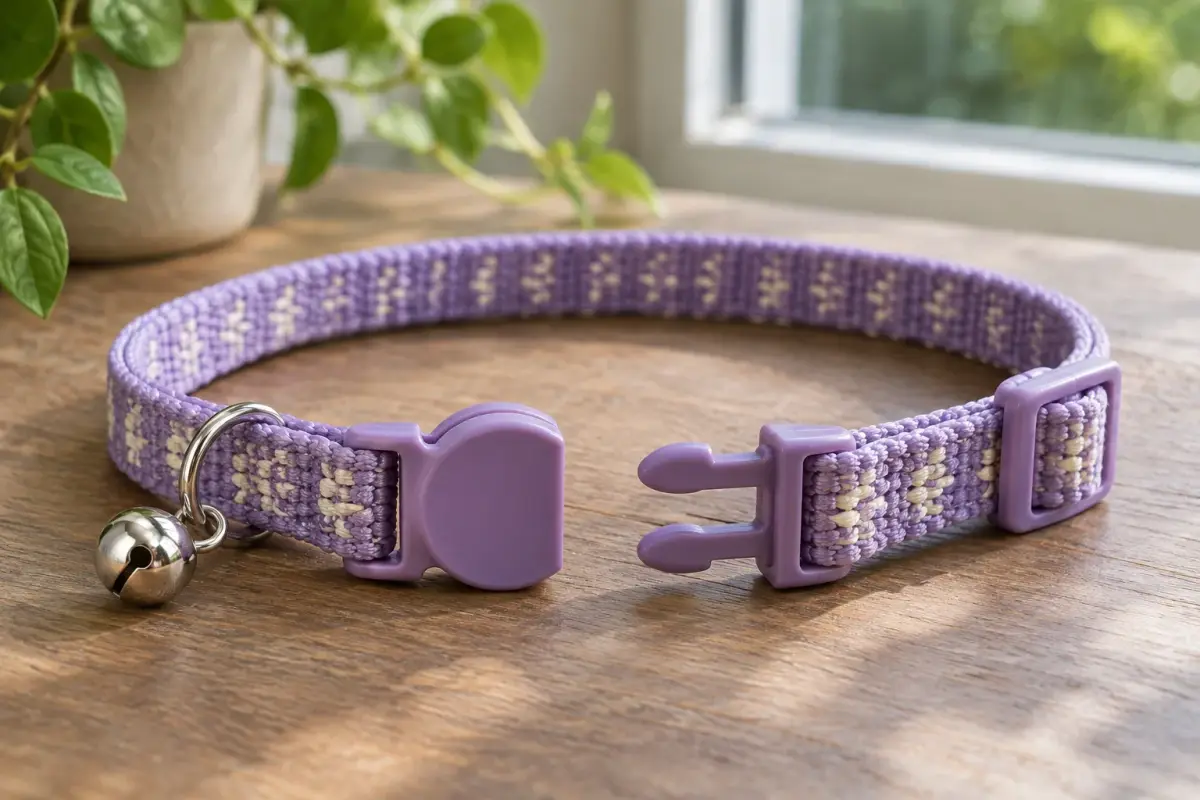
The best cat collar is one that releases if it snags, fits with about two fingers of room, and carries a readable tag. Everything else, from bows to bells, is secondary. A collar also should not be your cat's only identification, because collars come off. Start with our cat collars once you have decided which of those features your cat needs most.
By Matt GarnettUpdated November 14, 20264 min read2 sources
Why a cat collar is worth wearing at all
A tag is the quickest way for a stranger to get your cat home. The ASPCA says personalized ID tags are likely to be the fastest way to return a pet, because anyone who finds the animal can read one without special equipment. Humane World for Animals estimates that around 15 percent of cats get lost at least once, and notes that a finder who can read a tag can phone the owner, which spares the cat a trip to a shelter.
That applies to indoor cats too. A door left open or a startled dash past a visitor is how most indoor cats end up outside. If your cat dislikes wearing a collar, it is still worth introducing one gradually, because the alternative is relying on a microchip alone, and finders rarely carry a scanner.
The one feature that matters most: a breakaway release
Cats climb, squeeze and jump, so a collar that cannot open is a hazard. Humane World describes breakaway collars as having plastic fasteners that open when the collar is pulled, and says they may come off more easily but give a safer release if the collar snags. That trade-off is the point: you accept that the collar may be lost in exchange for a much lower chance of your cat being trapped by it.
A collar with no release, such as a fixed buckle, cannot open if it snags, which matters most for a cat that goes outside or climbs. Many cat collars on the market do not say whether they release, so read the listing for the word breakaway before you buy. If you are comparing styles, our guide to breakaway collars covers how the release works in more detail.
Getting the fit right
Humane World advises that you should be able to fit two fingers, side by side, between the collar and your cat's skin. Too tight and it rubs and restricts; too loose and the cat can slip it off or hook a jaw or leg through it. The same article notes that sliding-adjustment collars fit better than buckle-and-hole styles, because you are not stuck with the nearest hole.
Check the fit often, especially in the first few days and whenever your cat gains or loses weight, and replace a collar once it is worn or frayed. Kittens outgrow collars quickly, so check weekly while they grow. A basic cat collar in a plain strap is enough if the fit and release are right.
Tags, bells and style
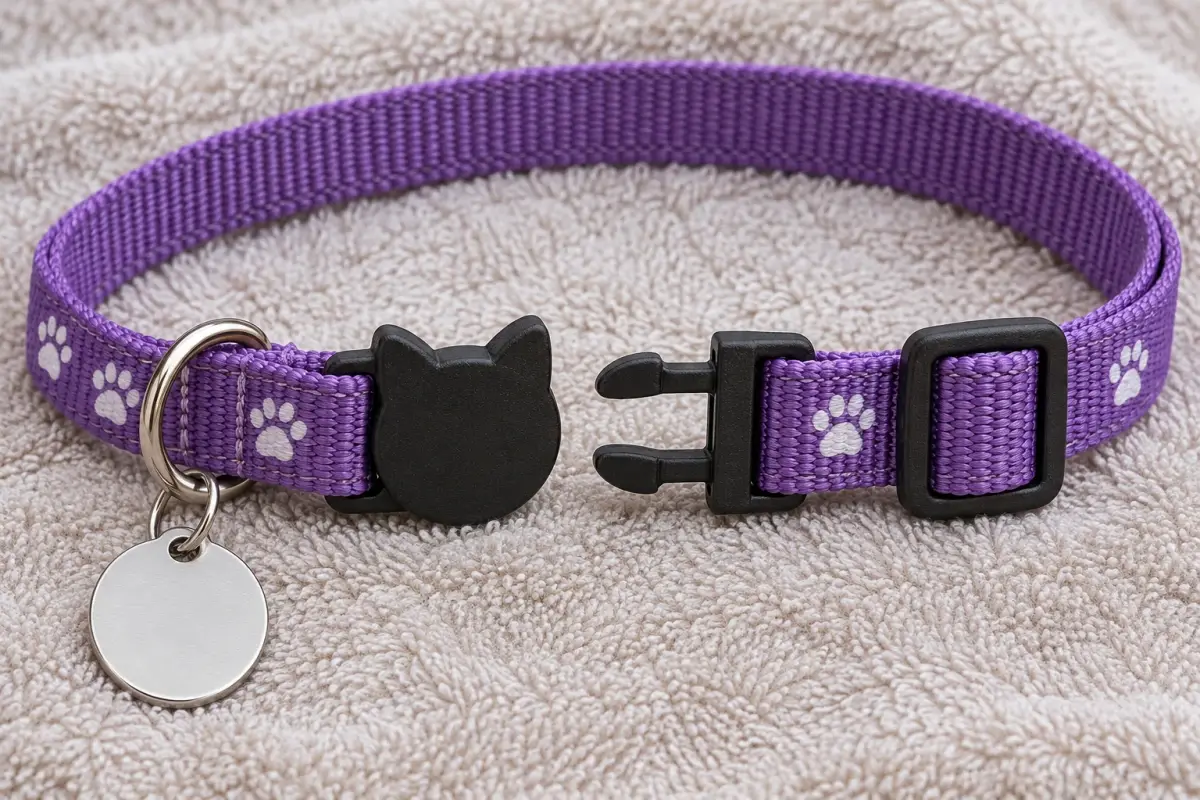
Use a cat-sized tag rather than a large dog tag, which is heavy on a small neck. If the tag jingles and your cat hates it, Humane World suggests securing it with Velcro or tape, using a tag silencer, or choosing an engraved nameplate instead. Keep the phone number current, and keep a spare collar so you can swap one on when the first wears out.
Bells divide opinion. Some owners like being able to hear where a cat is, but some cats find them irritating. A bell cat collar with a printed strap is a type to consider if you want the sound, and a bow tie cat collar or a decorative cat collar is a style choice. Check for a breakaway buckle on any style you like. Decoration should never outrank the release.
What not to do with a collar
Humane World is clear on two points. Do not use a flea collar to hold an ID tag, and do not use a collar for leash walks. A harness is the better choice for walking a cat, because a collar on a leash puts all the pull on the neck and a breakaway buckle will simply open. Our cat harnesses collection covers that case.
Never leave a collar on that is visibly tight, damaged or has swollen skin or hair loss beneath it. If you see redness, a sore under the strap or your cat is scratching at its neck, take the collar off and call your vet.
Pair the collar with a microchip
Collars come off, which is exactly why they are built to. The ASPCA states that collars can come off, leaving a pet without identification, and supports microchip identification paired with a collar and a personalized tag. Your vet or local shelter can implant one quickly.
A microchip only helps if the registry has your current details. The ASPCA stresses that reunification depends on keeping your address and contact information up to date. Treat the collar as the visible first line and the chip as the permanent backup, and update both when you move or change your number.
Common questions
Should cats wear collars?
Yes, in most cases. A tag gives a finder an instant way to reach you, and a breakaway collar keeps the risk of snagging low. A microchip should back it up in case the collar comes off.
How tight should a cat collar be?
Snug enough to stay on, with room to slide two fingers side by side between the collar and your cat's skin. Check regularly, and again whenever your cat gains or loses weight or is growing.
Are breakaway collars safe for cats?
They are designed to be, because the fastener opens when the collar is pulled. The trade-off is that the collar may come off, so pair it with a microchip and replace it if the fastener wears out.
Can I walk my cat on a collar?
No. A collar puts the pull on the neck, and a breakaway buckle will open under tension. A harness is the better choice for leash walks, and fitted so your cat cannot back out.
Do indoor cats need a collar and tag?
It is worth it. Indoor cats slip out through open doors, and a tag lets whoever finds them call you quickly. Ask your vet about a microchip as a permanent backup.
Sources we checked
This guide is general information, not veterinary advice. If your pet is unwell or injured, contact your veterinarian.


