Training & behavior
How to Put a Harness on a Cat
To put a harness on a cat, choose a cat-specific vest or H-style harness, slip the neck loop over the head or lay the vest across the back, fasten the strap behind the front legs, and adjust until it is snug but you can slide two fingers under it. Introduce it gradually with treats over several days, and practice indoors before any walk outside.
By Matt GarnettUpdated November 13, 20264 min read3 sources
Choosing the right harness
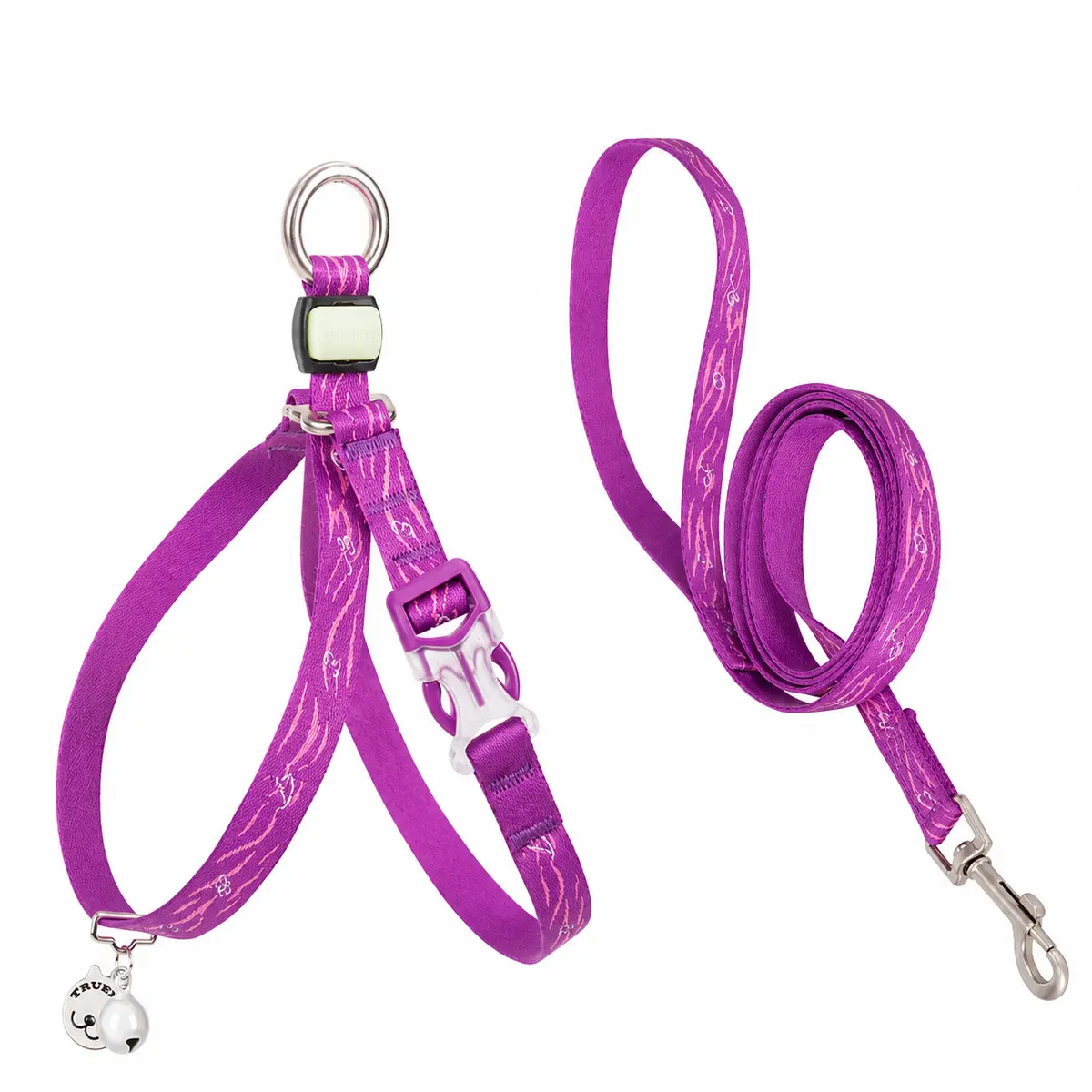
Use a harness made for cats, not a collar. VCA advises that cats should always be walked on a harness, because collars are too easily slipped off, and the harness should be sized so your cat cannot wiggle out of it. Vest-style harnesses spread pressure across the chest and are harder to escape; H-style or figure-eight harnesses are lighter and adjustable.
Measure the widest part of your cat's chest just behind the front legs and the neck, then follow the maker's sizing chart. Pair it with a lightweight leash, or choose a harness and lead set that comes together. VCA recommends avoiding retractable or long leashes that could let your cat run up a tree or over a fence.
Step 1: Make the harness familiar
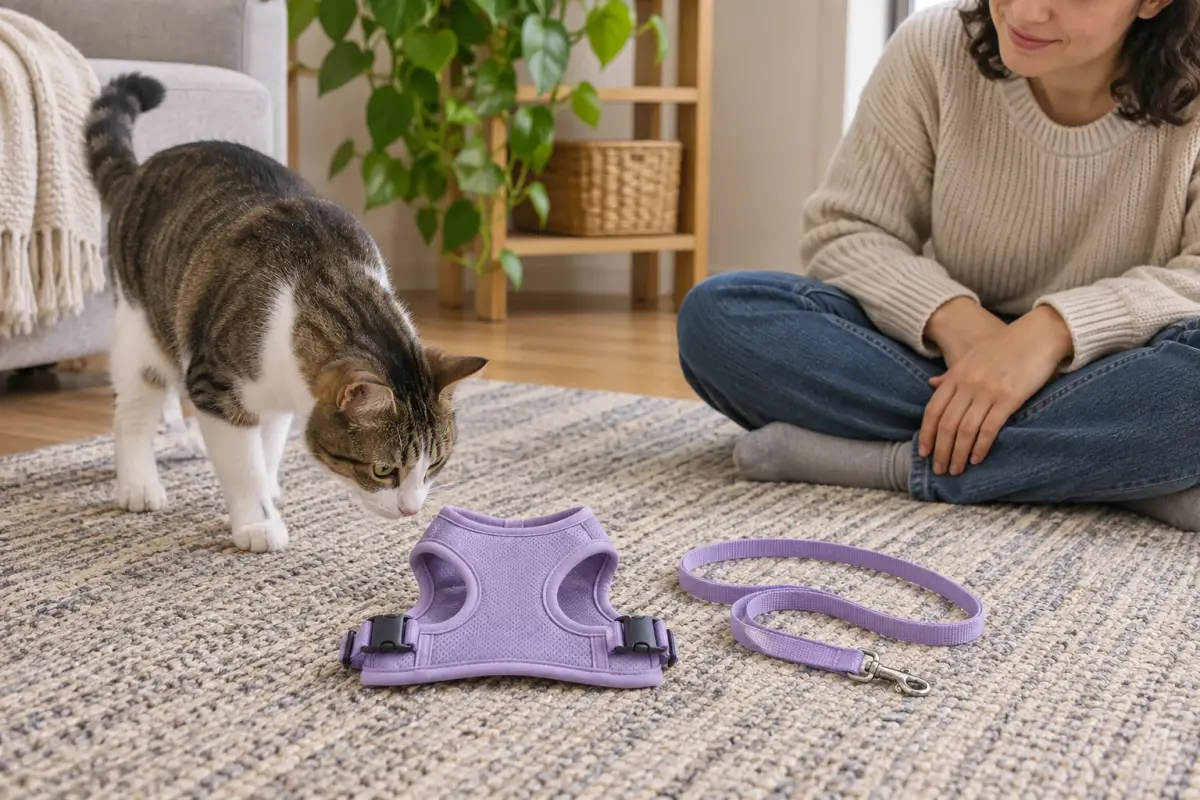
Leave the harness near your cat's bed or food bowl for a few days so it smells like home. Let your cat sniff it and reward each sniff with a treat. Some owners lightly spray it with a synthetic feline pheromone.
Then lay it across your cat's back for a second during a meal or a treat, and take it off. Repeat over several short sessions until your cat ignores it. VCA's training steps start with getting your cat used to the harness indoors with treats and affection.
Step 2: Put it on and fit it
For a vest: lay it over the back with the opening underneath, bring the straps around the chest behind the front legs and clip them. For an H-style: slip the smaller loop over the head, then bring the body strap under the chest behind the front legs and fasten it on top. Give a treat at each step.
Adjust so you can slide two fingers under every strap, no more. Too loose and your cat can back out; too tight and it will rub. Check behind the front legs for pinching. At first, let your cat wear it for a minute or two while eating or playing, then remove it.
Step 3: Wearing it around the house
Many cats freeze, flop over or walk low when they first wear a harness. That is normal. Distract with a wand toy or treats and keep sessions short, then gradually lengthen them over a week or two until your cat moves around normally in it.
Never leave a harnessed cat unsupervised, since straps can catch on furniture. Remove it after each session. If your cat struggles or panics, go back a step and slow down.
Step 4: Add the leash, then step outside
Clip on the leash indoors and let your cat drag it around under supervision so it gets used to the weight, as VCA suggests. Then pick up the end and follow your cat, using treats to lure it a few steps toward you. Never drag your cat by the leash.
Only go outside once your cat is relaxed walking on the leash indoors. VCA advises keeping the first outings very short, such as the front yard or driveway, choosing quiet places, and letting your cat set the pace. Some cats love exploring; others prefer to sit and watch, and that is fine.
Safety outside, and when to ask your vet
Before going out, make sure your cat's vaccinations and flea and tick prevention are up to date; VCA notes outdoor walks increase exposure to strays and parasites. Make sure your cat is microchipped and the details are current. Avoid busy roads, dogs off leash and very hot pavement, and keep walks to quiet, familiar places.
Pick your cat up and go home if it crouches, flattens its ears, hisses or tries to bolt. If your cat is very fearful of the harness or of going outside, talk to your vet; not every cat will enjoy leash walks, and indoor play is just as good.
This page is general information, not veterinary advice, and it cannot replace an examination by the vet who knows your pet.
Common questions
Why does my cat flop over when I put a harness on?
Many cats freeze or flop over the first few times because the pressure on their back feels strange. Keep sessions short, distract with treats or a wand toy, and the reaction usually fades within days.
Can I leave a harness on my cat all the time?
No. Only use the harness during supervised sessions and walks. A harness left on can catch on furniture or rub the skin, and an unsupervised cat could get tangled.
Which is better for a cat, a vest or H-style harness?
Vest harnesses spread pressure and are harder to slip out of, which suits beginners and escape artists. H-style harnesses are lighter and very adjustable. The best cat harness is the one that fits snugly and securely.
At what age can you harness train a cat?
Kittens can start getting used to a harness indoors once they are settled at home. Do not walk outside until your vet confirms vaccinations are complete. Adult cats can learn too, with patience.
Sources we checked
This guide is general information, not veterinary advice. If your pet is unwell or injured, contact your veterinarian.