






Care & how-to
How to Exercise an Indoor Cat
Most indoor cats need about 20 to 30 minutes of active play a day, split into several short sessions of 5 to 10 minutes. Exercise an indoor cat with wand toys, climbing space, food puzzles that make it hunt for meals, games of fetch and, for some cats, harness walks. Kittens need more; seniors need gentler sessions. Exercise works best alongside sensible portions.
By Matt GarnettUpdated November 9, 20264 min read4 sources
How much exercise does an indoor cat need?
VCA recommends several 10-minute play sessions every day, and its enrichment guidance aims for at least three. Its exercise article suggests five to 10 minutes of play every few hours. In practice that adds up to roughly 20 to 30 minutes of active play spread through the day for most adult cats.
Kittens and young cats often want more, with frequent wild bursts. Older cats may be content with two or three gentler sessions. The best measure is your cat: a cat that is relaxed in the evening, at a healthy weight and not attacking your feet is getting enough.
Interactive play: the core of cat exercise
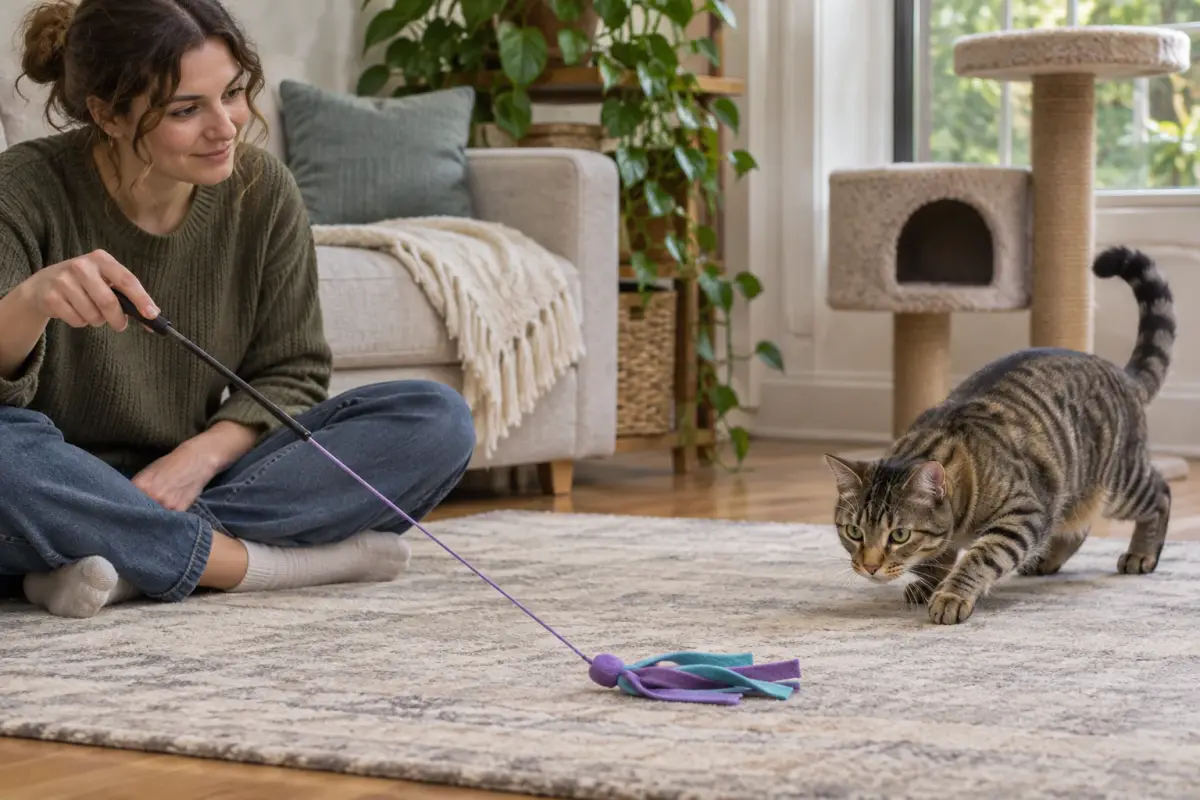
Wand and fishing-pole toys get a cat sprinting, leaping and twisting more than anything else. VCA notes many cats love them. Drag the toy along the floor, flick it up onto furniture and let it vanish around corners. Let your cat catch it often, then end with a treat or meal.
Time sessions for dawn and dusk, when VCA says predatory activity peaks, and just before your cat's usual crazy hour. Never leave wand toys out after play; VCA warns that cats can swallow string and become seriously ill.
Climbing and vertical space
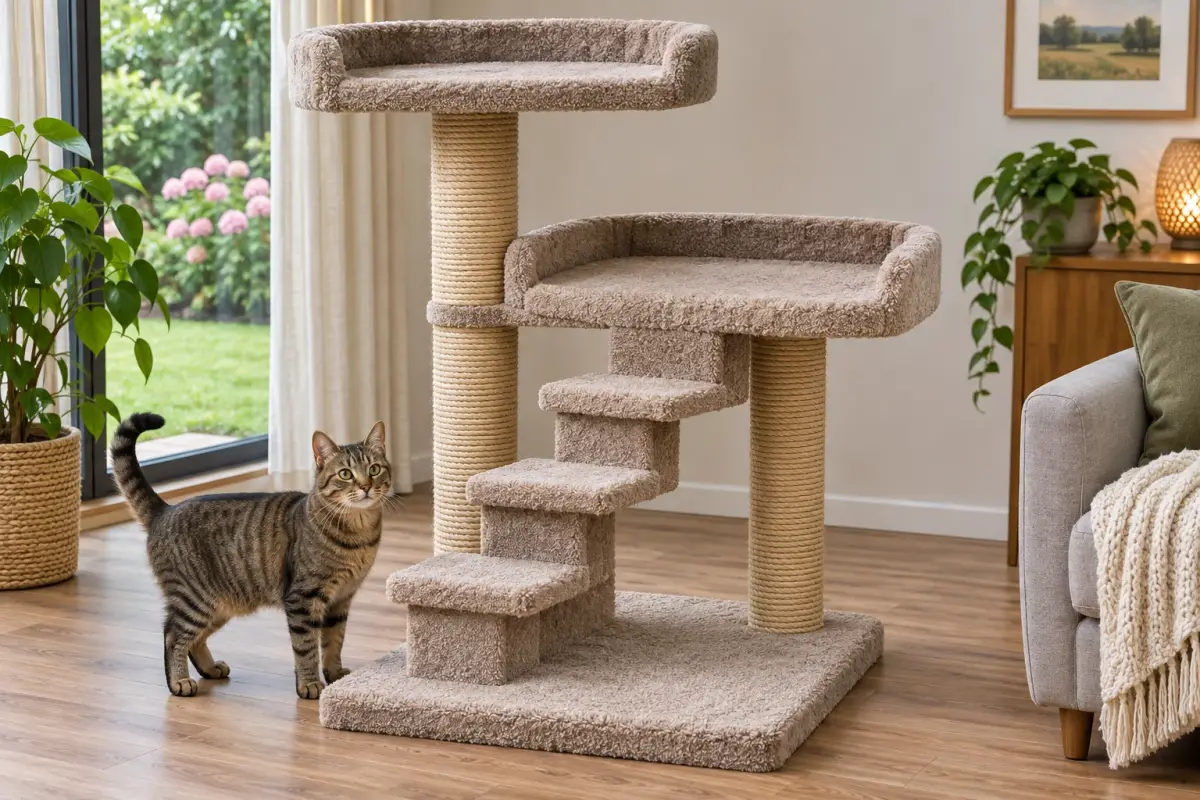
Cat trees, shelves and window perches add exercise to everyday life, because every trip up and down is a jump. VCA calls cat trees aerobic centers and recommends placing them where the family spends time. Toss treats onto different levels to encourage climbing.
A route of wall shelves around a room can turn a sedentary cat into a regular climber. Keep jumps easy, about 12 to 18 inches between levels, and make sure every surface is stable and non-slip. Some owners of high-energy cats also add a cat exercise wheel, such as this wooden cat exercise wheel or a large treadmill-style cat wheel; it needs a slow introduction with treats, and not every cat takes to one. Our cat exercise wheel guide covers how to choose.
Make meals a workout
Food puzzles and treat balls make a cat bat, roll and chase part of its food. VCA notes they provide enrichment especially for sedentary indoor cats, and suggests a DIY version: a plastic bottle with small, smooth holes, filled with dry food.
VCA also suggests splitting the daily ration into several small dishes around the house so your cat has to hunt for it. Make sure your cat still eats its full daily amount, since cats that do not get enough calories can become seriously ill.
Fetch, tricks and harness walks
Some cats love fetch with a crinkle ball or a paper wad, and VCA notes that trick training counts as play for interested cats. Teaching a cat to jump onto a stool or come when called, for treats, is mental and physical exercise together.
Harness walking with a cat harness suits confident cats. VCA recommends a cat harness rather than a collar, getting your cat used to it indoors first, and keeping first outings short. Our harness guide has the steps. Make sure vaccinations and parasite prevention are up to date before going outside.
Exercise, weight and when to call your vet
Exercise helps, but VCA notes that for weight control, calorie intake matters more than exercise. If your cat is overweight, ask your vet for a target weight and daily calories and pair a measured diet with daily play.
Start slowly with overweight or older cats and stop if your cat pants, limps or seems stiff afterward. Cats rarely pant after play; if yours does, rest it and call your vet. A cat that suddenly stops playing or jumping may be in pain and should be checked.
This page is general information, not veterinary advice, and it cannot replace an examination by the vet who knows your pet.
Common questions
How long should I play with my cat each day?
Aim for about 20 to 30 minutes in total, split into several sessions of 5 to 10 minutes. VCA recommends several 10-minute sessions daily, ideally around dawn and dusk.
How much playtime do kittens need?
Kittens usually want several play sessions a day and plenty of toys to bat between them. Follow their lead, keep sessions short and stop before they are overtired. Always supervise string or wand toys.
How can I exercise a lazy cat?
Use slow, secretive wand movements near the floor, try food puzzles and treats tossed onto a cat tree, and play just before meals. Short, frequent sessions work better than one long one.
Do indoor cats need to go outside for exercise?
No. Indoor cats can get all the exercise they need from play, climbing and food puzzles. A harness walk or a secure catio is an option for cats that enjoy the outdoors.
Sources we checked
This guide is general information, not veterinary advice. If your pet is unwell or injured, contact your veterinarian.


