Buying guides
Best Kitten Harness: How to Choose One That Fits a Growing Kitten
The best kitten harness is a soft, snug, adjustable vest or H-style harness with the leash ring on the back, sized so you can slip two fingers underneath. Kittens grow fast, so adjustability matters more than any feature. Start indoors, and only go outside once your vet confirms vaccinations are on track and your kitten is microchipped.
By Matt GarnettUpdated November 13, 20264 min read2 sources
What matters most in a kitten harness
Fit decides everything. The San Francisco SPCA advises a harness made for cats, adjusted so you can slip two fingers between the harness and your cat's body, with the leash attachment on the back and not at the neck. For a kitten, that means a small, lightweight harness with several adjustment points, because a kitten's chest and neck change quickly over a few months.
Soft, flat webbing or mesh is kinder to small bodies than stiff straps, and a quick-release buckle makes it easier to get a squirming kitten in and out. Avoid anything heavy, with dangling parts a kitten could chew, or that sits tight across the throat. If the harness is too big, a kitten will back out of it; if it is too tight, it will freeze or fight it.
Vest, H-style and strap harnesses compared
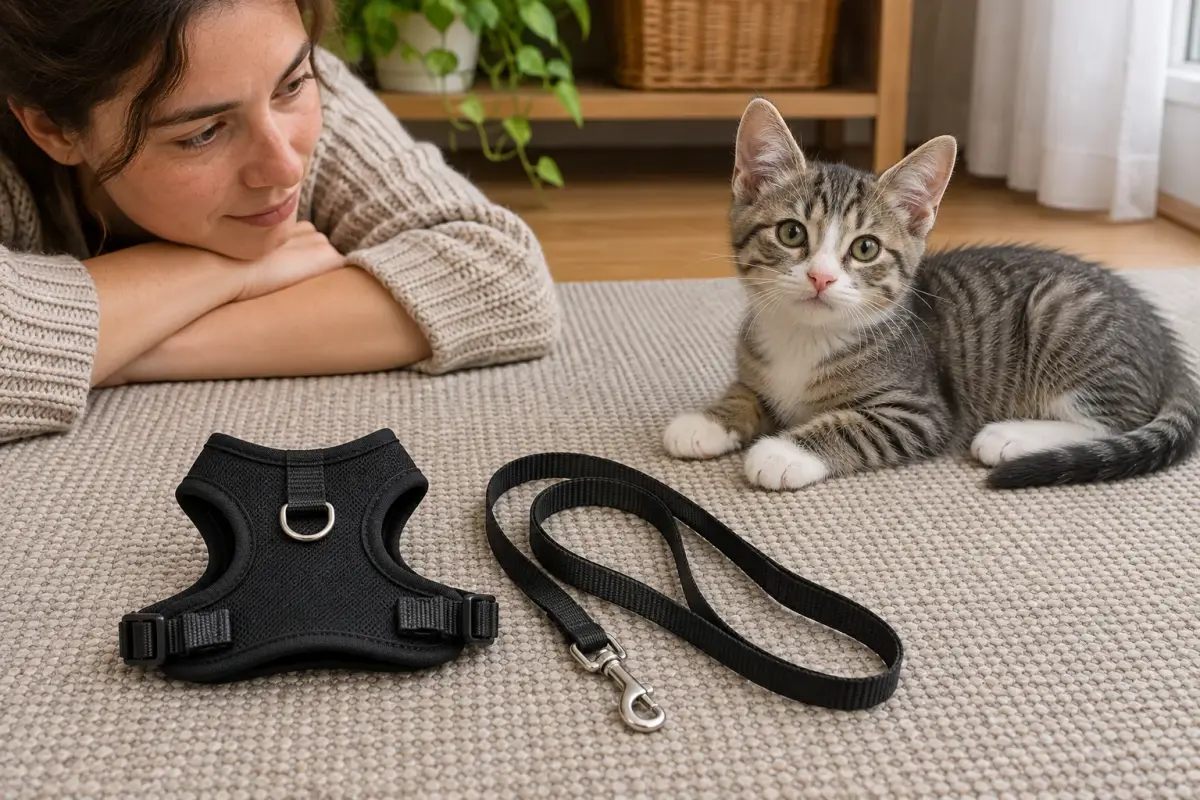
A vest harness spreads pressure across the chest and is usually the easiest to put on, which helps with a wriggly kitten. Many are made of soft mesh, such as this cat vest harness, and close with one or two buckles. They suit most kittens as a first harness.
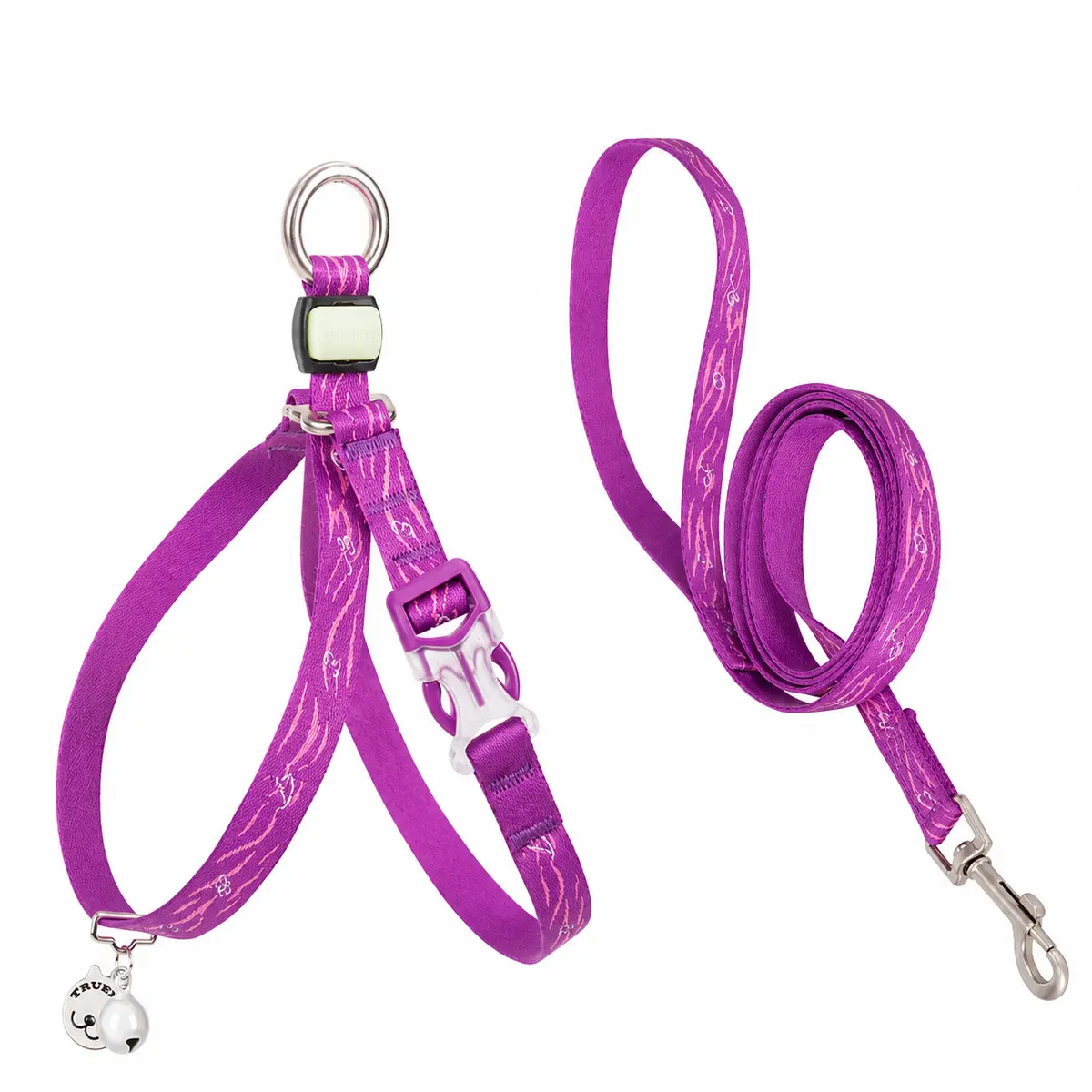
H-style or strap harnesses use thin adjustable loops around the neck and chest, such as this harness and lead set. They are lighter and can be adjusted more precisely, but they take longer to fit and a thin strap is easier for an escape artist to work loose. Whichever style you pick, check the fit again each time your kitten has a growth spurt. Browse our full range of cat harnesses.
When is a kitten ready for a harness?
The SF SPCA gives no minimum age and says kittens are naturally more accepting of a harness than older cats. Indoor practice can start early, with the harness lying near the food bowl so the scent becomes familiar. Going outside is a separate question and depends on your vet's advice.
VCA Hospitals says kitten vaccines start at 6 to 8 weeks and repeat every 3 to 4 weeks until about 16 weeks, with rabies usually given once at 12 to 16 weeks. The SF SPCA says to make sure a cat is up to date on all recommended vaccinations and microchipped before walks. VCA adds that kittens exposed to outdoor cats may need feline leukemia vaccine, so ask your vet what your kitten's lifestyle calls for.
How to introduce the harness step by step
Go slowly and keep it positive. The SF SPCA's method begins by leaving the harness near the food or favorite bed for several days, then letting your kitten sniff it with treats nearby. Next, drape it over the shoulders and remove it straight away, working up to fastening it for a couple of minutes at a time and stretching those sessions as long as the kitten stays relaxed.
Add the leash only after the harness is accepted, and let it trail indoors first. Then hold it loosely and follow your kitten. Never jerk or pop the leash, and do not put the harness on a kitten that is crying or pestering you. Our guide on how to put a harness on a cat covers the hands-on steps in more detail.
Keeping a kitten safe once the leash is on
Put the harness on away from the door and carry your kitten outside rather than letting it walk out. Pick a quiet, sheltered spot, sit down and let the kitten explore on its own terms. The SF SPCA says never to tie a cat to anything outdoors or leave it unattended, leashed or not, and to treat stalling, crouching or trying to escape as signs of fear.
Keep the leash loose and behind or beside the kitten, because forward tension makes it easier to slip backward out of a harness. If the kitten seems frightened, stop and go back indoors; walks do not suit every cat. Our guide to the best cat harness and leash covers escape-resistant designs, and the escape-proof cat harnesses collection shows more secure styles.
What to avoid, and when to call your vet
Avoid collars as the leash attachment, harnesses left on unsupervised, and any harness a kitten can chew or get a leg tangled in. Do not buy a harness far too big to grow into, because it will not stay on. Check the fit again every week or two while your kitten is growing, and retire any harness with frayed webbing or a damaged buckle.
Call your vet if your kitten has rubbed skin, sores or hair loss under the straps, has trouble breathing, or seems lame after wearing one. Ask about vaccinations and microchipping before any outdoor outing. This page is general information, not veterinary advice, and it cannot replace an examination by the vet who knows your pet.
Kitten harness body and closure layouts
| Layout | Physical construction | Fit points to check |
|---|---|---|
| Vest | Mesh or fabric panels around the chest | Panel edges and closure position |
| H-style | Neck and chest loops joined by straps | Each loop’s actual fitting range |
| Thin-strap | A lighter strap-based body | Strap width and adjustment |
| Harness-and-lead set | A harness paired with a line | Actual contents and connector sizes |
Common questions
What age can a kitten start wearing a harness?
The SF SPCA gives no minimum age and says kittens accept harnesses readily. Practice indoors early, but wait for your vet's go-ahead on vaccinations before taking a kitten outside.
How tight should a kitten harness be?
Snug enough that it will not slip off, but you should be able to slide two fingers between the harness and the kitten's body. Recheck the fit often while your kitten is growing.
Should a kitten harness clip at the back or the chest?
The leash ring should sit on the back, not at the neck. Keeping the leash loose and behind or beside the kitten also makes it harder to back out of the harness.
Is a vest or an H-style harness better for a kitten?
A vest is usually easier to put on and spreads pressure across the chest, while an H-style harness is lighter and more adjustable but fiddlier to fit. Pick the one your kitten tolerates and that stays on.
Do kittens need vaccines before wearing a harness outside?
Yes, your vet should confirm vaccinations are on track first. VCA says the kitten series runs about every 3 to 4 weeks until roughly 16 weeks, and outdoor kittens may need extra vaccines.
Sources we checked
This guide is general information, not veterinary advice. If your pet is unwell or injured, contact your veterinarian.