






Care & how-to
Dog Walking Tips: How to Have Safer, Happier Walks
The best dog walks are safe, relaxed and interesting for your dog. Use a well-fitted harness or collar and a 4- to 6-foot leash, keep ID tags current, check the pavement temperature with your hand, bring water and poop bags, let your dog sniff, and use lights after dark. Check paws and coat when you get home. If your dog is older, overweight or has health issues, ask your vet what kind of walking suits it.
By Matt GarnettUpdated November 14, 20263 min read2 sources
Gear: leash, harness and ID
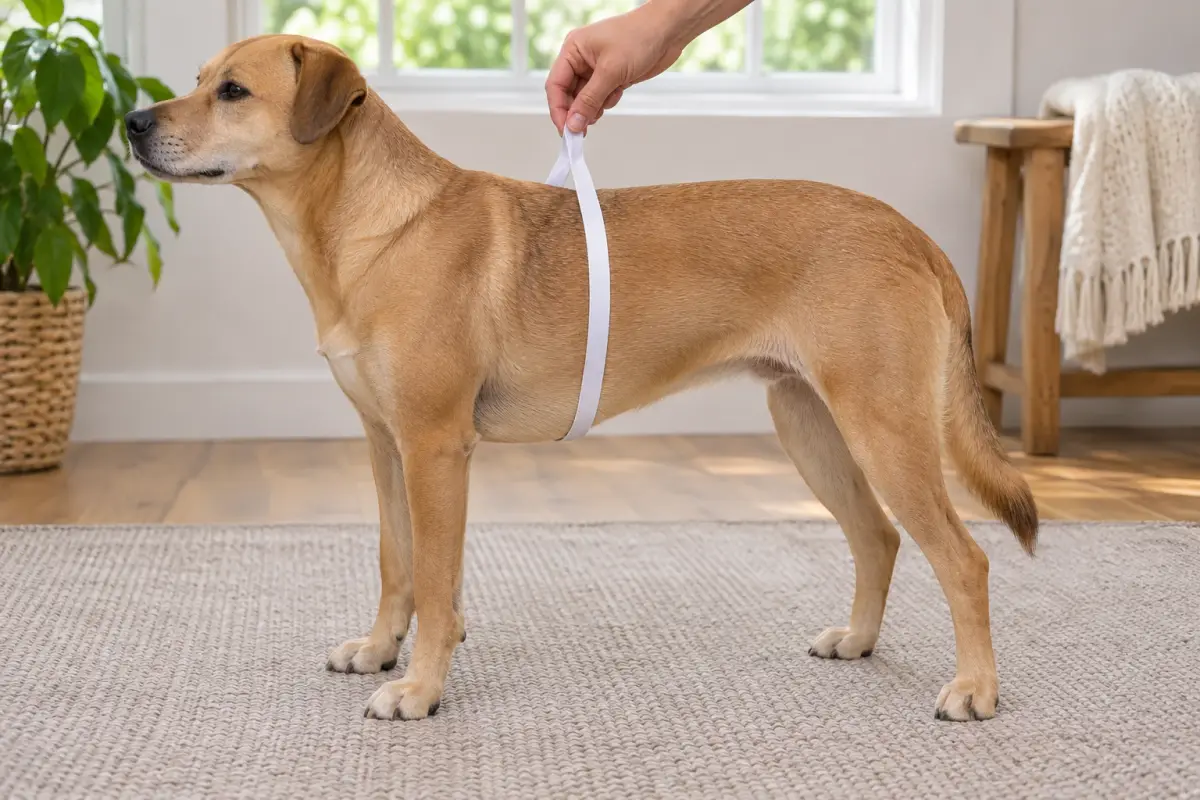
A sturdy 4- to 6-foot leash gives the best control for everyday walks; save long lines for open spaces and avoid retractable leashes near roads and people. Pair it with a well-fitted harness, especially for pullers, small dogs and dogs with throat or neck problems, or a flat collar for calm walkers.
Make sure your dog wears an ID tag with your current phone number, and that its microchip registration is up to date. Check the fit of collars and harnesses regularly, and replace frayed leashes or worn clips before they fail.
Let your dog sniff
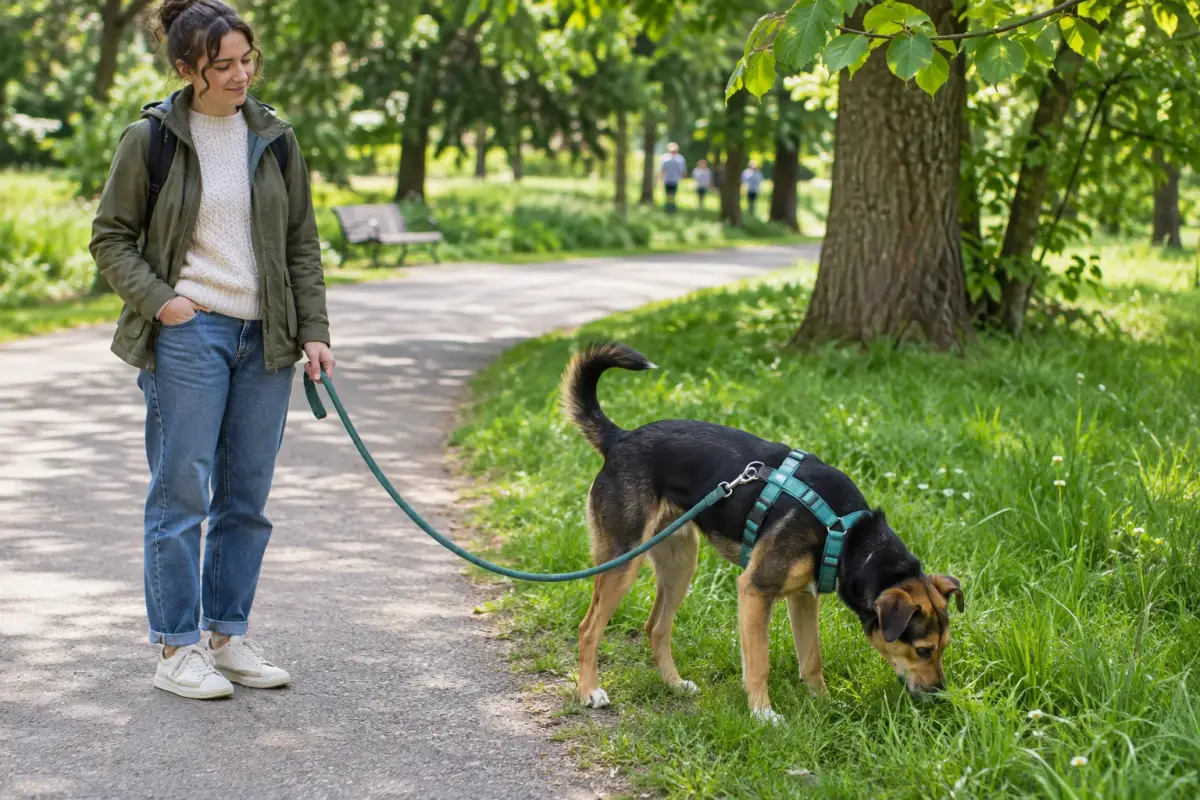
For dogs, sniffing is how they read the news, and it is mentally tiring in a good way. A slow walk with lots of sniffing can leave a dog more satisfied than a fast march around the block. Build in sniff breaks with a cue such as 'go sniff', and a cue such as 'let's go' to move on.
Vary your routes, visit new places, and include a few short training games, such as a recall, a sit at the curb or a hand target, to keep walks engaging. Reward your dog for checking in with you.
Walking safely in heat and cold
In hot weather, walk early in the morning or late in the evening, stick to grass and shade, and test the pavement by holding the back of your hand on it for 10 seconds; if it is too hot for you, it is too hot for paws. Bring water in a dog travel water bottle and a collapsible bowl, and watch for heavy panting, drooling or slowing down, which can signal overheating.
In winter, watch for ice, wipe paws after walks to remove de-icing salt and chemicals, and consider snow boots or paw balm. Short-coated, small and senior dogs may need a coat. Keep puppies' cold-weather outings short.
Traffic, other dogs and visibility
Keep your dog on a short leash near roads and driveways, and ask it to sit at curbs. Give other dogs space unless both owners agree to a greeting; not every dog is friendly, and on-leash greetings can turn tense. Cross the street to avoid a dog or person your dog finds worrying.
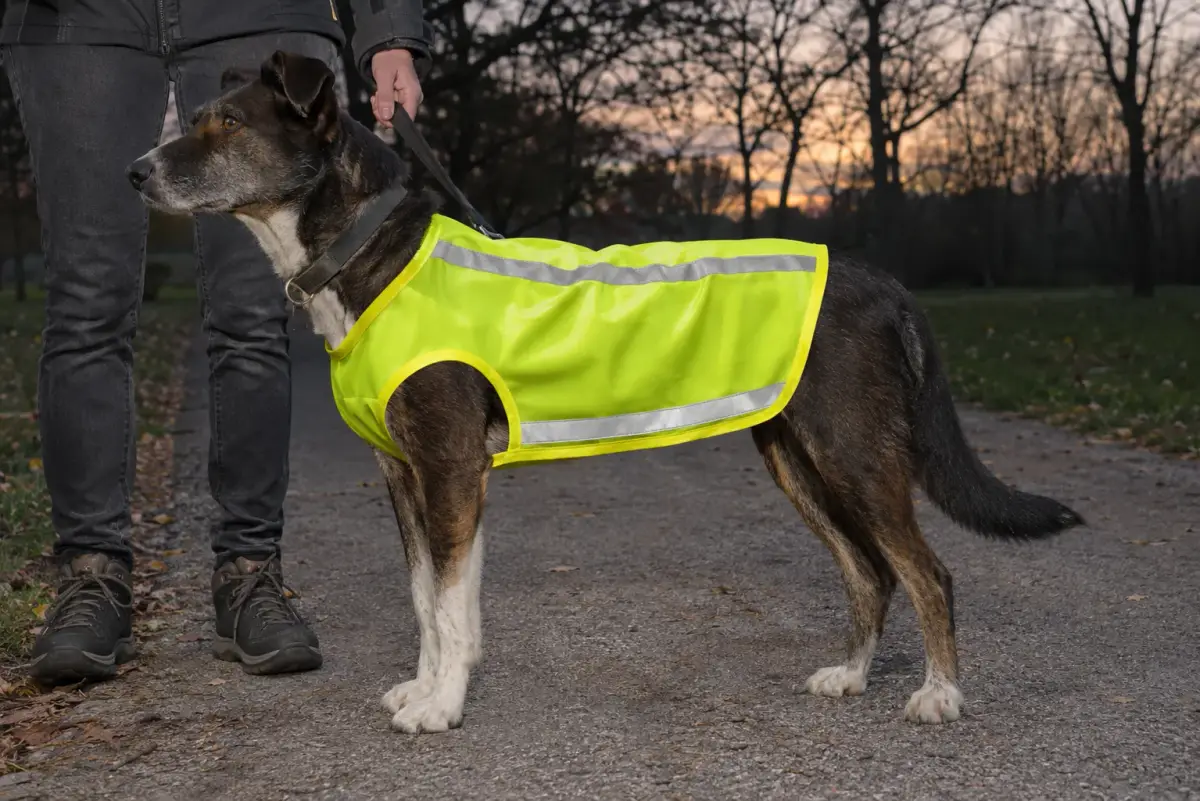
For early morning or evening walks, use a light-up collar or clip-on light for your dog and a headlamp or reflective gear for yourself. Reflective gear only works when headlights hit it, so active lights are better.
Good walking manners and cleanup
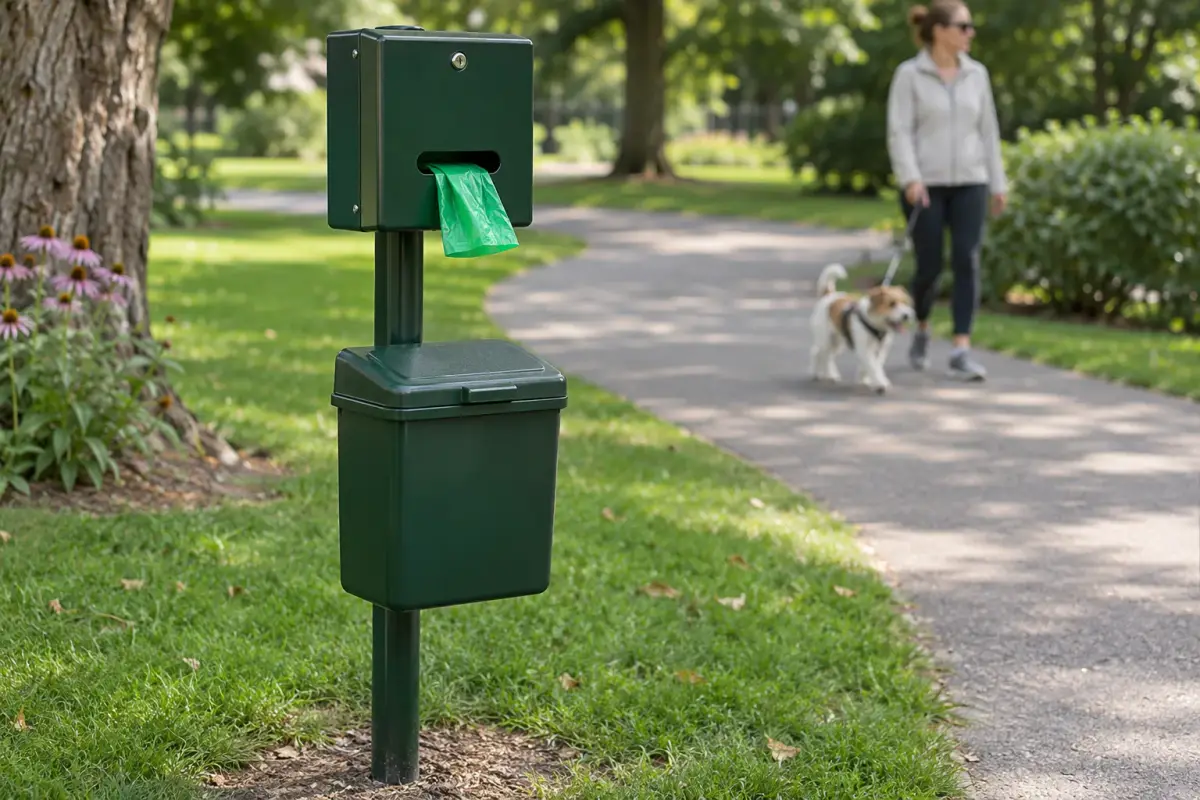
Always carry poop bags and pick up after your dog, keep it off neighbors' lawns and gardens, and follow local leash laws. Teach loose-leash walking with rewards so walks are pleasant for both of you, and avoid letting your dog greet people who have not invited it.
Teach a solid 'leave it' for things on the ground, such as chicken bones, food scraps and dead animals, and reward generously when your dog leaves them. Swallowed items can cause poisoning or blockages.
After the walk, and when to call your vet
Check your dog's paws for cuts, splinters and burrs, especially between the toes, and look through the coat, ears and belly for ticks in season. Offer fresh water and let your dog rest.
Call your vet if your dog limps, stops and refuses to continue, pants very hard or collapses, coughs on walks, or seems sore afterward. Ask your vet for a suitable exercise plan for senior dogs, growing puppies and dogs that are overweight or have joint problems.
This page is general information, not veterinary advice, and it cannot replace an examination by the vet who knows your pet.
Common questions
Is it OK to walk my dog every day the same route?
Yes, but varying routes adds new smells and sights that keep walks interesting. Mixing in a different route or a sniffy park walk a few times a week is a good idea.
Should I let my dog sniff on walks?
Yes. Sniffing is mentally enriching and calming for dogs. Use cues to let your dog sniff and to move on, so you can balance exploring with walking.
What should I bring on a dog walk?
A leash and harness or collar with ID, poop bags, water and a bowl in warm weather, some treats for training, and a light for walks in the dark.
How do I know if it's too hot to walk my dog?
Hold the back of your hand on the pavement for 10 seconds. If it is uncomfortable, it is too hot for paws. Walk early or late on grass and shade instead.
Sources we checked
This guide is general information, not veterinary advice. If your pet is unwell or injured, contact your veterinarian.


