






Buying guides
Best Dog Leash: How to Choose the Right Length and Type
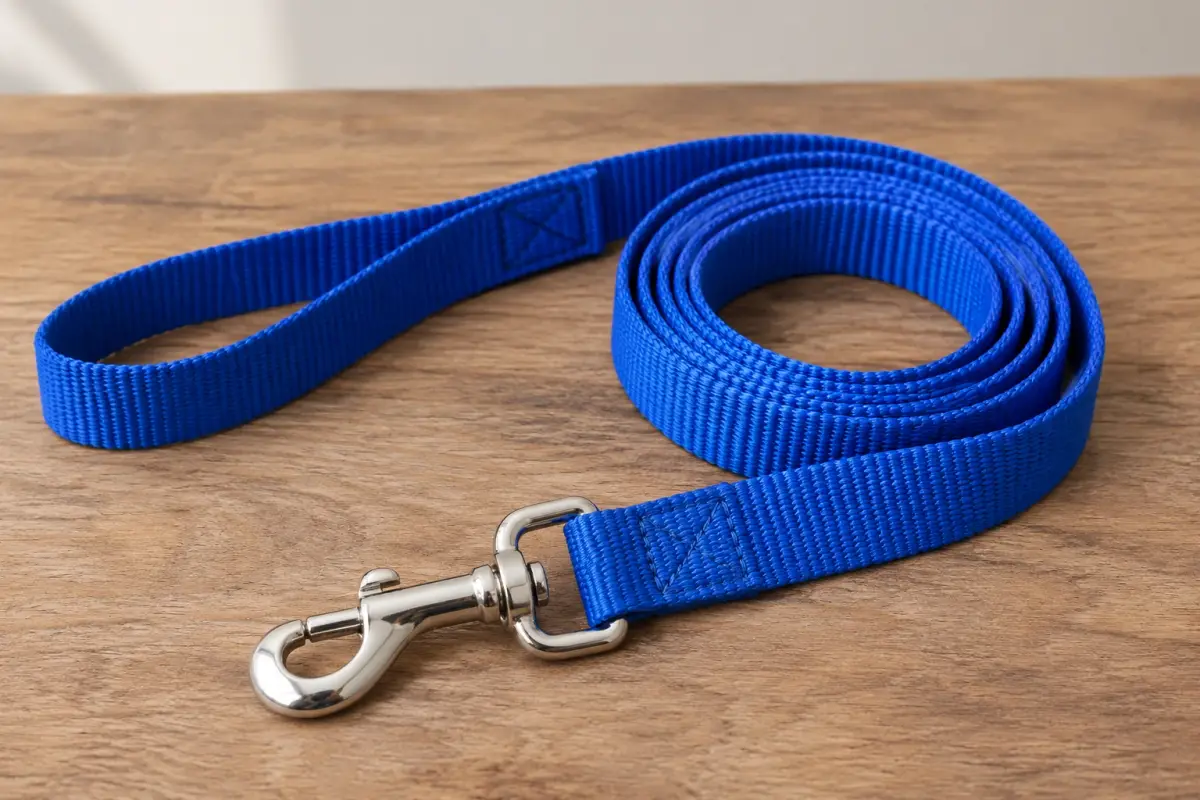
For everyday walking, the best dog leash is a standard flat leash 4 to 6 feet long, in nylon, leather or biothane, with a strong clip and a comfortable handle. It gives your dog room to sniff while keeping control near roads. Width should match your dog: narrow and light for small dogs, wider and sturdier for big dogs and pullers. Long lines are for training; retractables are for leash-trained dogs in open space only.
By Matt GarnettUpdated November 13, 20264 min read2 sources
What matters most: length, width and the clip
Length decides control. The AKC describes the standard flat leash as usually 4 to 6 feet long and recommends that length for leash training. Four feet keeps a dog close on busy sidewalks; six feet gives more freedom on quiet streets. Some places do not permit leashes longer than six feet, so a standard length keeps you within local rules.
Width and weight decide comfort for your dog. The AKC notes small dogs do well on narrow, lightweight leashes, while large dogs and pullers need thicker, wider, heavier ones. The clip is the safety-critical part. A solid brass or steel snap with a strong spring is more reliable than a thin, light clip, and a swivel stops the leash twisting.
The main leash types compared
Standard flat leashes are the all-round choice. Traffic handles, a second loop close to the clip, help you hold a dog close when a car or another dog passes. Long lines, from about 10 to 50 feet, are training tools for recall and for letting a dog explore safely in open areas. Hands-free leashes clip around your waist, which suits running, and adjustable leashes change length or convert to hands-free.
Retractable leashes let out a cord or tape up to about 30 feet. The AKC warns that they reward pulling, that a dog hitting the end at speed can injure its neck or spine, and that thin cord can burn or cut skin, so they suit only leash-trained dogs in open spaces. Double leashes or couplers walk two dogs from one handle, and chain leashes suit dogs that chew through fabric.
Best leash for each dog
For a small dog, choose a narrow, lightweight 4 to 6 foot leash with a small clip that does not swing heavily against the harness. For a large dog or a puller, a wide nylon or leather leash with a padded handle and a traffic handle gives control without leash burn. For a puppy, a light 6-foot leash is ideal for early training, and a long line helps with recall practice in a safe area.
For city walking, four feet with a traffic handle keeps your dog close at crossings. For hiking, a six-foot leash or a hands-free leash keeps your hands free on rough ground. For dogs that swim, biothane does not soak up water or smell. For night walks, choose reflective stitching.
Materials compared
Nylon is strong, affordable, waterproof and easy to clean, and many nylon leashes are machine washable, though thin nylon can burn your hand if a dog lunges. Leather is durable and many handlers find it the most comfortable to hold; it softens with use but needs to dry and be conditioned after rain. Biothane is a coated webbing that wipes clean, does not absorb odor and stays flexible in cold weather.
Rope leashes are comfortable and strong but bulkier. Padded handles in neoprene or soft nylon reduce friction on the palm. Whatever the material, run the leash through your hands before buying: rough edges and stiff webbing make a leash unpleasant to use every day, and you will reach for a different one.
What to avoid
Avoid retractable leashes for dogs that pull, for puppies still learning, near roads and in crowded places. Avoid leashes with flimsy plastic clips on strong dogs. Avoid wrapping the leash around your hand or fingers, which can injure you if a dog lunges, and never grab a retractable cord while it is moving.
Avoid clipping a leash to the collar of a dog that pulls hard; use a harness instead to protect the neck and throat. If your dog coughs, gags or seems sore around the neck after walks, switch to a harness and have your vet check it. Replace any leash with frayed stitching or a weak spring in the clip right away. Not sure how a harness goes on? See how to put on a dog harness.
Care and how long a leash lasts
Check the clip and stitching every month, especially where the webbing folds around the ring. Wash nylon leashes in a mesh bag or by hand, and let them dry fully before use. Wipe leather and biothane after muddy walks, and condition leather a few times a year so it does not crack.
A good leash lasts years. Clips and stitching usually fail first, and a leash that has been chewed, even lightly, should be replaced, because damaged webbing can tear under the sudden load of a lunge. Keep a spare leash in the car so you never have to improvise with a weak one.
Leash formats and handling points
| Format | What changes | Handling point to inspect |
|---|---|---|
| Standard flat | A fixed length between the handle and clip | Clip, strap width and comfortable grip |
| Traffic handle | An extra handhold close to the clip | Where the second loop sits |
| Long line | More line to manage during recall practice | Open-space use and a clear route for the line |
| Hands-free | Attachment at the handler's waist | Waist fitting and connector arrangement |
| Retractable | Cord or tape pays out from a handle | Lock operation and suitability for the setting |
| Double leash or coupler | Two branches share a handle or connection | Both clips and the branch connection |
Common questions
What is the best leash for small dogs?
A narrow, lightweight leash about 4 to 6 feet long with a small, secure clip, attached to a harness rather than a collar. A heavy leash and clip can drag on a small dog's neck.
How long should a dog leash be?
For everyday walks, 4 to 6 feet. Four feet keeps a dog close in busy places, and six feet allows more sniffing on quiet streets. Use a longer line only for training in safe, open spaces.
Are retractable leashes bad for dogs?
They are not ideal for most dogs. The AKC warns they reward pulling and can injure a dog that hits the end at speed. They suit leash-trained dogs in open spaces away from roads.
Is leather or nylon better for a dog leash?
Both are good. Nylon is cheaper, waterproof and washable. Leather is very durable and comfortable to hold once softened. Biothane is a good third option for dogs that swim.
Sources we checked
This guide is general information, not veterinary advice. If your pet is unwell or injured, contact your veterinarian.


