






Buying guides
Best Slip Leads for Dogs: What Matters and When Not to Use One
A good slip lead is a smooth, strong rope or webbing loop with a snug ring or sliding stop, long enough to reach your dog comfortably and soft enough to hold. It suits quick, short jobs such as a trip to the car or a backup for a dog that slips collars, and it works best on well-trained dogs. It is a poor choice for a dog that pulls.
By Matt GarnettUpdated November 14, 20265 min read3 sources
What a slip lead is and what matters most
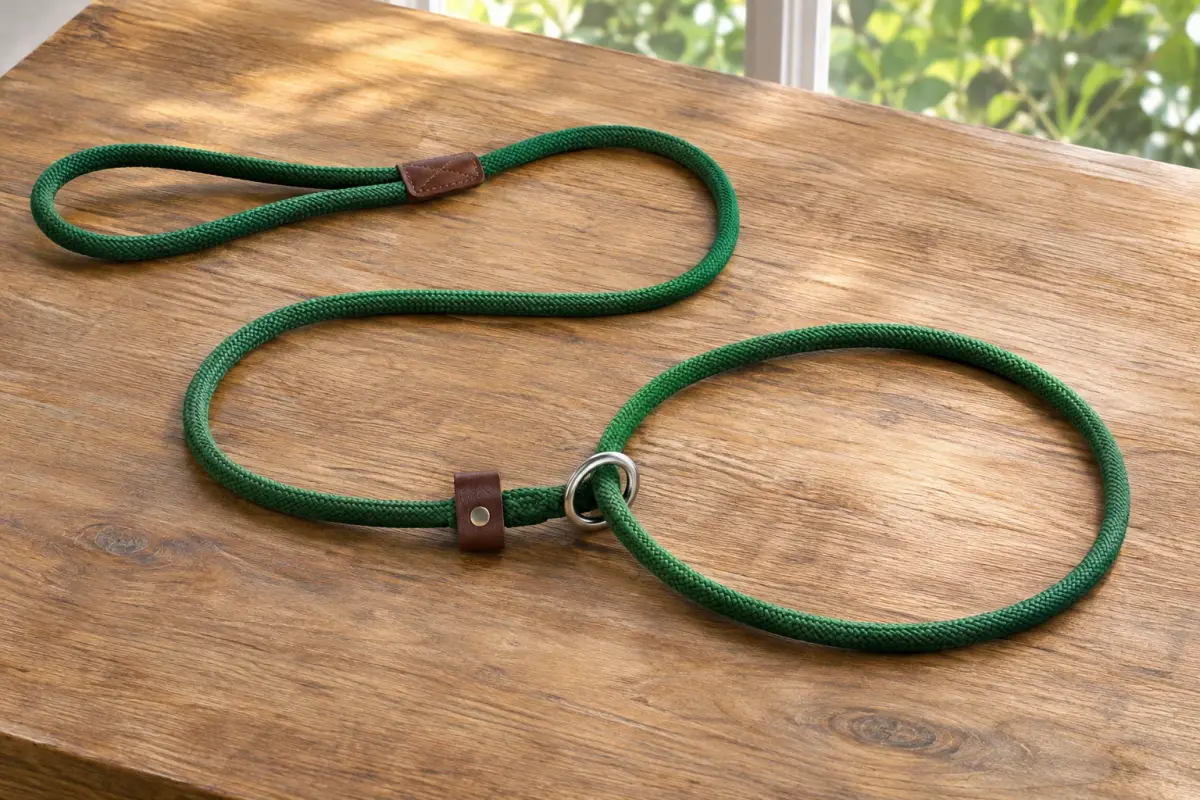
A slip lead is a single piece of equipment that works as both collar and leash. The AKC describes it as quick to slip on and remove, which is why it is handy in many situations, and says slip leads generally work best with well-trained dogs that are unlikely to duck out of them. If you are comparing styles, our slip leads range is the place to start, using the checks below.
Four features decide quality: the material, the ring or stop where the loop slides, the length, and the handle. Smooth, rounded rope or flat webbing is kinder on a neck than a thin cord. A solid metal ring that slides freely is safer than a stiff one that jams. Choose a handle you can grip comfortably, since a slip lead is often used by someone handling a dog in a hurry.
How a slip lead tightens, and why it matters
A slip lead has no stop of its own on most designs. When the dog pulls, the loop keeps tightening for as long as the pull lasts. VCA Hospitals groups slip, choke, prong and electronic training collars together and advises against them for training, because they rely on discomfort and some can tighten without limit, risking strangulation. Its separate collar guide notes that tightening devices can cause tracheal damage.
That is not a reason to avoid slip leads entirely. It is a reason to use one for what it does well and not to ask it to fix pulling. If your dog lunges or pulls hard, coughs on a collar or breathes noisily, VCA says a flat collar is not appropriate either, and a well-fitted harness is a better tool.
Where a slip lead helps
The AKC suggests keeping a spare slip lead in your car, both for your own dog and for a loose dog you come across, because it can be put on in seconds. It also works as a backup for a dog known to slip its collar, and it is common for short transitions such as getting a calm dog from the car to the vet's door.
For these jobs, a standard slip lead is plenty. Keep it high on the neck, just behind the ears, rather than low where it presses on the throat, loosen it as soon as you stop, and take it off once the dog is settled. Do not leave a dog tied or unsupervised in one.
Best option for each situation
For everyday walks, a flat leash is the better default. The AKC says standard leashes run 4 to 6 feet in nylon webbing, and VCA suggests a lightweight leash of 6 to 10 feet for training walks. A plain dog leash or a nylon dog leash clipped to a harness gives steadier control and spreads pressure across the chest. See our dog leashes and dog harnesses for more styles.
For recall practice and open space, VCA describes a long line of 15 to 50 feet used for supervised exploration, such as this long dog leash. For a puller, follow VCA's method: stand still or step away when the leash tightens and reward any slack. Our guide to how to stop a dog pulling on the leash walks through it.
Which dogs should skip a slip lead
Skip a slip lead, or ask your vet first, for dogs that pull hard, that cough or wheeze on a collar, or that have neck, throat or eye problems. VCA's collar guide notes that tightening devices may raise pressure inside the eye, a concern for dogs prone to glaucoma. Small dogs, flat-faced breeds and puppies are also poor candidates, because a small amount of pressure goes a long way on a small neck.
Nervous dogs can be a mixed case. A slip lead is harder to back out of, but jerking or sustained tension can add to fear. Pain or fright on the lead can also teach a dog to link what it was looking at with something unpleasant, so a harness and calm training are the safer route.
What to avoid when buying
Avoid thin cord or braided line that bites into the hand and neck, rings that do not slide cleanly, and stitched handles that look frayed. Avoid anything sold as a corrective or training device in the style of a choke chain, which VCA advises against.
Check the length against the job. A very short lead gives little room for a nervous handler, while a very long one tangles on a busy sidewalk. Keep a flat collar and tags on your dog under the slip lead so identification stays in place.
Care and when to see your vet
Wipe rope clean with warm water and dog-safe soap, dry it fully, and retire any lead that is fraying. Stop using the lead and call your vet if your dog develops a cough, gagging, hoarse voice, rubbed hair or sore skin at the neck, or any change in breathing after walks.
When you are ready to compare, browse our slip leads and a flat leash alongside. This page is general information, not veterinary advice, and it cannot replace an examination by the vet who knows your pet.
Common questions
Is a slip lead good for dogs that pull?
No. A slip lead keeps tightening while the dog pulls, so it does not teach loose-leash walking. VCA advises against slip, choke, prong and electronic collars for training and suggests a harness plus positive-reinforcement training.
Where should a slip lead sit on the neck?
High on the neck, just behind the ears, rather than low on the throat. Loosen it as soon as the dog stops pulling, and remove it when the dog is settled.
Are slip leads safe for puppies and small dogs?
They carry more risk for puppies, small dogs and flat-faced breeds, because little pressure is needed on a small or short neck. A harness and flat leash are the safer everyday choice, so ask your vet first.
What is a slip lead best used for?
Short, controlled jobs: a spare in the car, a backup for a dog that slips its collar, or moving a calm dog from the car to the vet's door.
How long should a slip lead be?
A length similar to a standard leash is common, since the AKC puts standard leashes at 4 to 6 feet. Choose what suits the job, short enough to control the dog and long enough to be comfortable.
Sources we checked
This guide is general information, not veterinary advice. If your pet is unwell or injured, contact your veterinarian.


