






Training & behavior
How to Stop a Dog Pulling on the Leash
Dogs pull on the leash because pulling works: it gets them to the smells and sights they want faster. To stop it, make pulling stop the walk and make a loose leash keep it going. Stand still when the leash goes tight, move on when it slackens, reward your dog often for walking beside you, and use a front-clip harness to help while you train. Never jerk the leash or use aversive tools.
By Matt GarnettUpdated November 14, 20263 min read3 sources
Why does my dog pull on the leash?
Dogs naturally walk faster than people, and the world outside is full of exciting smells, dogs and people. Every time a dog pulls and the walk continues, it learns that pulling gets it where it wants to go, so the habit strengthens.
Pulling can also come from excitement, frustration at not reaching another dog, or fear, when a dog pulls to get away from something. A dog that lunges and barks at other dogs or people may be leash reactive, which needs a slightly different plan.
Step 1: Make pulling stop the walk
Each time the leash goes tight, stop and stand still like a tree. Wait. The moment your dog eases off, looks back at you or steps toward you, mark it with 'yes', reward, and walk on. At first you may stop every step or two; that is normal.
Apply the rule every time. If pulling sometimes works, your dog will keep trying. On days you cannot train, use a front-clip harness and keep walks short and simple so your dog does not practice pulling.
Step 2: Make walking beside you worth it
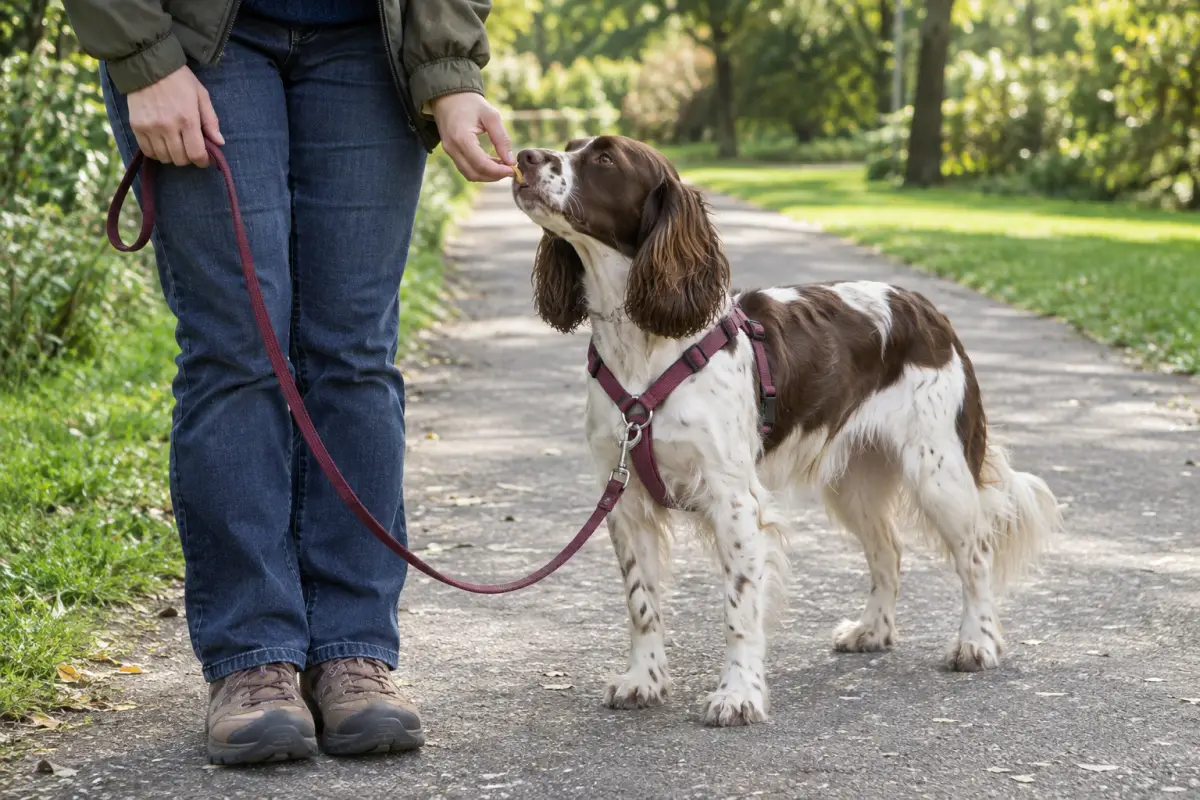
Reward your dog generously for being at your side with a loose leash, especially at first. Deliver training treats at your knee so your dog learns where the good spot is. Gradually space out the rewards as it improves.
Use real-life rewards too: walking on toward a smell, a chance to sniff a bush, or permission to greet a friendly person can all be given as payment for a loose leash. Say 'go sniff' to release your dog, and 'let's go' to start walking again.
Step 3: Change direction and pace
If your dog races ahead, turn and walk the other way, cheerfully calling it. Reward it when it catches up. Frequent, unpredictable turns teach your dog to keep an eye on you rather than charge ahead.
Walk at a brisk pace that suits your dog; very slow walking can frustrate a dog into pulling. Before a distraction appears, get your dog's attention with a 'watch me' cue or hand target, and reward it for focusing on you as you pass.
Equipment that helps without hurting
A front-clip harness attaches the leash at the chest, so when your dog pulls it turns toward you rather than gaining power. It is a helpful training aid for strong pullers and keeps pressure off the throat. Our no-pull dog harnesses include a padded no-pull harness and a no-pull harness and lead set, and our no-pull harness guide explains fit. A head halter gives even more steering but needs careful, gradual introduction.
Avoid tools that work by causing pain or discomfort; they can injure the neck, increase fear and make reactivity worse. Equipment manages pulling, but only rewarding a loose leash teaches your dog not to pull.
When to get help
A positive-reinforcement trainer can help if your dog is very strong, lunges at dogs or people, or if progress stalls. For lunging and barking, look for someone experienced with leash reactivity.
If your dog suddenly starts pulling, coughing on walks or seems sore, check with your vet. A collar on a pulling dog can strain the neck and throat, especially in small breeds.
This page is general information, not veterinary advice, and it cannot replace an examination by the vet who knows your pet.
Common questions
Can you stop leash pulling in 5 minutes?
A front-clip harness can reduce pulling right away, but teaching a dog not to pull takes weeks of consistent practice. Quick fixes that rely on pain are not recommended.
Do no-pull harnesses work?
Front-clip harnesses help many dogs pull less by turning them toward you, and they protect the throat. They work best combined with rewarding loose leash walking.
How do I stop my large dog pulling on the leash?
Use a well-fitted front-clip harness, practice stop-and-wait and direction changes in quiet places first, and reward heavily. A positive trainer can help with very strong dogs.
How do I teach my dog to heel?
Lure and reward your dog in position at your side, add the cue 'heel', then build steps, turns and distractions gradually. Heel is a formal position; loose leash walking is the everyday goal.
Sources we checked
This guide is general information, not veterinary advice. If your pet is unwell or injured, contact your veterinarian.


