Buying guides
Best Dog Treats for Training: What Makes a Good One
The best training treats are tiny, soft, smelly and quick to eat, so your dog can take dozens in a session without filling up or stopping to chew. Pea-sized for most dogs, smaller for toy breeds and puppies. Keep a lower-value treat for easy practice and a higher-value one for distractions, and count all of it in the day's food.
By Matt GarnettUpdated November 10, 20263 min read3 sources
What matters most in a training treat
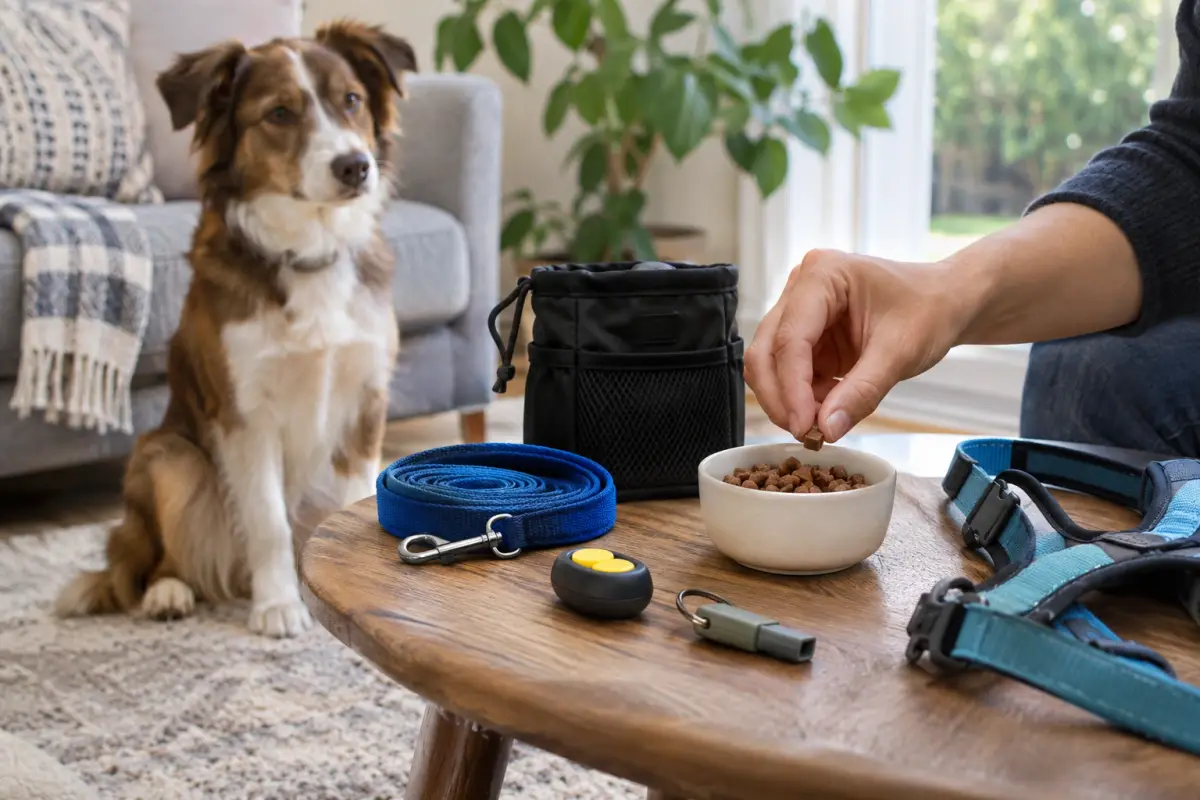
Speed of eating comes first. A reward works best delivered right after the behavior, and the AKC's clicker method is to click, then treat immediately, with every click followed by a reward. A small training clicker is all the equipment that method calls for. A treat that takes ten seconds to crunch breaks the rhythm of a session; a soft morsel the size of a pea is gone in a second.
Value is second. The AKC notes that edible treats are the best incentive for most dogs, but what counts as valuable differs from dog to dog. Soft, strong-smelling treats usually beat dry ones in a busy park, while plain kibble may be enough for an easy cue in the kitchen.
The main treat types compared
Soft, chewy training treats are designed for this job: small, aromatic and easy to break smaller. Freeze-dried single-ingredient meat is light and high value, though crumbly. Dry crunchy treats and biscuits are fine for occasional rewards but too slow for rapid repetitions.
Your dog's own kibble is the cheapest training treat and adds no extra calories if you set aside part of the day's ration. Some owners use tiny pieces of plain cooked chicken. Long-lasting chews are not training treats at all; save them for settling in a crate.
Best treat for each situation
For puppies, choose very small, soft treats and use part of the puppy's own food for most repetitions. The AKC advises keeping training treats as small as possible and cutting mealtime portions to account for them. For toy breeds, cut treats down to the size of a lentil.
For distractions, recall and new places, bring the highest-value treat your dog loves, because a reward has to outcompete what is around it. A treat pouch, such as this portable snack bag, keeps the next reward within reach. For dogs with sensitive stomachs or allergies, single-ingredient treats or the dog's regular food reduce the chance of upsets, and your vet can advise on a suitable option.
How many training treats is too many
Treats add up quickly in a long session. A common guide is to keep treats and extras to about 10% of the day's calories, which is also the share the WSAVA Global Nutrition Committee gives for foods not intended as a complete diet. Breaking each treat into two or three pieces doubles the repetitions for the same calories.
Reduce the next meal on heavy training days, weigh your dog every few weeks, and move from food to life rewards, such as a sniff, a game or a greeting, as behaviors become reliable. If your dog gets diarrhea after a new treat, stop it and call your vet if it lasts more than a day.
What to avoid
Avoid treats too large to swallow quickly, hard treats that slow training, and anything containing xylitol, grapes or raisins, chocolate, onion or garlic, all of which are toxic to dogs. Avoid giving rich human food as rewards, which can upset the stomach. Store soft treats sealed so they do not dry out or grow mold, and check the labels on any training treats you buy.
Avoid using treats to bribe rather than reward: show the treat only after the behavior once your dog knows the cue. If you suspect your dog has eaten something toxic, call your vet, the ASPCA Animal Poison Control Center at (888) 426-4435, or the Pet Poison Helpline at (855) 764-7661; a fee may apply.
This page is general information, not veterinary advice, and it cannot replace an examination by the vet who knows your pet.
Common questions
What are the best dog treats for training?
Tiny, soft, strong-smelling treats your dog loves and can swallow in a second. Use part of the regular kibble for easy cues and a higher-value treat for distractions.
What are the best training treats for puppies?
Very small, soft treats and part of the puppy's own food. Keep pieces tiny, reduce meals on training days, and introduce one new treat at a time.
How big should training treats be?
About the size of a pea for most dogs and smaller for toy breeds. Small pieces keep the session moving and limit calories across many repetitions.
Can I use kibble as training treats?
Yes. Setting aside part of the daily kibble works well for easy cues at home and adds no extra calories. Save higher-value treats for harder, distracting situations.
Sources we checked
This guide is general information, not veterinary advice. If your pet is unwell or injured, contact your veterinarian.