






Buying guides
Best Dog Training Clickers: How to Choose One
The best dog training clicker makes one crisp, consistent sound, fits comfortably in your hand and stays attached to you, so your timing is the only thing you have to think about. VCA says the sound should cause neither alarm nor joy, so choose one that suits your dog's ears. Browse our dog training clickers, then see how to clicker train a dog.
By Matt GarnettUpdated November 13, 20264 min read2 sources
What a clicker is actually for
A clicker is a marker: a sound that tells the dog the exact moment it did the right thing. VCA describes clicker training as positive reinforcement in which a sound marks the exact moment of a desired behavior, and says the click only becomes meaningful once it has been paired with food.
That is why the device matters less than the habit. The AKC calls the clicker simply a teaching tool, and says you will not need the marker once the dog has learned the behavior. What a good clicker does is make your timing easy to repeat, which is the part of training you can control.
What to look for in the sound
The sound should be distinct, consistent and different from the way you normally speak to your dog. The AKC says any distinct sound can work as a marker, including a whistle, a tongue cluck or a word such as Yes, and that a marker should differ from normal talking.
VCA adds that the sound should cause neither alarm nor joy. A very loud click can startle a sensitive dog, and a clicker you can hear across the yard is not much use in a quiet living room. If your dog flinches, try a softer click or a word marker, and consider asking a behavior professional for help.
Styles compared
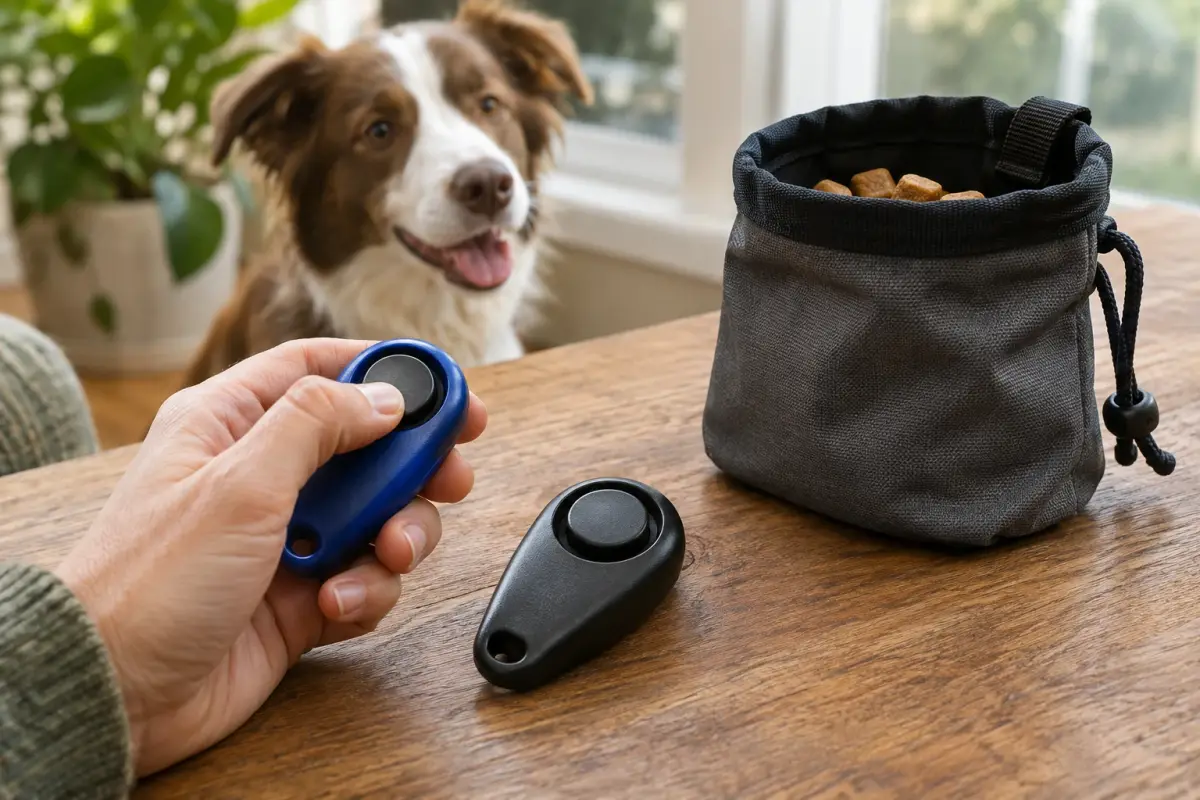
Standard box or button clickers are the simplest: press, click, treat. A drop-shaped design such as this drop-shaped training clicker is shaped to sit in the palm, which some people find easier to press quickly while holding a leash or treats in the other hand.
Wrist-coil and keyring styles keep the clicker attached to you, so it is not lost in a coat pocket or on the lawn. A clicker with a wrist strap and keyring is one version, and a plain dog training clicker is another. Left-handed or small-handed owners should check how easy a clicker is to press with one finger.
Getting started
Charge the clicker first. VCA says to sound it and immediately give a high-value treat, repeating several times per session, and the AKC says after about 10 to 20 repetitions the dog understands the marker predicts a reward. Keep sessions short and end on a success.
Click at the instant the behavior happens, such as when a dog's rear touches the ground in a sit, and follow every click with a reward. The AKC stresses that every click must be followed by a reward. Our treat pouches and dog training treats keep rewards close at hand.
Other markers and special cases
You do not need a clicker for every dog. The AKC lists snapping fingers, a whistle, a clucking sound or a marker word, and says a light or a gentle tap on the shoulder can serve as the marker for a hearing-impaired dog. VCA suggests a click can be used up close and a whistle at a distance.
Choose the marker you can use consistently. If your hands are full on a hike, a word may be easier. If your dog startles at sharp sounds, a word or gesture may suit better. A behavior professional can help with fearful or reactive dogs, and any sudden change in behavior is a reason to see your vet.
What to avoid, and how to care for it
Avoid clicking without giving a treat, using the clicker to get your dog's attention, and clicking near a dog's ears. Avoid very loud models for puppies or sensitive dogs, and avoid cheap clips that snap or straps too short to use comfortably.
Wipe a clicker clean if it gets wet or covered in treat residue, and keep a spare in a different pocket. When the behavior is learned, drop the clicker and reward with treats or praise, as the AKC suggests. For the wider choice return to our dog training clickers, and read the how to clicker train a dog guide for the step-by-step method.
Clicker body and carry features
| Feature | Physical difference | Inspect before choosing |
|---|---|---|
| Box or button body | A pressed control produces a click | Button reach and grip |
| Palm-shaped body | A shaped shell sits in the hand | One-finger operation and size |
| Wrist cord or coil | A cord connects clicker to the wrist | Cord attachment and fit |
| Keyring | A ring attaches to another carried item | Ring position and button access |
Common questions
Do I need a clicker to train my dog?
No. The AKC says any distinct sound can work as a marker, such as a whistle, a tongue cluck or a word like Yes. A clicker is popular because it makes the same sound every time.
How do I get my dog used to the clicker?
Press the clicker and immediately give a treat. VCA says to repeat this several times per session, and the AKC says about 10 to 20 repetitions teach the dog that the click predicts a reward.
What if my dog is scared of the clicker sound?
Try a softer clicker, muffle the sound, or use a word or gesture marker instead. VCA says the sound should cause neither alarm nor joy, and a behavior professional can help with fearful dogs.
When can I stop using a clicker?
Once the dog reliably knows the behavior. The AKC says the marker is simply a teaching tool, so you can drop it and reward with treats or praise. Use it again when teaching something new.
Sources we checked
This guide is general information, not veterinary advice. If your pet is unwell or injured, contact your veterinarian.


