Training & behavior
How to Train a Reactive Dog
To train a reactive dog, first stop it from practicing the lunging and barking by managing distance on walks, then change how it feels about its triggers: let it notice another dog or person from far enough away that it stays calm, and pair each sighting with a great treat. Teach easy alternatives like 'watch me' or a hand target. Never punish reactivity. Aggression toward people or dogs needs a qualified professional and a vet check.
By Matt GarnettUpdated November 9, 20264 min read2 sources
What reactivity is, and why dogs do it
A reactive dog overreacts to normal things, most often other dogs, people, bikes or cars, by barking, lunging, growling or spinning, usually on leash. It is common, and it is not the same as a dog that wants to cause harm. Reactivity is usually driven by fear, which makes the dog want the trigger to go away, or by frustration, which is common in friendly dogs that cannot reach what they want to greet.
Leashes add to it, because a nervous dog on a leash cannot choose to move away. Limited socialization, genetics, a bad experience and pain can all contribute. A dog that has started reacting suddenly should see a vet, since pain often makes dogs more defensive.
Step 1: Manage walks so your dog stops practicing
Each lunge rehearses the habit and keeps your dog stressed. Walk at quieter times and on quieter routes, cross the street or turn around early when you see a trigger, and use parked cars or hedges as visual barriers. Give your dog a break from busy places for a while if needed.
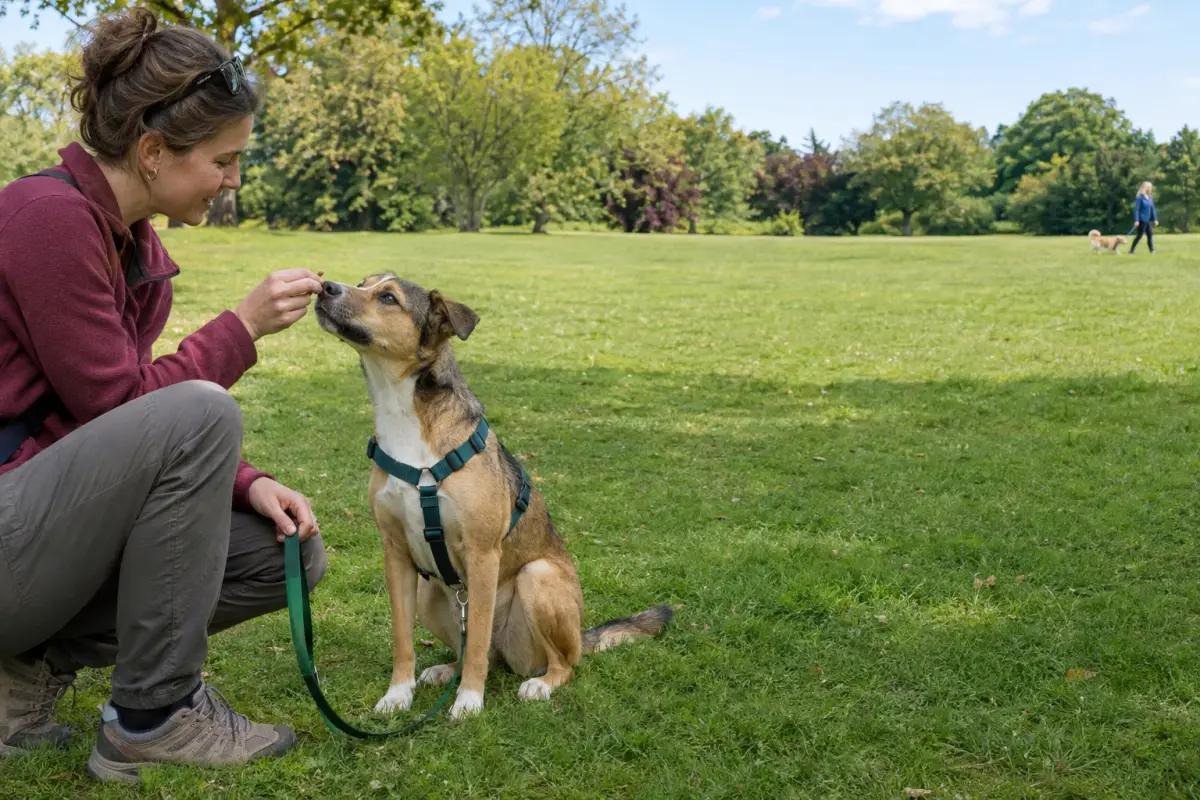
Use a well-fitted front-clip no-pull harness rather than a collar, so lunging does not put pressure on the throat. Keep the leash loose and your movements calm. A dog that is too stressed to take food is too close, so increase the distance.
Step 2: Find the threshold distance
Your dog's threshold is the distance at which it can see the trigger and still stay relaxed, take treats and respond to you. That might be across a park or the length of a parking lot. All training happens at or beyond that distance, never closer.
Signs you are over threshold include staring, stiffening, raised hackles, a closed mouth, ignoring food, whining or pulling. When you see them, calmly move away and try again from farther back. Over weeks, the threshold distance usually shrinks.
Step 3: Change how your dog feels with counterconditioning
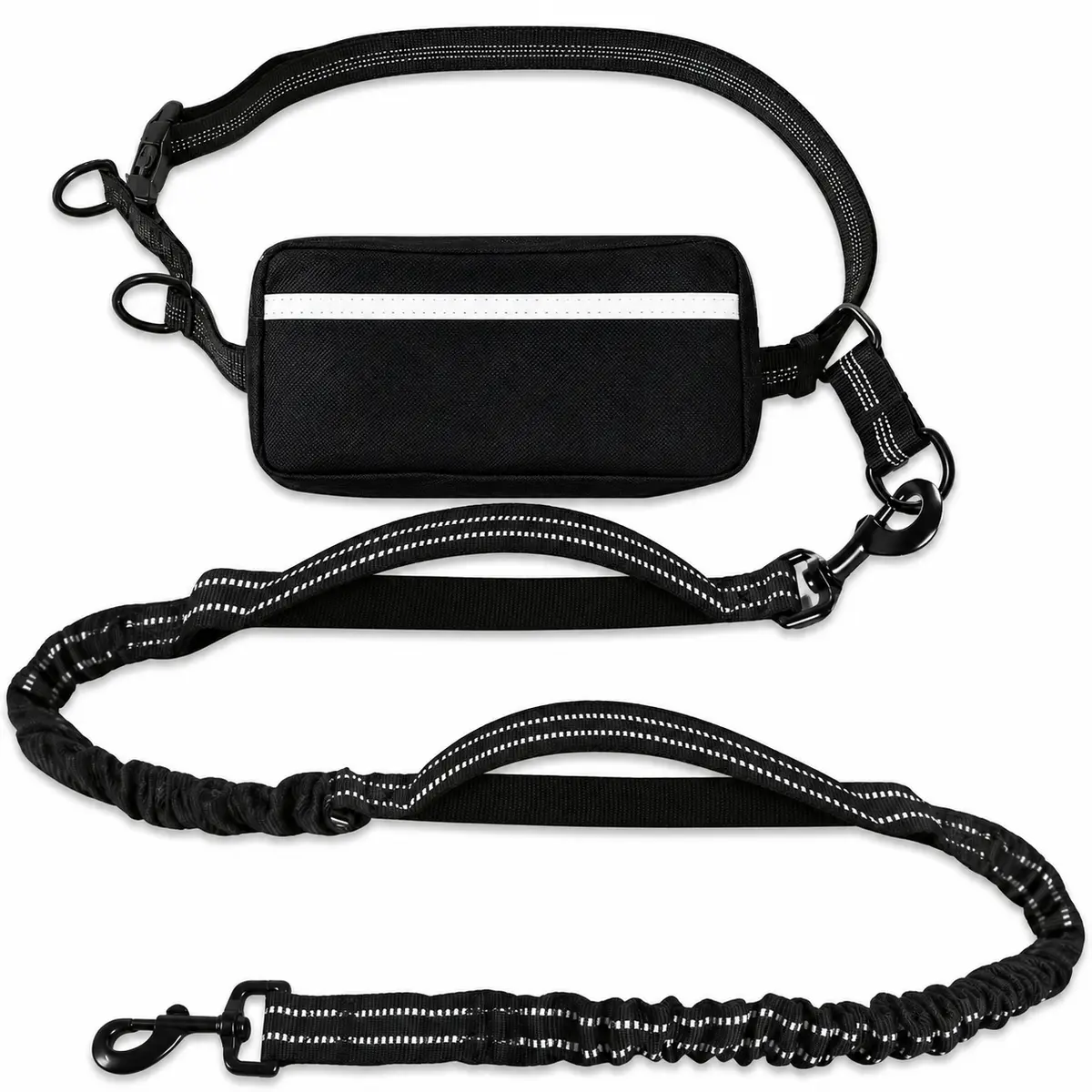
Each time your dog notices the trigger from a safe distance, mark and feed something special, such as chicken or cheese kept in a treat pouch, one piece after another while the trigger is in view. When it disappears, the treats stop. Your dog starts to learn that other dogs or people predict great food.
Move closer only in small steps, and only when your dog is clearly relaxed at the current distance, looking at the trigger and then turning to you for a treat. If it starts lunging again, you have moved too far, too fast, so go back a step.
Step 4: Teach alternative behaviors
Teach a 'watch me' cue, where your dog looks at your face; a hand target, where it touches your palm with its nose; and 'find it', where you toss treats on the ground to sniff out. Practice them at home first, then on walks away from triggers, so they are easy and well-rewarded.
Use them to turn away from a trigger calmly, or to keep your dog's attention as something passes at a distance. A dog cannot lunge while it is looking at you or searching the grass. Reward heavily from a portable training snack bag so treats are always at hand, and expect progress to be gradual.
When to get professional help
Get help from a certified trainer or behavior consultant experienced with reactivity if progress stalls, and from a veterinary behaviorist if your dog has bitten, shows aggression toward people, or is aggressive toward dogs in the home. Look for professionals who use reward-based methods, and keep a dog treat pouch such as this training snack bag stocked for each lesson; punishment and aversive tools can increase fear and aggression.
Your vet can look for pain or illness and may discuss medication to lower anxiety enough for training to work; only your vet can decide that. Use a basket muzzle, introduced gradually with treats, if there is any bite risk.
This page is general information, not veterinary advice, and it cannot replace an examination by the vet who knows your pet.
Common questions
Can a reactive dog be cured?
Many reactive dogs improve greatly with management and counterconditioning, and some become relaxed around triggers. Others always need some space. Progress takes consistency over months.
How do I stop my dog being aggressive toward other dogs?
Keep distance, avoid on-leash greetings, and use counterconditioning below threshold. For true aggression, especially with bites, work with a veterinary behaviorist or qualified behavior professional.
Is reactivity the same as aggression?
Not quite. Reactivity is an overreaction, often from fear or frustration, while aggression involves intent to threaten or harm. They can overlap, so get help if your dog has snapped or bitten.
Should I let my reactive dog meet other dogs?
Not on leash while you are training. Tight leashes and face-to-face meetings are hard for reactive dogs. Controlled introductions can come later, with a professional's guidance.
Sources we checked
This guide is general information, not veterinary advice. If your pet is unwell or injured, contact your veterinarian.