






Buying guides
Best Dog Harness: How to Choose the Right Type and Fit
The best dog harness is the one that matches how your dog walks and fits its body without rubbing. For a dog that walks calmly, a back-clip harness is simplest. For a dog that pulls, a front-clip or dual-clip harness gives you more steering. After that, fit decides everything: two fingers under each strap, no gap a shoulder can slip through, and nothing pressing on the throat or behind the front legs.
By Matt GarnettUpdated November 10, 20265 min read2 sources
What matters most: clip position, fit and comfort
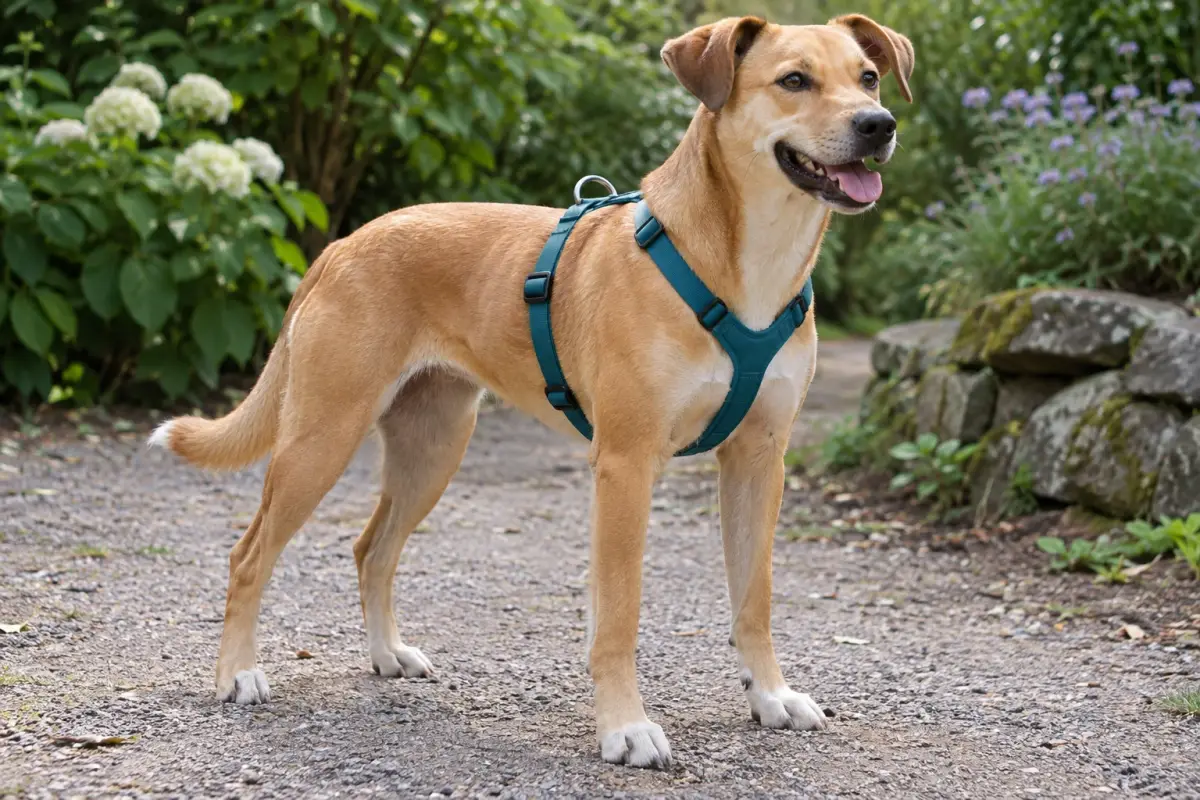
The clip position changes how a harness behaves. The AKC describes a back clip as sitting between the shoulder blades and best for well-trained dogs, while a front clip on the chest helps dogs that pull by turning them sideways when they lunge. A dual-clip harness has both, so you can start on the front ring for control and move to the back as your dog's leash manners improve. Our dog harnesses cover these clip styles, from a plain dog harness to a chest harness with a leash.
Fit matters as much as design. Measure the base of the neck and the widest part of the chest, then use the maker's chart rather than a size label. Once fitted, you should be able to slide two fingers under each strap. The straps should sit clear of the throat and should not cut into the armpits, where most rubbing sores start on dogs that walk a lot.
The main harness types compared
Overhead harnesses have a neck loop and a girth strap and are the most common. They are secure and adjustable but some dogs dislike having anything pulled over the head. Step-in harnesses lie flat on the floor, the dog steps in with its front feet and you buckle it over the back. The AKC notes step-in designs suit dogs with head, ear or neck sensitivity and are harder to escape when fitted well.
Vest harnesses spread pressure over a wide padded panel and suit small dogs and flat-faced breeds, though they run warmer. Y-front harnesses leave the shoulders free and suit active dogs that hike or run. No-pull harnesses add a front ring that tightens slightly when the dog pulls. Avoid any harness strap that crosses straight over the shoulder points, which restricts the stride.
Best type for each dog
For a puppy, choose an adjustable overhead or step-in harness and recheck the fit every couple of weeks, since puppies grow fast. For a strong puller, a dual-clip harness used with positive leash training is the most practical choice. For a small or toy breed, a soft vest or step-in harness avoids pressure on a fragile neck. For flat-faced breeds such as Bulldogs and Pugs, which the AKC lists among dogs that benefit from a harness, a wide chest panel keeps pressure off the airway.
For a dog that slips out of everything, look for a harness with an extra belly strap behind the ribs. For hiking, a Y-front harness with a back handle is useful. For a senior dog, a harness with a handle helps you support it on steps and in and out of the car.
Materials and build quality
Nylon webbing is strong, affordable and dries quickly, though it can rub on short coats if the edges are hard. Padded mesh is breathable and gentle but wears faster. Leather is durable and comfortable once conditioned but needs care and does not like getting soaked. Neoprene lining suits dogs that swim but holds heat in summer.
Look at the hardware before anything else. Metal D-rings and sturdy side-release buckles last longer than thin plastic fittings, and stitching should be even and doubled at load points. Reflective trim is a real safety feature if you walk early or late. A harness that you can wash in the machine, or at least hand-wash, will last longer and smell better.
What to avoid
Avoid harnesses that tighten hard around the chest or legs as a correction; the AKC describes no-pull harnesses as tightening slightly, and anything that squeezes more than that is uncomfortable. Avoid buying a size up so your dog can grow into it, because a loose harness lets a shoulder slip free. Avoid leaving a harness on all day, since straps mat the coat and can rub sores in the armpits.
Check your dog's skin under the straps after the first few walks. Redness, hair loss or a dog that suddenly resists the harness are signs of a poor fit. If your dog coughs on walks even in a harness, or flinches when you touch its neck or shoulders, have your vet take a look.
How to measure, and when to replace it
Use a soft tape measure. Measure the neck where a collar would sit, then the chest just behind the front legs at the widest point. If your dog falls between two sizes on the chart, the girth measurement matters most, and adjustable straps usually make the smaller size a better fit. Recheck after grooming, a weight change or a coat change, as the AKC recommends.
Inspect the harness every month. Replace it if the stitching frays, a buckle cracks or the webbing thins where it meets a ring. Most harnesses last a year or two of daily walks, longer for a dog that does not pull. Keep a spare if your dog swims or hikes, so you always have a dry one ready. A waterproof dog harness, collar and lead set is one way to cover wet-weather walks, and when it is time to replace a harness you can browse dog harnesses or dog leashes.
Harness layouts and fitting checks
| Layout | How it goes on | Check before choosing |
|---|---|---|
| Overhead | Neck loop passes over the head; body strap closes around the chest | Neck-loop clearance and shoulder-strap placement |
| Step-in | Front feet enter the open harness before it buckles over the back | Leg openings and buckle position |
| Vest | A wider fabric panel covers the chest | Panel edges, chest fit and room at the armpits |
| Dual-clip | Front and back attachment positions | Exact ring locations and the maker's fitting chart |
Common questions
What is the most comfortable dog harness?
Usually a padded Y-front or vest harness that is fitted correctly, with two fingers of room under each strap and nothing sitting on the throat or rubbing behind the front legs. Comfort comes from fit more than from brand or padding.
Is a front-clip or back-clip harness better for walking?
A back clip suits a dog that already walks calmly. A front clip gives more control over a dog that pulls. A dual-clip harness lets you use both and switch as training improves.
How tight should a dog harness be?
Snug enough that it cannot slide over the shoulders, loose enough that two fingers fit under each strap. Check the fit after grooming or weight changes and look for redness under the straps.
Should a dog wear a harness all day?
It is better not to. Straps can mat fur and rub the armpits. Put the harness on for walks and training, and keep ID on a light collar the rest of the time.
Sources we checked
This guide is general information, not veterinary advice. If your pet is unwell or injured, contact your veterinarian.


