






Buying guides
Best Harness for a Cocker Spaniel: Fit, Style and Clip
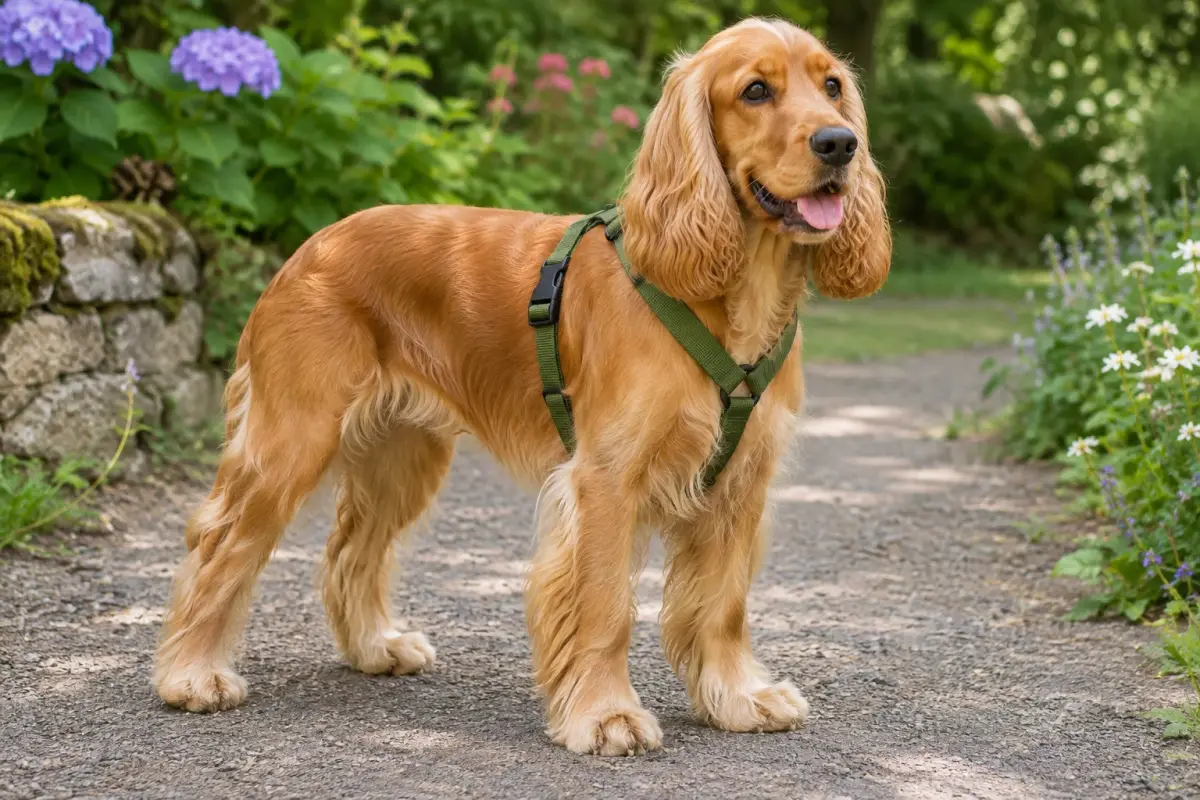
The best harness for a Cocker Spaniel is a well-fitted vest or step-in harness that sits on the chest, adjusts at the neck and girth, and clips at the back for a calm walker or at the front for a puller. A step-in style keeps straps off the ears, and a snug fit matters because a long coat can hide a loose harness.
By Matt GarnettUpdated November 14, 20264 min read3 sources
What a Cocker Spaniel needs from a harness
The AKC breed weight chart lists the Cocker Spaniel at 20 to 30 pounds and the English Cocker Spaniel at 26 to 34 pounds, so most Cockers sit in the small-to-medium range. They are a merry, hunting-bred companion, which means a harness has to cope with enthusiastic pulling toward every scent. Browse our harnesses for Cocker Spaniels with that in mind.
A harness also protects the neck. VCA calls harnesses a strong starting point for leash training because the neck is not strained when a dog pulls, and the AKC says harnesses may help dogs with neck pain or breathing problems. Keep a flat collar for ID tags and clip the leash to the harness; our guide to harness vs collar explains the trade-offs.
Step-in or over-the-head: protecting the ears and coat
The AKC says a step-in harness, where the dog steps in with its front legs and the harness fastens over the back, avoids pulling anything over the head, which helps dogs with head, ear or neck sensitivity. For a Cocker with long ears, that is a practical advantage: no straps dragging across the ears and feathering each time the harness goes on. Over-the-head styles are widely available and many dogs accept them, so choose the one your dog tolerates.
Check how the straps meet the coat. A Cocker's long, feathered coat can tangle where webbing rubs behind the front legs, so look for soft edges and smooth webbing. A harness and leash set is a simple way to start, and a plain pet harness or a harness with leash offers other shapes to compare. Compare each listing's adjustment range with your dog's measurements before buying.
Back clip, front clip or no-pull
The AKC's veterinarian recommends back-clip harnesses for well-trained dogs, says front-clip designs can help redirect dogs that pull, and finds dual-clip harnesses useful while teaching a dog to wear one. VCA likewise notes that a front clip reduces forward pulling. Many young Cockers pull hard, so a dual-clip design lets you use the back clip for relaxed strolling and the front clip for training.
No harness replaces loose-leash practice with rewards. Treat the front clip as a steering aid while the training catches up, and keep the leash light so the harness does not twist your dog sideways. Our no-pull dog harnesses show the common styles side by side.
How to measure and fit
Use a soft tape to measure the base of the neck where it meets the shoulders and the widest part of the chest behind the front legs, as the AKC advises. Size by those two numbers, not by the breed name: an American Cocker and an English Cocker can differ by several pounds and in build, and a trimmed dog is shaped differently from one in full coat.
Start loose and tighten gradually. The AKC's veterinarian says the common two-finger rule may be slightly too much, so aim for something you can slide two fingers under without the harness being uncomfortable, and note that thick or fluffy coats may need slightly tighter adjustment. Walk your dog around to check the shoulders move freely, back up to confirm the harness does not slide over the head, and recheck the fit after grooming.
What to avoid, care and when to see your vet
Avoid a harness that restricts the shoulders or legs, slides over the head when your dog backs up, or leaves rubbing and pressure points that you ignore. Mesh is breathable but offers less padding, which the AKC says can increase chafing, so a padded dog harness may suit a dog with sensitive skin. Wash it when dirty, check buckles and stitching, and replace anything frayed; puppies need regular adjustment or replacement as they grow.
See your vet if the skin under the straps turns red, hair is rubbed away, your dog yelps when the harness goes on, or you notice neck pain or coughing. For more, read our best dog harness guide, how to put on a dog harness and the Cocker Spaniel breed guide.
This page is general information, not veterinary advice, and it cannot replace an examination by the vet who knows your pet.
Common questions
What size harness does a Cocker Spaniel need?
Size by chest and neck measurements, not weight or breed name. Measure the base of the neck and the widest part of the chest behind the front legs, then pick the size whose range covers both.
Is a step-in harness good for a Cocker Spaniel?
It can be. The AKC says step-in harnesses avoid pulling anything over the head, which helps dogs with head, ear or neck sensitivity, and for a long-eared Cocker it keeps straps off the ears.
Should a Cocker Spaniel wear a harness or a collar?
Use a harness for walks. VCA says a harness avoids neck strain when a dog pulls, and a flat collar is still useful for ID tags. Clip the leash to the harness, not the collar.
Can a Cocker Spaniel wear a no-pull harness?
Yes, a front-clip or dual-clip harness can help redirect a puller. Use a light hand, reward walking beside you and keep working on loose-leash training, since the harness alone will not teach it.
How tight should a Cocker Spaniel harness be?
Snug enough that it cannot slide over the head or let your dog back out, yet comfortable enough to slip two fingers underneath. Thick coats may need slightly tighter settings, so recheck after grooming.
Sources we checked
This guide is general information, not veterinary advice. If your pet is unwell or injured, contact your veterinarian.


