Breeds
Harness vs Collar: Which Is Better for Your Dog or Puppy?
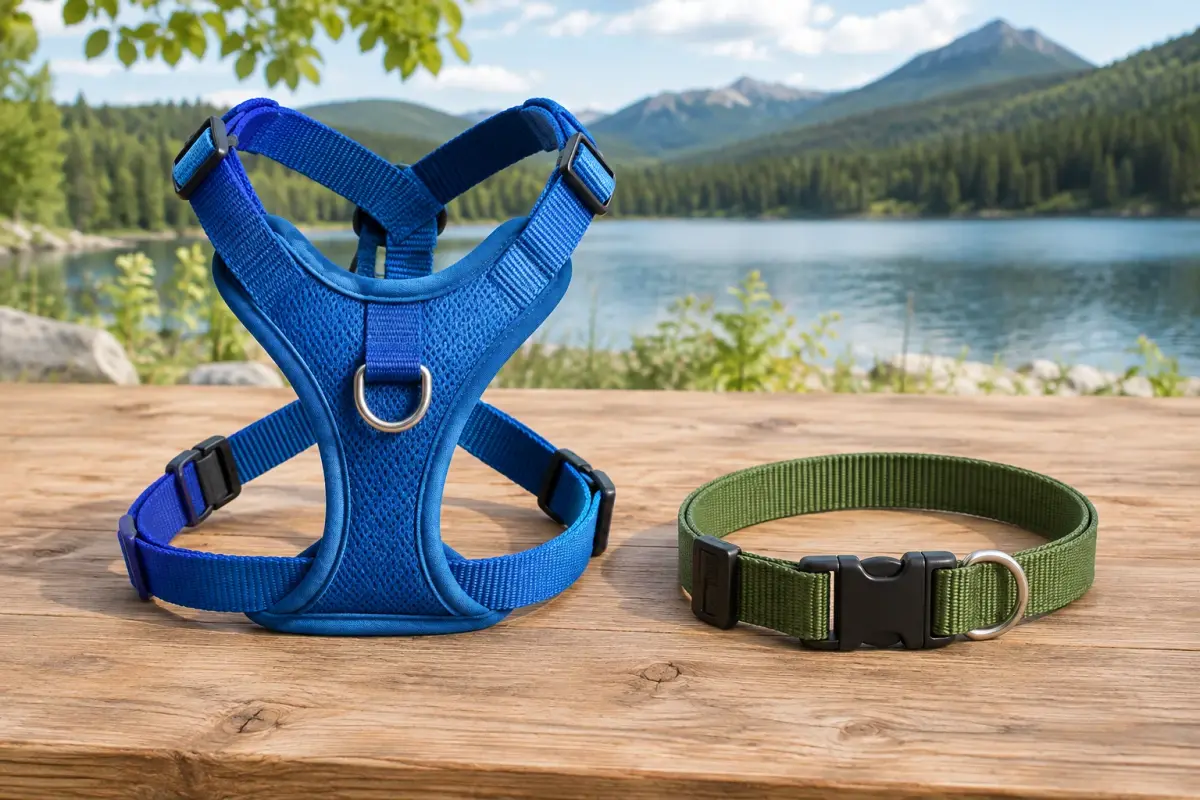
For walking on a leash, a well-fitted harness is the better choice for most puppies, small dogs, pullers and any dog with neck, throat or breathing problems, because it spreads pressure across the chest instead of the neck. A collar is still useful for carrying ID tags and suits calm dogs that walk nicely. Many owners use both: a collar for ID, and a harness for walks.
By Matt GarnettUpdated November 14, 20263 min read2 sources
Collars: pros and cons
Collars are simple, inexpensive and quick to put on, and they are the easiest way for your dog to wear ID tags at all times. For a dog that already walks calmly on a loose leash, a flat buckle collar can be all it needs.
The downsides appear with pulling, and a harness is the usual alternative. A dog that strains against a collar puts pressure on its throat and neck, which can cause coughing and may be risky for small breeds and dogs with tracheal or neck problems. Loose collars can slip off, especially on dogs whose heads are narrower than their necks.
Harnesses: pros and cons
A harness spreads leash pressure over the chest and shoulders rather than the neck, so it is gentler on the throat and harder to slip out of when fitted well. Front-clip harnesses also discourage pulling by turning a dog toward you when it leans into the leash.
Harnesses take a little longer to put on, need checking for fit, and a poorly fitted one can rub behind the elbows or restrict shoulder movement. Back-clip harnesses can make pulling more comfortable for the dog, so they are better for dogs that already walk nicely.
Collar or harness for a puppy?
Many trainers recommend a harness for leash training a puppy, because puppies pull, dart and tangle, and a harness protects the developing neck and throat. Choose a lightweight, adjustable mesh puppy harness, introduce it gently with treats, and check the fit often as your puppy grows.
Your puppy can still wear a lightweight flat collar for its ID tag. Whichever you choose, pair it with a standard leash of around four to six feet while your puppy is learning, rather than a retractable one.
Which suits which dog
Pullers usually do best in a front-clip harness while they learn loose-leash walking. Small and toy breeds, flat-faced breeds and dogs with collapsing trachea or neck injuries generally should walk on a harness. Sighthounds often wear martingale collars, which tighten slightly to stop them backing out, or a well-fitted harness.
Calm, leash-trained dogs can walk on either. Dogs with sensitive skin or skin folds may prefer a rolled collar or a padded harness. Your vet can advise if your dog has a medical reason to avoid pressure on the neck.
Martingale vs harness
A martingale, or limited-slip collar, has a second loop that tightens a set amount when the dog pulls, so it cannot slip over the head without choking. It is useful for dogs with narrow heads, but it still puts pressure on the neck and must be fitted correctly. It is not a training tool.
A harness avoids neck pressure entirely, which makes it the better pick for pullers and dogs with throat issues; browse our puppy harnesses or no-pull dog harnesses to compare styles. For a calm sighthound, a properly fitted martingale is a reasonable everyday choice.
This page is general information, not veterinary advice, and it cannot replace an examination by the vet who knows your pet.
Common questions
Is a harness better than a collar for a puppy?
Usually, yes, for walks. A harness protects a puppy's neck while it learns not to pull. Many owners also use a light collar for the ID tag.
Do harnesses encourage pulling?
Back-clip harnesses can make pulling more comfortable, so some dogs pull more in them. Front-clip harnesses help reduce pulling, especially when paired with reward-based loose-leash training on every walk.
Should my dog wear a collar at home?
Many owners keep a collar with ID on at all times, in case the dog slips out. Breakaway collars that release under pressure reduce the risk of snagging during play.
Can a dog wear a harness and collar at the same time?
Yes. A common setup is a collar carrying ID tags and a harness for attaching the leash. Make sure neither is too tight and they do not rub against each other.
Sources we checked
This guide is general information, not veterinary advice. If your pet is unwell or injured, contact your veterinarian.