






Buying guides
Best Harness for a Great Dane: Strength, Fit and Control
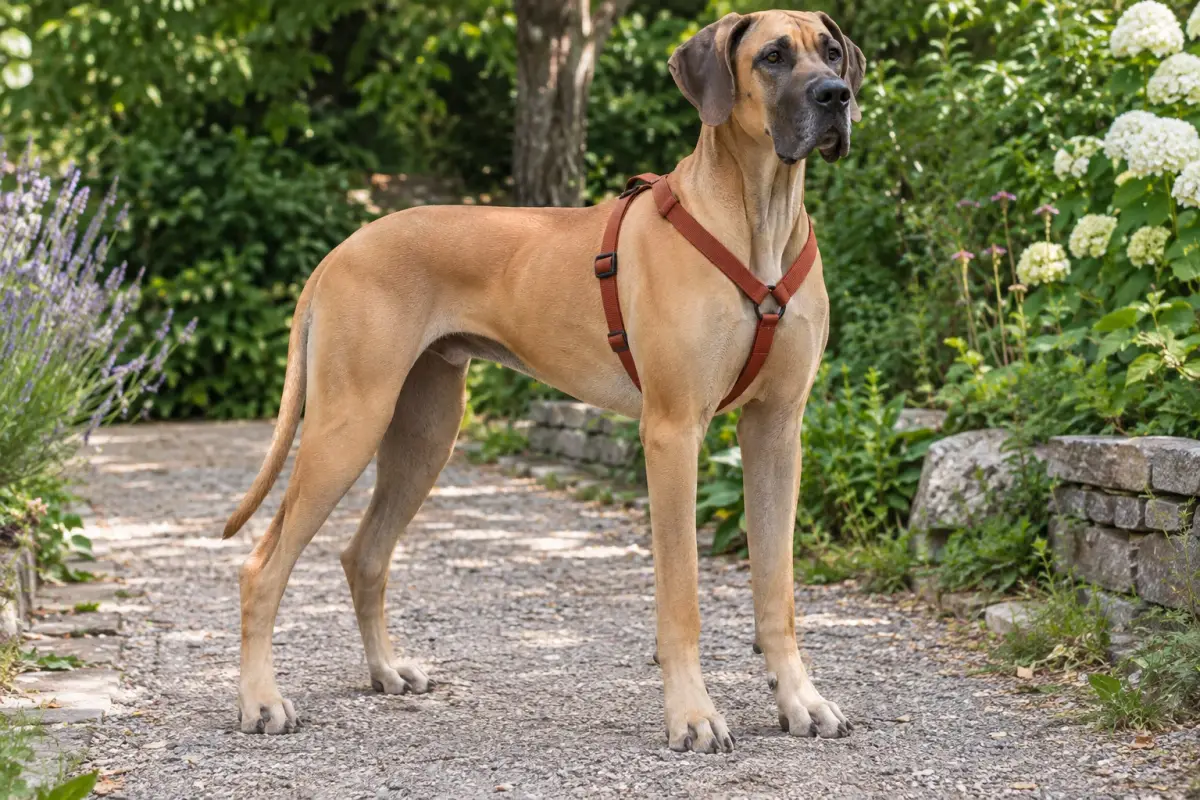
The best harness for a Great Dane is a strong, wide-strapped harness with solid hardware, a front or dual clip for control, and enough adjustment to fit a deep chest. A Great Dane can outweigh its handler, so strength and clip position matter more than style. Fit it so it moves freely at the shoulders and cannot be backed out of.
By Matt GarnettUpdated November 14, 20264 min read4 sources
What makes a Great Dane different
The AKC breed weight chart lists the Great Dane at 110 to 175 pounds, which means a lunge can overpower a handler and test every buckle. Choose from our harnesses for Great Danes and the wider large dog harnesses with that in mind, and judge strength before color.
Shape matters too. Danes are deep-chested, the same build VCA links to bloat, so a harness must leave the chest and ribs free and adjust at the girth. VCA says dogs over 100 pounds have roughly a 20 percent lifetime risk of bloat, so know the signs listed in the vet section below.
Strength, width and hardware
Look for wide webbing, double-stitched stress points and metal rings and buckles instead of thin plastic, because a large dog loads every connection. Wider straps spread force across the chest. The AKC lists nylon as durable and affordable, leather as durable but costly, mesh as breathable with less padding that can chafe, and neoprene as good for swimming but warm.
A collar harness for large dogs in training and a light-up chest strap for large dogs are two designs to compare. Check each listing's stated size and strength before buying, and pair a light-up strap with a properly rated leash. Never rely on decoration to hold a large dog.
Front clip, dual clip and no-pull control
The AKC's veterinarian says no-pull harnesses with a front D-ring help when a dog is larger than its handler, and that front-clip designs can redirect dogs that pull. VCA agrees that a front clip reduces forward pulling. A dual-clip harness is useful while teaching a dog to wear one, and a back clip suits a well-trained dog.
For a young, strong Dane, a front or dual clip gives more steering control. See our no-pull harnesses for large dogs and the best no-pull harness for large dogs. Training still decides the walk: reward slack in the leash and stop moving when it tightens.
Measuring and fitting a deep chest
With a soft tape, measure the base of the neck where it meets the shoulders and the widest part of the chest behind the front legs, as the AKC advises. A Dane's chest can fall outside standard size ranges, so check the maker's size chart and choose adjustable straps at neck and girth.
Start loose and tighten gradually. The AKC's veterinarian says the usual two-finger rule can be slightly too much, so aim for two fingers fitting underneath without discomfort. Walk the dog to check free shoulder movement, tug the harness to test it, and back the dog up to confirm it will not slide over the head. Puppies need regular adjustment or replacement as they grow, and a Dane puppy grows fast.
What to avoid, care and when to see your vet
Avoid thin or cheap hardware, straps that restrict the shoulders or legs, and any fit that is loose enough to escape. Avoid ignoring rubbing or sore spots. Check stitching and buckles regularly and retire a frayed harness. See also our best harness for large dogs, best dog harness and Great Dane breed guide.
Bloat is an emergency. VCA lists restlessness, heavy drooling, labored breathing, retching without producing anything, collapse and a swollen, drum-like abdomen as signs, and says a dog needs a vet within minutes to hours. Call your vet or nearest emergency clinic immediately. Also see your vet for red or sore skin under the straps. Browse our Great Dane harnesses when ready.
This page is general information, not veterinary advice, and it cannot replace an examination by the vet who knows your pet.
Common questions
What is the best type of harness for a Great Dane?
A strong, wide-strapped harness with metal hardware, adjustable neck and girth, and a front or dual clip for control. Check the maker's stated size and strength, and make sure it fits a deep chest.
Should a Great Dane use a no-pull harness?
Often, yes. The AKC's veterinarian says no-pull harnesses help when a dog is larger than its handler. Use a light hand and keep teaching loose-leash walking, because the harness alone will not do it.
What size harness does a Great Dane need?
Measure the base of the neck and the widest part of the chest behind the front legs, then compare with the maker's size chart. Dane chests are deep, so choose a harness adjustable at the girth.
How often should I check my Great Dane's harness?
Before every walk, look at buckles, stitching and rings, and recheck the fit after weight or coat changes. Puppies grow fast, so expect to adjust or replace a harness regularly.
Can a harness cause bloat in a Great Dane?
VCA does not list harnesses among bloat risk factors. It describes bloat as a risk for large, deep-chested dogs, with signs such as retching and a swollen abdomen, and calls it an emergency needing a vet immediately.
Sources we checked
This guide is general information, not veterinary advice. If your pet is unwell or injured, contact your veterinarian.


