Buying guides
Best Harness for Large Dogs: What Matters for Big, Strong Breeds
The best harness for a large dog has a Y-shaped front that leaves the shoulders free, both front and back leash rings, at least four adjustment points and strong metal hardware. A front clip gives you leverage with a dog that pulls; the back clip suits relaxed walks. Fit by chest girth, and check that two fingers slide under the straps.
By Matt GarnettUpdated November 14, 20264 min read2 sources
What matters most for a big dog
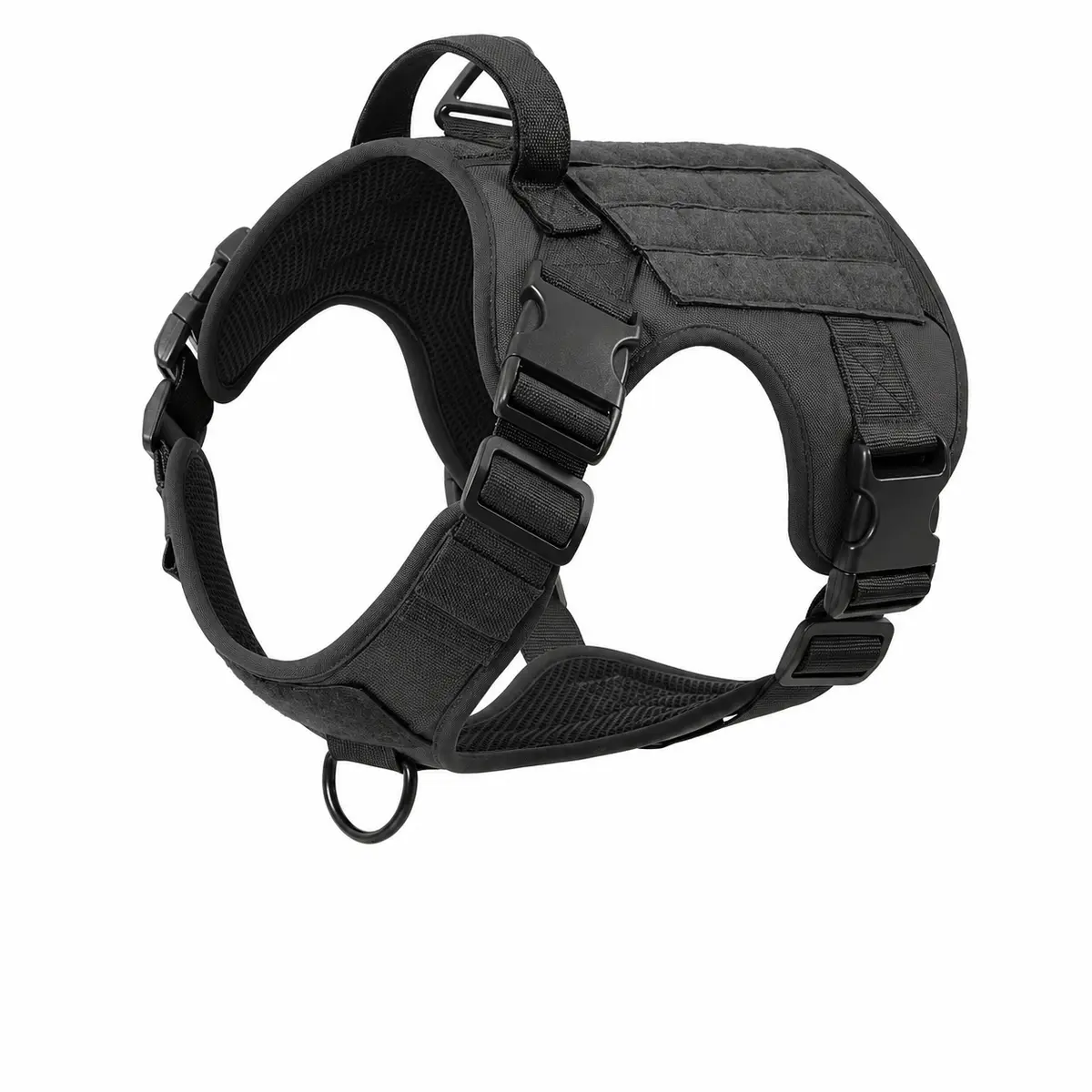
Strength and control come first. A 70 lb dog lunging at a squirrel puts real load on every seam, so look for wide nylon webbing, reinforced stitching, and metal D-rings and buckles rather than thin plastic. A front-clip ring at the chest turns a pulling dog back toward you, which the AKC notes gives you leverage, and a back ring covers calm walks and long lines.
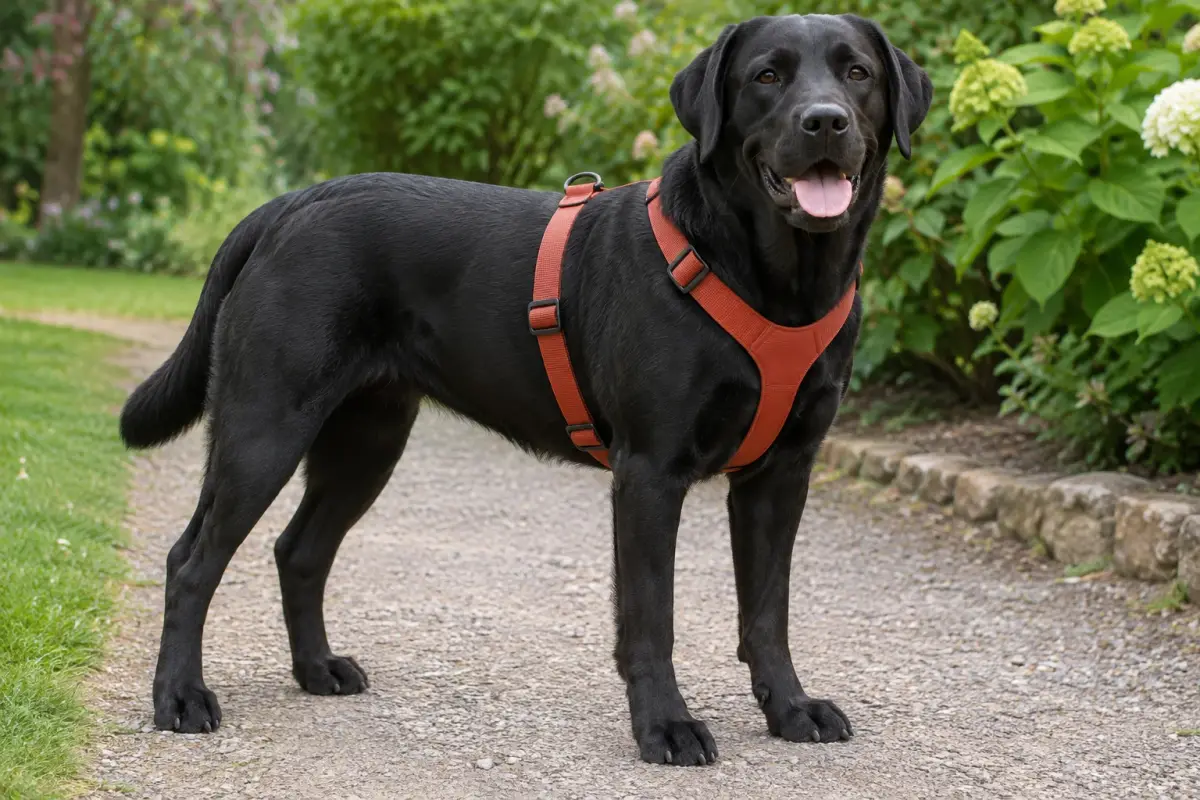
Comfort comes next. The front of the harness should form a Y over the breastbone, with the straps running up between the front legs and around the ribs behind them, so the shoulders move freely. Straight straps that cross the front of the chest can restrict a big dog's stride over many miles. Padding at the chest and belly prevents rubbing on long walks.
Harness types compared
Dual-clip adjustable harnesses, with front and back rings, are the most versatile type for large breeds and suit most Labs, Goldens and shepherds. Front-clip no-pull harnesses are designed specifically to discourage pulling and work best alongside reward-based leash training. Back-clip harnesses suit dogs that already walk nicely, as well as hiking, running and canicross where you want the dog moving ahead.
Vest-style harnesses spread pressure widely and are comfortable for big, calm dogs, but can trap heat on thick-coated breeds. Harnesses with a top handle help you steady a large senior on stairs or guide a dog in crowds. Car harnesses are a separate category; a walking harness is not crash-tested unless the maker says so.
The best type for each large breed
For Labradors and Golden Retrievers, which are often strong pullers as adolescents, a dual-clip Y-front harness is a sensible choice while you train loose-leash walking. For German Shepherds and other deep-chested breeds, look for a long chest strap that sits behind the front legs without pressing into the armpits. For Huskies, which were bred to pull, a back-clip harness invites pulling; use the front ring for daily walks.
For Pit Bull-type and other broad-chested muscular dogs, choose a harness with a wide range of chest adjustment and heavy-duty hardware. For giant breeds, check the size chart reaches your dog's girth, because many brands stop short. For seniors with weak hind legs, a harness with a sturdy handle or a separate support sling helps on steps; your vet can advise on mobility aids.
How to measure and fit
Measure the chest at its widest point, just behind the front legs, and the neck where a collar sits. Choose the size that puts your dog's measurement mid-range. The AKC's fit guide for large breeds is two fingers between the harness and the body. The front ring should sit on the breastbone, not low on the chest or up near the throat.
Check the fit while your dog moves, not just standing still. The harness should not slide to one side when the leash pulls sideways, should not rub under the front legs, and should not let the dog back out with a firm tug. Recheck after a few walks, as straps loosen, and seasonally, as thick coats grow and shed.
What to avoid, care and lifespan
Avoid harnesses that are too small for your dog's frame, those with plastic buckles on a heavy puller, and designs that sit across the shoulder joints. Do not rely on any harness to fix pulling alone; pair it with reward-based training. Take the harness off at home, where straps can catch on crates or furniture.
Wash the harness in mild soap and let it air-dry. Check stitching, buckles and rings before walks and replace the harness if webbing frays or hardware bends. A well-made large-dog harness lasts several years. If you see hair loss, sores or limping after walks, stop using it and ask your vet.
More on harnesses: best no-pull harness for large dogs, best no-pull dog harness, gentle leader vs harness, harness vs collar and how to put on a dog harness.
Large-dog harness attachment layouts
| Layout | What distinguishes it | Check on the individual model |
|---|---|---|
| Dual-clip | Front and back rings | Both attachment positions and strap adjustment |
| Front-clip | A chest attachment position | Ring placement and the maker’s fitting method |
| Back-clip | An upper-back attachment position | Back-panel position and body fit |
| Vest-style | A wider fabric panel | Panel edges and leg clearance |
| Top-handle design | A handle on the upper panel | Handle attachment and any stated use limits |
| Car harness | A separate vehicle-restraint design | Model-specific restraint evidence |
Common questions
What is the best harness for a German Shepherd?
An adjustable Y-front harness with front and back rings, a long chest strap that sits behind the front legs, and metal hardware. Fit by chest girth and allow two fingers under the straps.
What harness is best for a Labrador that pulls?
A dual-clip harness used on the front ring, combined with reward-based loose-leash training. The front clip turns the dog toward you when it pulls, which makes training easier.
Should a Husky wear a front or back clip harness?
For everyday walks, a front clip is usually better, because Huskies were bred to pull and a back clip encourages it. Back-clip harnesses suit sledding, running and canicross.
How tight should a harness be on a large dog?
Snug enough that it cannot slip off, with room for two fingers under every strap. It should not rub under the front legs or slide sideways when the leash pulls.
Sources we checked
This guide is general information, not veterinary advice. If your pet is unwell or injured, contact your veterinarian.