Breeds
Head Halter vs Harness: Which Is Better for a Dog That Pulls?
A head halter, such as a Gentle Leader-style headcollar, gives the most control over a strong dog that pulls or lunges, because it steers the head, but many dogs need weeks of gentle conditioning to accept one and some never do. A front-clip harness offers less steering but is easier for most dogs to wear, puts no pressure on the face, and is the simpler first choice. Neither replaces loose-leash training.
By Matt GarnettUpdated November 14, 20263 min read3 sources
How a head halter works
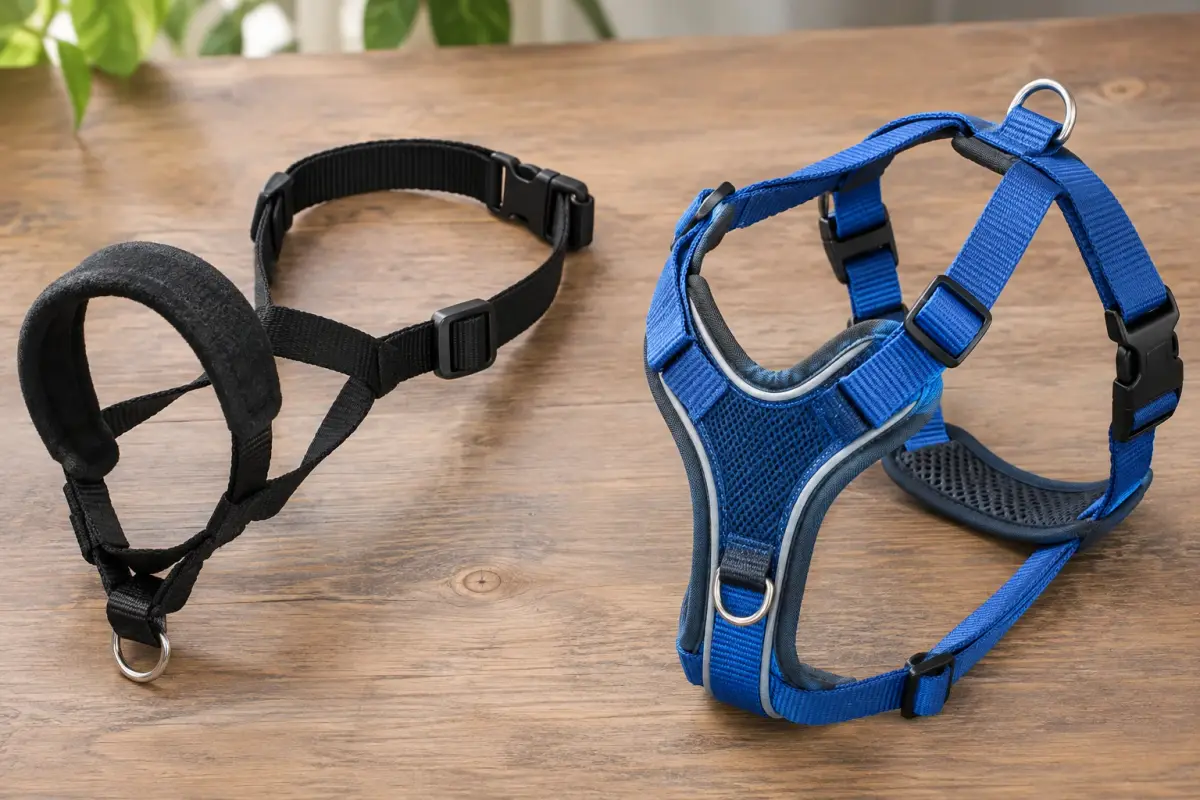
A head halter has a strap behind the ears and a loop around the muzzle, with the leash attached under the chin. When your dog pulls forward, gentle pressure on the nose loop turns its head toward you, much like a halter on a horse, so even a big dog loses most of its pulling power.
It is not a muzzle; a dog can still open its mouth, eat treats, pant and drink, and it can still bite. A correctly fitted halter sits loose enough for the dog to open its mouth fully, with the nose loop resting below the eyes. If you would rather skip the halter, browse our no-pull harnesses for large dogs.
How a front-clip harness works
A front-clip harness attaches the leash at the center of the chest. When your dog leans forward, the leash swings it sideways toward you, reducing the reward it gets from pulling. It puts no pressure on the neck or face and spreads force across the chest.
Most dogs accept a front-clip harness quickly. Fit matters: a strap that sits across the front of the shoulders can restrict movement, so choose a Y-shaped design and check you can fit two fingers under each strap.
Pros and cons side by side
Head halter pros: maximum steering control, useful for large or strong dogs and for turning a dog's head away from a trigger. Cons: many dogs dislike something on their face, rub at it or freeze; it needs careful introduction; and a sudden jerk or a dog hitting the end of the leash can twist the neck.
Front-clip harness pros: easy to accept, gentle on the neck and face, and good for everyday pulling. Cons: less control over a very strong dog's head, and some designs rub or restrict the shoulders. For most dogs, a no-pull harness is the sensible first try.
How to introduce a head halter kindly
Go slowly, over days or weeks. Show the halter and give a treat. Hold the nose loop open and lure your dog's nose through with a treat, then take it off. Build to fastening the neck strap for a few seconds, then wear it indoors during meals or play, rewarding all the while.
Distract your dog from pawing at it with treats and movement, rather than removing it the instant it paws. Practice short walks indoors, then outdoors. Stop and go back a step if your dog shuts down, rubs its face on the ground or seems distressed.
Safety rules for head halters
Never jerk or yank the leash, which can injure the neck. Release pressure the moment your dog moves with you. Do not use a head halter with a retractable leash or a long line, because a dog hitting the end at speed can be hurt.
Clip a second leash or a safety strap to a harness or flat collar in case the halter slips off. Dogs with neck injuries or problems should use a body harness instead. Ask your vet if you are unsure which suits your dog, and see our guide to no-pull harnesses for large dogs.
This page is general information, not veterinary advice, and it cannot replace an examination by the vet who knows your pet.
Common questions
Is a Gentle Leader better than a harness?
It gives more control over a strong puller, but many dogs find it harder to accept. A front-clip harness is easier for most dogs and is usually the better first choice.
Are head halters cruel?
Not when fitted properly, introduced gradually and used without jerking. They become unkind if forced on a distressed dog or used with sudden leash pops.
Can a dog wear a head halter all day?
No. Use it only for walks and supervised training, and remove it afterward. Never leave a dog unsupervised in a halter, as it could catch on something.
Will a head halter stop my dog lunging?
It gives you more control during a lunge, but it does not change why your dog lunges. Pair it with distance and reward-based counterconditioning to triggers.
Sources we checked
This guide is general information, not veterinary advice. If your pet is unwell or injured, contact your veterinarian.