Buying guides
Best No-Pull Harness for Large Dogs: How to Choose
For a large dog that pulls, the best harness has a front clip on the chest, a second clip on the back, wide adjustable straps that sit clear of the armpits, and hardware rated for a big dog. The AKC explains that a front attachment redirects forward movement when the dog pulls. A harness reduces pulling; reward-based loose-leash training is what stops it.
By Matt GarnettUpdated November 14, 20264 min read2 sources
How no-pull harnesses work
A front-clip harness attaches the leash at the center of the chest. When the dog lunges forward, the pull swings it sideways toward you rather than letting it lean its whole weight into the leash. The AKC says front-clip harnesses are often helpful for dogs that pull, with the trade-off that the clip under the chest is less convenient to attach.
Dual-clip harnesses have both a front ring and a back ring. The AKC suggests these are useful when teaching a dog to use a harness: start on the front clip for control, then move to the back clip once the dog walks nicely. For a big puller, that flexibility is worth having. Browse our no-pull harnesses for large dogs.
What matters most for a large dog
Strength and fit. A 70 to 100 lb dog puts real force through the straps, so look for wide webbing, metal D-rings, a stitched or riveted front ring and buckles rated for large dogs. Plastic side-release buckles are fine if they are heavy-duty; thin ones crack. A large dog harness with three buckles is one example of a buckle-based design to check against this list.
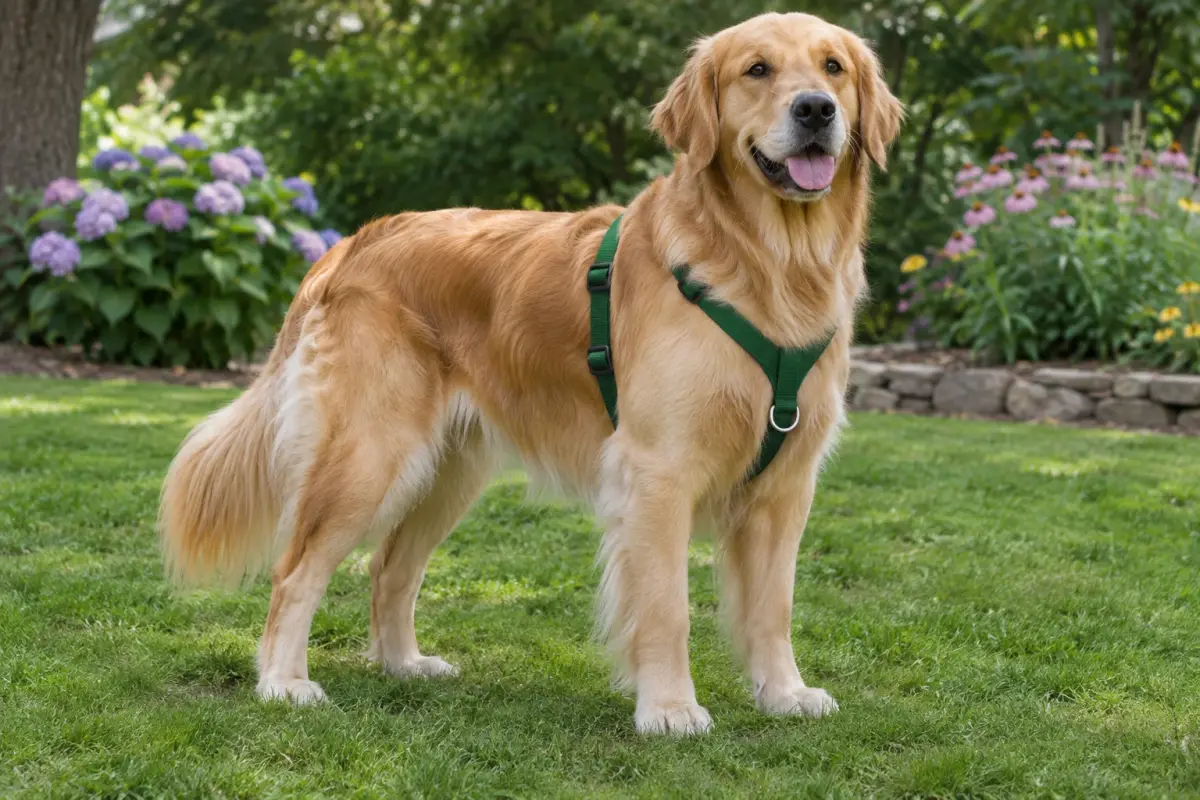
Fit decides comfort and whether the dog can back out. The AKC suggests measuring around the base of the neck and the widest part of the chest, starting with a looser fit and tightening gradually, and checking the harness does not slip over the head when the dog backs up and does not pinch when it moves. The front legs should reach forward freely.
Harness styles compared
Y-front harnesses have a strap that sits on the breastbone and leaves the shoulders free, which suits athletic dogs and long walks. Strap-across-the-chest designs can restrict the shoulder's movement if they sit low; check the strap sits above the point of the shoulder. Padded vest-style no-pull harnesses spread pressure widely and are comfortable, but can be warm.
Tightening martingale-style harnesses add a small cinch at the chest when the dog pulls; fit them so they never squeeze the dog. Head halters are a separate tool for very strong pullers and need careful introduction.
Best type for each dog
For a big, enthusiastic puller, a dual-clip Y-front harness with padding at the chest. For a deep-chested breed such as a German shepherd or Doberman, a harness with separate neck and chest adjustments. For an escape artist, a harness with a third belly strap behind the ribs.
For dogs with thick coats, the AKC notes straps may need to be snugged a little more to stop the dog slipping out. For older large dogs with stiff joints, a harness with a back handle helps you support them over steps. A padded no-pull harness with handle is one example of that style.
What to avoid
Avoid harnesses that tighten across the throat, rub the armpits or sit on the shoulder joint. Avoid relying on the harness alone: pulling is rewarded every time the dog gets where it wants to go, so pair the harness with training, stopping when the leash goes tight and rewarding a loose leash.
Avoid retractable leads with strong pullers; a sudden stop at the end is a jolt for you and the dog. A standard 4 to 6 foot leash, which the AKC says trainers often recommend, gives better control. See our dog leashes. If your dog pulls because it is anxious or reactive, a qualified trainer or your vet can help.
Care and lifespan
Recheck the fit after grooming, weight changes and as young dogs fill out, as the AKC suggests. Wash the harness in a laundry bag on a gentle cycle and air dry.
Inspect stitching, rings and buckles every few weeks. Replace a harness at the first fraying or crack in the hardware; on a strong dog, a failure near a road is dangerous. Our no-pull harnesses for large dogs are there when you need a new one. Rubbing, hair loss or sores under the straps mean the fit is wrong, and sores that do not heal need your vet.
This page is general information, not veterinary advice, and it cannot replace an examination by the vet who knows your pet.
Front-body harness layouts and fitting differences
| Layout | Physical distinction | What to inspect |
|---|---|---|
| Y-front | Front straps meet along the breastbone | Shoulder clearance and chest placement |
| Chest-across strap | A strap crosses the front body | Its position relative to the shoulders |
| Padded vest | A wider padded panel | Panel edges and leg openings |
| Martingale-style | An additional tightening arrangement | Exact adjustment and operating instructions |
| Head halter | A separate tool around the head | Individual fitting and introduction guidance |
Common questions
What is the best harness for a large dog that pulls?
A dual-clip harness with a front chest ring, wide adjustable straps, metal hardware and a fit that leaves the shoulders free. Start on the front clip and pair it with reward-based loose-leash training.
Do no-pull harnesses really work on strong dogs?
They reduce pulling by turning the dog toward you when it leans forward, which gives you more control. They do not teach the dog to walk nicely on their own; consistent training does that.
Are front-clip harnesses bad for dogs' shoulders?
A well-fitted Y-front harness leaves the shoulders free. Straps that sit across the front of the shoulders can restrict movement, so check the fit and watch your dog's gait when walking.
How should a no-pull harness fit a big dog?
Snug but not tight, with no rubbing in the armpits and no slipping over the head when the dog backs up. The AKC suggests starting loose and tightening gradually, then rechecking after grooming or weight changes.
Sources we checked
This guide is general information, not veterinary advice. If your pet is unwell or injured, contact your veterinarian.