







Dog harnesses
Breathable Mesh Dog Harness and Leash Set with Adjustable Straps
- Options
- 16 to choose from
$18.99
Free US shipping over $49 · 30-day free returns · Happy pets, happy homes
Pet care guidesDogs
Better walks, every day.
15 items picked for everyday life with your pet, with shipping estimates on every item.
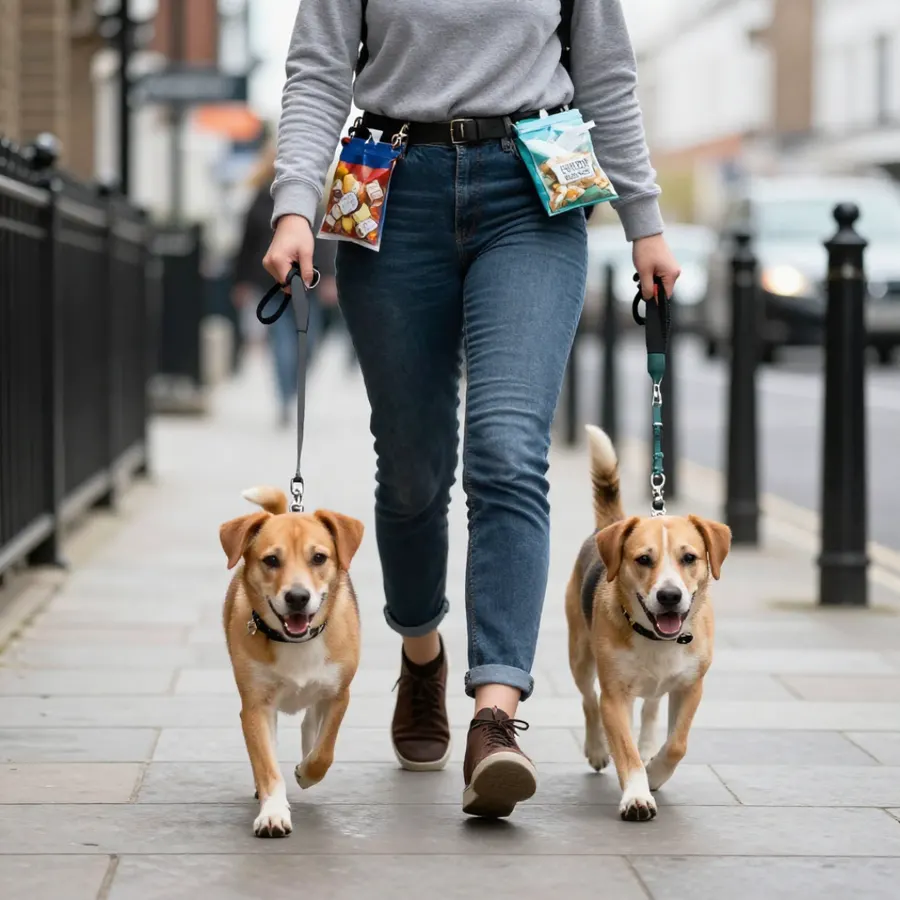 Out the door and ready for anything.
Dog harnesses
$18.99


Dog vest harnesses
From $19.99

Retractable dog leashes
From $21.99


Dog leashes
From $20.99

Dog harnesses
From $14.99


A little guidance
Buying guides and care advice written for this range: what to measure, what matters and what to skip.
This page narrows our harnesses to step-in designs: a lightweight padded step-in harness, mesh step-in harness and lead sets including a rainbow stripe design, and a step-in harness paired with a retractable lead. Your dog steps into two loops and you clip the harness closed over the back, with nothing going over the head. They suit small dogs, puppies and dogs who dislike having gear pulled over their ears. The guide below covers fit and when a step-in is the right choice.
A step-in harness lies flat on the floor in a figure-eight or triangle shape. Your dog places each front paw into a loop, you lift the two sides up around the shoulders and clip them together over the back. The lead then attaches to the D-ring on top.
Because nothing passes over the head, step-in harnesses are popular with head-shy dogs, dogs with sensitive ears and owners who find it hard to wrestle a wriggly puppy into an overhead design. They are quick to put on once both of you have practiced a few times.
Step-in designs are best for small and toy breeds such as Chihuahuas, Yorkies, Shih Tzus and Pomeranians, and for puppies. Many owners of small dogs prefer a harness to a collar for walks, because a harness spreads pressure across the chest instead of the throat.
For strong pullers and large dogs, a step-in harness with only a back clip offers less control than a no-pull design with a front clip. If your dog pulls hard, our wider harness ranges include front-clip and handle options.
The AKC recommends measuring chest girth around the widest part of the rib cage, just behind the front legs, and neck girth. Step-in harnesses are sized mainly by chest. You should be able to fit two fingers under the straps once the harness is buckled.
Check that the straps sit clear of the armpits and do not rub, and that your dog cannot back out of the harness when you pull gently on the lead. Small dogs often fall between sizes; choose the adjustable option and recheck fit after a few walks.
Padded step-in harnesses add a soft layer that is comfortable on short coats. Mesh designs are light and breathable for warm weather. Sets with a matching lead mean you get the right clip and weight of lead for a small dog in one go.
Retractable leads give small dogs room to sniff, but they offer less control near roads and other dogs. Lock the lead short in busy places, and never attach a retractable lead to a collar, where a sudden stop at full length can jolt the neck.
Yes. They are easy to put on, spread pressure across the chest rather than the throat and avoid pulling anything over the head, which many small dogs dislike.
Lay it flat, place each front paw into a loop, lift the sides up around the shoulders and clip the buckle closed over the back. Attach the lead to the top D-ring.
A loose harness can be backed out of. Fit it so two fingers slide under the straps but the harness does not slip when you pull gently backward.
They give less control than front-clip no-pull harnesses. For dogs that pull hard, a front-clip harness and loose-lead training usually work better. A step-in harness remains a good everyday choice for calm small dogs.
Measure chest girth just behind the front legs and compare it to the size chart. If your dog falls between sizes, choose an adjustable harness and check the fit carefully.