






Buying guides
Best Dog Harness for Hiking: What Actually Matters
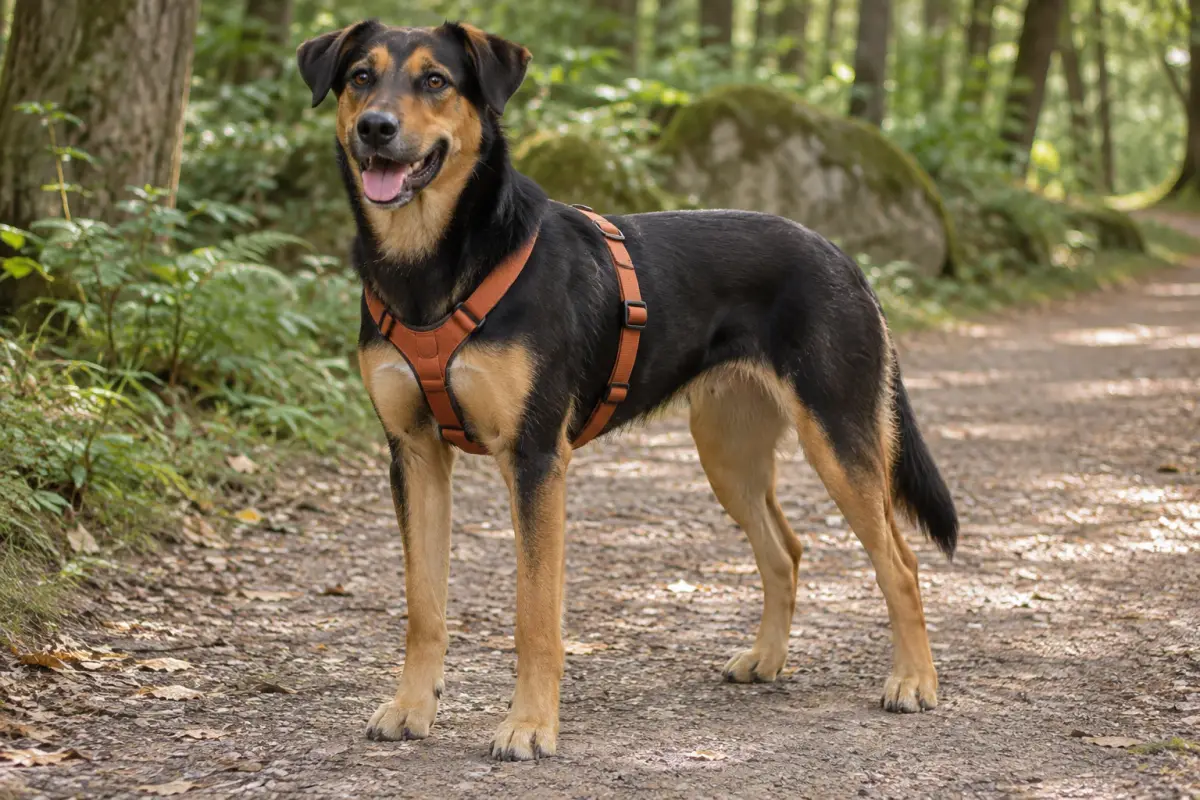
The best dog harness for hiking fits snugly enough that it never shifts or chafes, spreads pressure across the chest instead of the neck, and has a strong, easy-to-reach leash attachment. If it also carries a pack, the total load should stay under about 10 percent of your dog's weight. Below is how to size, compare and use one.
By Matt GarnettUpdated November 14, 20264 min read3 sources
What a hiking harness has to do
A trail harness works harder than a walking harness. It has to stay put over rocks and roots, avoid rubbing during hours of movement, and give you a secure handle if your dog needs help over a log or a steep step. The National Park Service recommends keeping your dog on a 6-foot leash at all times, so the leash attachment point and the harness straps take real strain on a hike.
Judge a harness on four things: fit, padding where straps meet skin, strength of the hardware, and whether it lets your dog move freely. If you are comparing styles, our dog hiking harnesses are the range built for trail use, and the general dog harness range covers everyday walking.
Fit and sizing
Measure the chest at its widest point, just behind the front legs, and use the maker's size chart with your dog's weight in pounds as a cross-check. AKC's rule of thumb for pack straps is that you should be able to fit one or two fingers under each strap: snug enough that nothing shifts or slips, loose enough that nothing chafes.
Check the fit with your dog standing, sitting and walking. Look for rubbing behind the front legs, where straps tend to wear the skin on long outings, and make sure the neck opening does not restrict breathing or the shoulders' movement. A harness that fits at home can still rub after two miles, so try a short walk first before committing to a full hike.
Types compared
A basic padded Y-front harness is lightweight and suits most easy trails. A vest-style harness spreads the load over a larger area and often has a sturdy top handle, which helps with lifting over obstacles. A pack harness adds saddlebags, which lets your dog carry its own water and supplies. A pack harness such as a dog backpack harness with saddle bags is one example of that style, while a dog hiking pack is another.
A vest style such as a tactical-style chest harness vest offers a handle and reflective trim but more coverage, which matters in hot weather. Compare vest harnesses if a handle is your main requirement.
Pack weight: the 10 percent rule
AKC advises that a pack plus its contents should weigh no more than 10 percent of a healthy, well-conditioned dog's body weight. For a 20-pound dog, that is about 2 pounds in total. Your vet can tell you whether a heavier load suits your particular dog.
Some dogs should not carry weight at all. AKC says growing puppies and senior dogs with problems such as arthritis should wear an empty pack or none, and overweight or out-of-shape dogs should not carry extra weight until they are fitter. Dogs with back problems, hip or elbow dysplasia, heart or breathing problems should be checked by a vet first. Start with an empty pack on short walks and add weight slowly.
Everything else on the trail
A harness is one piece of the kit. AKC's hiking list includes poop bags, a collar with ID tags, a sturdy 6-foot leash, water and a travel bowl, treats, a pet first-aid kit and booties for rough ground. AKC also notes that collars can break, so a reliable recall is the backup, and the ID tags should stay on the collar even when a harness is worn.
Dogs cool mainly by panting, so they overheat more easily than people. Skip very hot days, bring plenty of water, and stop often for water breaks. If your dog pants heavily, drools excessively or vomits, move to a cooler place and offer water, and call your vet if it does not settle. For more trail planning, see our hiking and camping with dogs guide.
What to avoid
Avoid harnesses with thin straps that dig in, flimsy plastic clips on a dog that pulls, and any design that rubs behind the front legs. Avoid loading a pack just because it has space, and avoid buying a size to grow into.
Before you commit to long hikes, check with your vet about your dog's fitness, particularly for puppies, seniors and breeds with short noses or heavy bodies. Then compare options in our dog hiking harness collection and pair your choice with a sturdy dog leash.
Trail harness panel and storage choices
| Structure | Physical arrangement | Verify before choosing |
|---|---|---|
| Y-front straps | An open webbing body | Strap path and adjustment |
| Padded vest | A broader panel over chest or back | Edges,padding and closure layout |
| Pack harness | Storage bags attached to the harness | Contents,compartment size and load instructions |
| Handle feature | A handle attached to the upper body | Exact permitted handling use |
Common questions
How tight should a hiking harness be?
Snug enough that it does not shift or slip, but loose enough that you can fit one or two fingers under the straps. Check behind the front legs for rubbing after a short walk.
How much weight can my dog carry in a pack?
AKC says the pack and everything in it should be no more than about 10 percent of a healthy, fit dog's weight, so roughly 2 pounds for a 20-pound dog. Ask your vet about heavier loads.
Should I use a harness or a collar when hiking?
Many hikers use a harness for control and comfort, and keep ID tags on a collar as well. AKC notes collars can break, so a reliable recall matters whichever you choose.
Can puppies wear a hiking pack?
Growing puppies should wear only an empty pack or none, according to AKC, because their bodies are still developing. Keep hikes short and ask your vet what your puppy can handle.
Sources we checked
This guide is general information, not veterinary advice. If your pet is unwell or injured, contact your veterinarian.


