






Care & how-to
Hiking and Camping With Dogs: A Practical Guide
Hiking and camping with your dog goes best when you check the rules first, build up distance gradually, and pack for your dog as carefully as for yourself: water and a bowl, a 6-foot leash, ID, poop bags, a first-aid kit and booties for rough ground. Avoid hot days, keep your dog leashed around wildlife, and check for ticks and foxtails every evening.
By Matt GarnettUpdated November 14, 20265 min read2 sources
Check where dogs are allowed
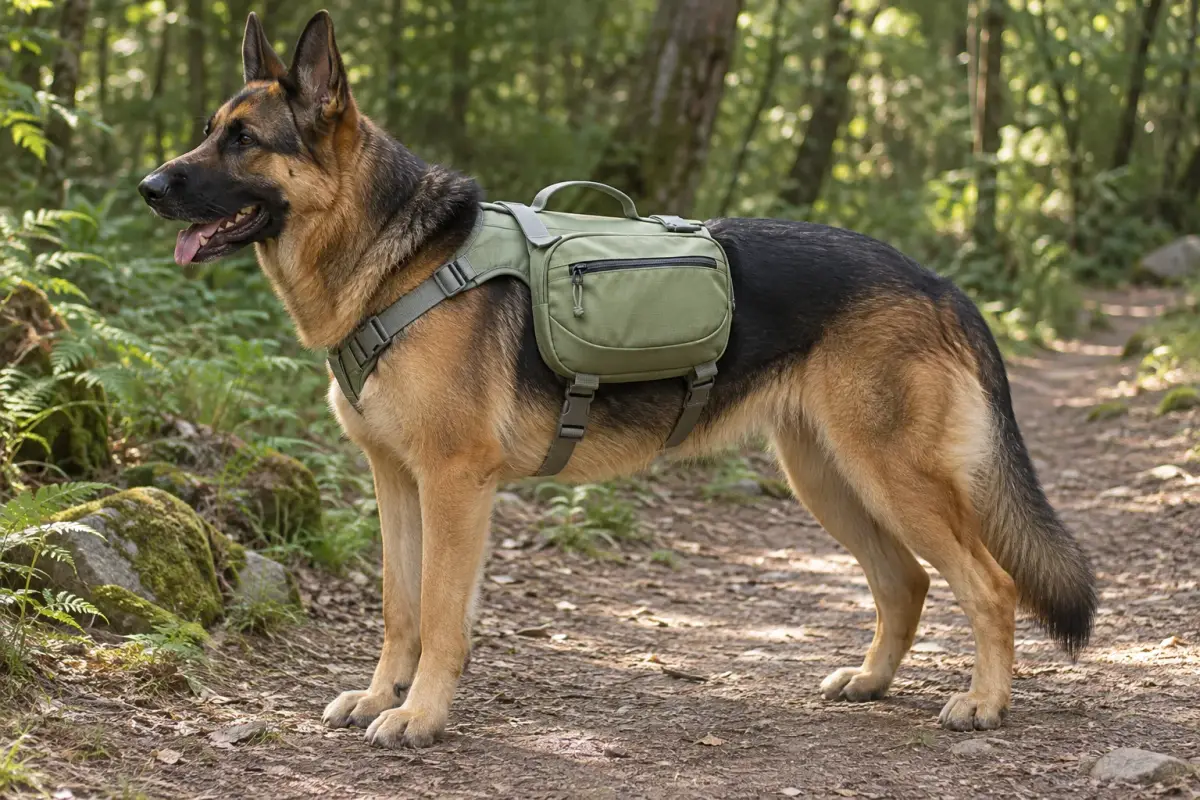
Rules change from one park to the next. Many national parks allow dogs in campgrounds and on paved roads but not on most trails, while national forests and many state parks are more open. Look up the specific park, trail and campground before you go, and note any leash length rules. The AKC sums up trail etiquette with the B.A.R.K. rule: bag your dog's waste, always leash, respect wildlife, and know where you can go. A secure, comfortable hiking harness gives you a handle and an attachment point on rough ground.
Leash laws are there for your dog's safety too. Off-trail wandering exposes dogs to cliffs, fast water, snakes and porcupines, and a dog that chases a deer can be lost for hours. Only let your dog off leash where it is permitted, where you can see them at all times, and if their recall is reliable around distractions.
Is your dog ready for the trail?
Ask your vet before your first big hike, especially for puppies, seniors, flat-faced breeds and dogs carrying extra weight. Growing puppies should not be taken on long or steep hikes, because their joints are still developing, and older dogs may tire sooner than they show. Build up gradually: start with an hour on easy terrain and add distance and elevation over several weeks.
A little training goes a long way on the trail. Polite leash walking, a reliable "come," and solid "leave it" and "drop it" cues let you steer your dog away from a dead animal, a skunk or a dropped sandwich. Practice stepping off the trail with your dog sitting at your side, which makes passing other hikers, horses and bikes calm for everyone.
What to pack for your dog
The AKC's core list is poop bags, a collar with ID tags, a sturdy 6-foot leash (not a retractable one), water and a travel bowl, treats and a pet first-aid kit, with dog boots for rough or rocky terrain. Add a lightweight towel, a spare leash and collar, your dog's food if you will be out past mealtime, and a copy of their vaccination record on overnight trips.
A basic first-aid kit for the trail holds wound cleaner, gauze and self-adhesive bandage, blunt-tipped scissors, tweezers or a tick tool, disposable gloves, a soft muzzle (even gentle dogs may bite when hurt) and a space blanket. Save your vet's number and the nearest emergency clinic to your phone before you lose signal. Large, fit dogs can carry some of their own gear in a well-fitted dog pack or backpack harness with saddle bags once they are used to it.
Water, heat and paws
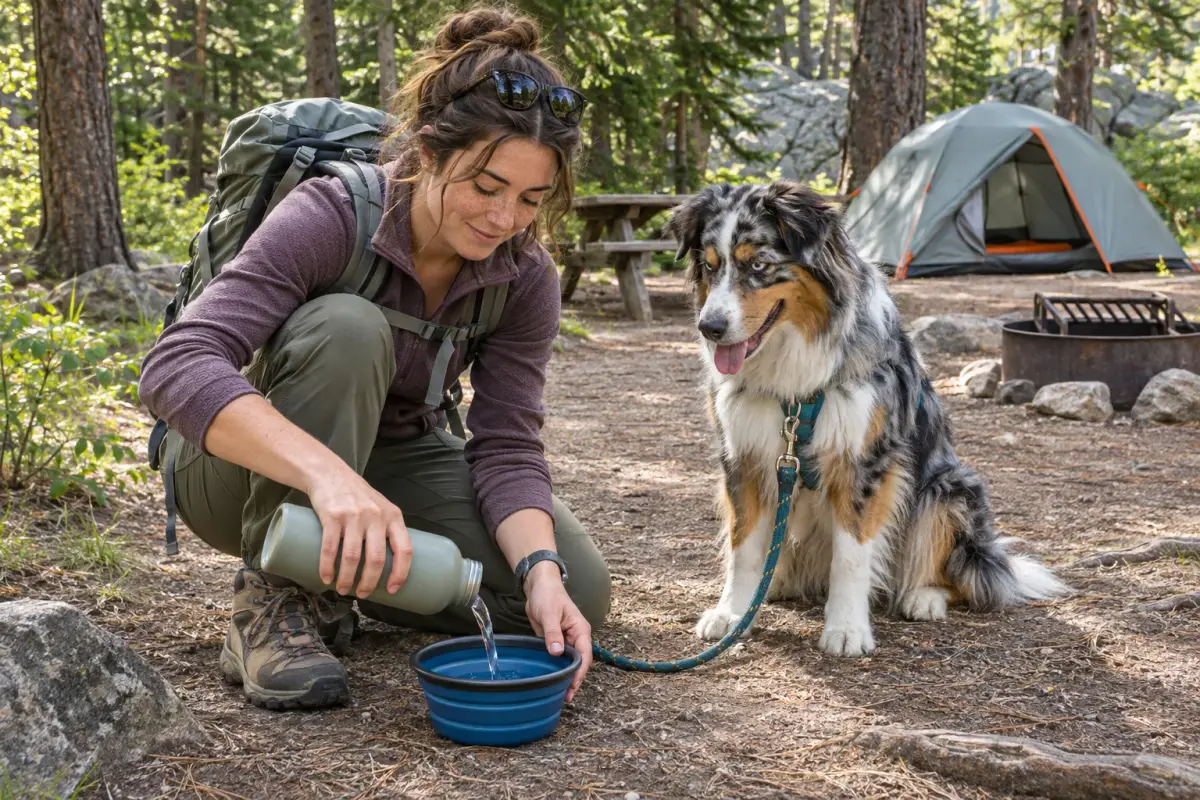
Dogs cool themselves mainly by panting, so they overheat faster than you on a climb. Hike in the cooler hours, choose shaded routes in summer, and stop to offer water every time you drink. Do not let your dog drink from ponds, streams or puddles, which can carry parasites such as Giardia or bacteria such as leptospirosis; carry enough for both of you and refill from treated sources.
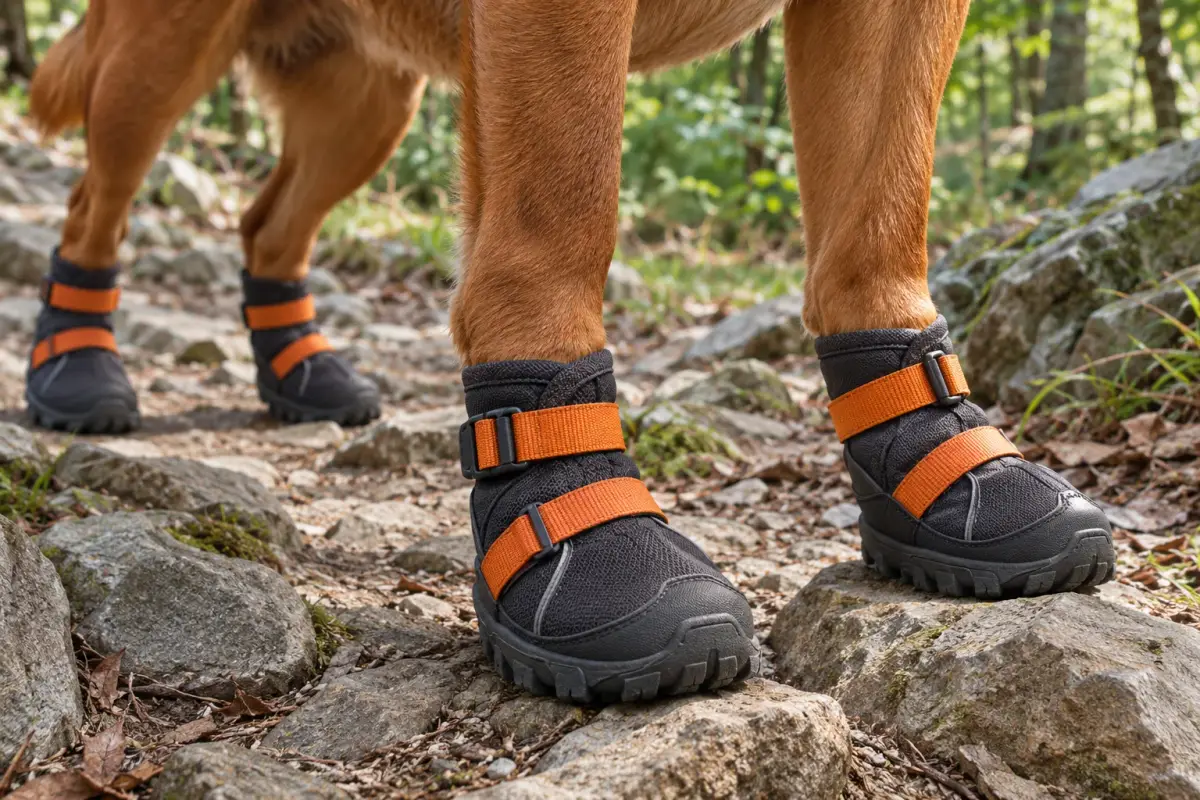
Heavy panting, lagging behind, lying down in the shade and refusing to go on are signs to stop, rest and cool down. Stumbling, confusion or vomiting can mean heat stroke and need a vet urgently. Check paws at every break: rock, hot ground and ice can cut or blister pads, and boots protect dogs on rough trails if they are introduced at home first.
Wildlife, ticks and foxtails
Keep your dog close in bear, moose and snake country. The AKC advises a non-retractable leash in bear areas and avoiding dawn, dusk and night hikes, when bears are most active. An unleashed dog that chases or corners a bear can bring it straight back to you. Give all wildlife plenty of space, and pick up any dropped food.
Use a flea and tick preventive chosen with your vet, and check your dog thoroughly at the end of every day: ears, armpits, between the toes, under the collar and around the tail. Grassy trails in the West also carry foxtails, barbed seed heads that can work into ears, noses, eyes and paws. Sudden head shaking, sneezing, squinting or licking a paw after a hike are reasons to see a vet soon.
Camping overnight with your dog
Keep your dog with you at all times at camp, including sleeping inside the tent rather than tied up outside, where they are exposed to wildlife and cold. Pack a dog bed or a foam pad and a blanket, because the ground gets cold at night even in summer. Trim long nails before the trip, since sharp nails can tear tent fabric.
Store dog food the same way as your own, in a vehicle or bear box where required, and never leave bowls out overnight. Keep your dog well back from the campfire and hot embers, and away from other campers' food and dogs. Never leave your dog alone in a closed car or tent in the heat. If the forecast is extremely hot or cold, the AKC suggests considering leaving your dog at home.
This page is general information, not veterinary advice, and it cannot replace an examination by the vet who knows your pet.
| When to pack it | What to bring | Where to keep it |
|---|---|---|
| Every outing | Water, a travel bowl and waste bags | In an outside pocket so you can reach them at a stop. |
| Rough or rocky trails | Dog boots your dog has practiced wearing | Near the top of your pack so you can check paws and adjust the fit. |
| Overnight stays | Your dog’s usual food, a spare leash and vaccination record | Keep food sealed and the record dry. Save clinic contact details before leaving cell service. |
Common questions
How far can my dog hike?
It depends on age, breed, fitness and terrain. Many fit adult dogs can manage several miles once conditioned, but start with short, easy hikes and build up over weeks. Ask your vet what suits your dog.
At what age can a puppy go hiking?
Puppies can go on short, gentle walks on trails, but long or steep hikes can strain growing joints. Ask your vet when your puppy is ready for longer distances, which often depends on breed and size.
Can my dog drink from streams on a hike?
It is best not to. Streams, ponds and puddles can carry Giardia, leptospirosis and other infections, and some contain toxic algae. Carry enough clean water for your dog and offer it at every break.
Where should my dog sleep when camping?
Inside the tent with you, on a pad or bed that insulates them from the cold ground. Leaving a dog tied outside exposes them to wildlife, weather and stress, and many campgrounds forbid it.
Sources we checked
This guide is general information, not veterinary advice. If your pet is unwell or injured, contact your veterinarian.


